- Norwich Blogs
- Blogs
- Moldova Is the Spark Russia Has Been Waiting For
Moldova Is the Spark Russia Has Been Waiting For
By Dr. James M. Deitch
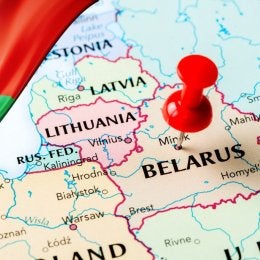
Moldova’s withdrawal from the Russian-led CIS marks a decisive geopolitical break that strips Moscow of a key lever in the post-Soviet space and heightens the risk that Russia will activate Transnistria as a pretext for escalation. The article argues that this move could open a short, high-risk window in which Russia seeks to destabilize Moldova and threaten Odesa, aiming to landlock Ukraine and reshape the war’s geometry before its own logistical limits force a halt.
Disclaimer: These opinion pieces represent the authors’ personal views and do not necessarily reflect the official policies or positions of Norwich University or PAWC.
Moldova’s formal withdrawal from the Russian-led Commonwealth of Independent States (CIS) is not a bureaucratic footnote. It is a geopolitical rupture, and Moscow knows it. Chişinău is now denouncing the founding CIS agreements and accelerating its integration with Europe. Russia has lost one of its last institutional levers in the post-Soviet space. The Kremlin’s reaction, warning Moldova of “consequences” and framing the move as a Western-orchestrated betrayal, reveals exactly how Moscow interprets this moment: as a closing window, and therefore as an opportunity.[1]
For years, Russia has treated Moldova as a buffer state, a pliable neighbor whose political trajectory could be nudged back toward Moscow through energy pressure, disinformation, or the ever-present threat of Transnistria. That era is over. Moldova is sprinting toward Europe, and Russia is running out of time. The danger is not theoretical. It is immediate, structural, and tied directly to Russia’s long-standing ambition to seize Odesa, landlocked Ukraine, and consolidate its hold over the Donbas and the southern land corridor.
Moldova’s CIS exit is the trigger Moscow has been waiting for.
Transnistria: Russia’s Ready-Made Pretext
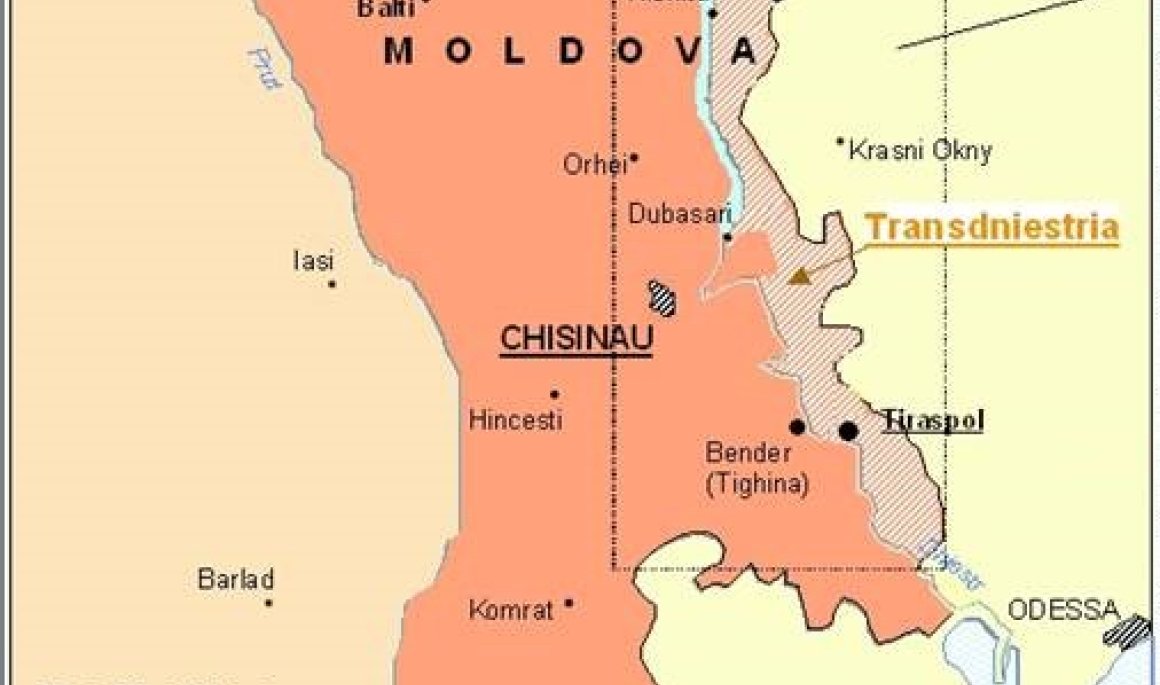
Transnistria has been a Russian forward operating base since 1992, when the 14th Guards Army shattered Moldovan positions at Bender and froze the conflict on Moscow’s terms. The enclave’s leadership remains aligned with Russia, its security forces are intertwined with the Operational Group of Russian Forces, and the massive Cobasna ammunition depot—one of Europe’s largest—provides both logistical depth and political leverage.[2]
This is not a dormant conflict. It is a dormant front.
Russian commanders have openly stated that creating a land corridor from Crimea to Transnistria is part of Moscow’s long-term war aims.[3] The logic is brutally simple: if Russia can pressure Odesa from both the east and the west, Ukraine becomes a landlocked state dependent on Western aid. The Kremlin understands that Odesa is not merely a city. It is Ukraine’s last deep-water port, its economic lifeline, and the anchor of its maritime sovereignty.
Moldova’s CIS withdrawal gives Moscow the narrative it needs to activate Transnistria. Russia can claim that Moldova’s “anti-Russian” turn threatens Russian speakers in the region, that Chişinău’s EU trajectory undermines regional stability, or that Moldova’s legal break from the post-Soviet space requires “protective measures.” These are the same narratives Russia used in Crimea, Donbas, and Georgia. They are not new. What is new is the timing.
A New Front Northwest of Odesa
If Russia chooses to escalate, it need not invade Moldova conventionally. It can activate Transnistria internally, stage provocations, or reinforce the enclave covertly. The geography is unforgiving: Transnistria sits just 45 miles from Odesa. A limited Russian escalation—sabotage, diversionary attacks, seizure of key infrastructure—would force Ukraine to divert troops from critical fronts and strain its already strained defenses.[4]
This is precisely the kind of asymmetry Russia seeks. After two years of grinding attrition, Moscow knows it cannot achieve a decisive breakthrough in the east without altering the war’s geometry. A new axis of pressure from the west would do precisely that. It would destabilize Moldova, threaten Odesa, and trigger panic across NATO’s southeastern flank.
The Kremlin does not need to conquer Moldova. It only needs to weaponize the enclave it already controls.
The 45-Day Window: Russia’s Logistical Reality
Yet this scenario contains a paradox. Russia may be preparing to open a new front, but it cannot sustain one. The Russian military’s logistical failures since 2022 have been well documented: inadequate supply lines, brittle transport networks, insufficient fuel reserves, and chronic shortages of precision munitions. Analysts across NATO, RAND, RUSI, and independent military studies reach the same conclusion: Russia’s operational endurance is limited. Its ability to sustain high-tempo offensive operations collapses rapidly without secure logistics.[5]
This is why this thesis is strategically sound: Russia has no more than 45 days of operational endurance for a high-intensity campaign to seize Odesa. The Kremlin knows this. If Russia opens a new front through Transnistria, it must achieve rapid, decisive gains before logistical failure forces a halt. This is not speculation. It is the pattern of Russian operations since 2014: short bursts of offensive action followed by long periods of consolidation.
A 45-day window is not enough to conquer Moldova. It is barely enough to destabilize it. But it is sufficient to create the conditions for a strike on Odesa—if Russia believes the West will hesitate.
Why Moldova Matters More Than Ever
Moldova is not the prize. Odesa is. Moldova is the hinge on which the next phase of the war may turn. If Russia can destabilize Moldova, activate Transnistria, and pressure Odesa from the west, it can complete the maritime encirclement of Ukraine. A landlocked Ukraine would be economically strangled, dependent on Western aid, and forced into negotiations on Moscow’s terms.[6]
This is why Russia is watching Moldova’s exit from the CIS so closely. It is not about the CIS itself—a hollow institution long past its relevance. It is about what the exit represents: Moldova’s final break from Moscow’s orbit, its alignment with Europe, and its refusal to accept a future defined by Russian coercion.
For the Kremlin, this is intolerable. And for that reason, it is dangerous.
The West Cannot Ignore the Warning Signs
The West has repeatedly underestimated Russia’s willingness to exploit political fractures, hybrid vulnerabilities, and frozen conflicts. Moldova is the next test. If Russia succeeds in destabilizing Moldova or activating Transnistria, the consequences will be immediate and severe: pressure on Odesa, diversion of Ukrainian forces, destabilization of Romania’s border, and a crisis that NATO is not structurally prepared to manage.
The warning signs are already visible. Russia has intensified disinformation campaigns, increased funding for pro-Russian political actors in Moldova, and framed Moldova’s exit from the CIS as a hostile act.[7] These are the same indicators that preceded escalation in Georgia and Ukraine.
Ignoring them now would be a catastrophic mistake.
A Short War With Long Consequences
Russia may lack the resources to sustain a long campaign, but it does not need one. A short, sharp 45-day offensive aimed at destabilizing Moldova and threatening Odesa would achieve Moscow’s strategic objectives: landlocking Ukraine, fracturing Western unity, and consolidating gains in the Donbas and the southern corridor.
The West must understand that Russia’s weakness does not make it less dangerous. It makes the situation more urgent. A state that cannot sustain a long war has every incentive to launch a short one.
Moldova’s exit from the CIS is not the end of an era. It is the beginning of a test. The next 45 days of any Russian offensive may determine the next 45 years of European security.
Dr. James M. Deitch was born in Philadelphia and raised in Bucks County, Pennsylvania. During his Marine Corps career, he deployed to Saudi Arabia, Kuwait, Iraq, Norway, and aboard the USS Saratoga. Deitch holds a master’s degree in military history from Norwich University and a doctoral degree in intellectual history from Liberty University. His published works can be found in USNI’s Proceedings, Total War Magazine, Concealed Carry Magazine, Real Clear Defense, and the Journal of the American Revolution.
[1] Kyiv Independent, “Moldova moving to withdraw from Russian-led CIS.”
[2] Philip Remler, Transdniestria, Moldova, and Russia’s War in Ukraine (Carnegie Endowment, 2022).
[3] Telegraph Online, “Russia seeks to capture southern Ukraine,” April 22, 2022.
[4] Rob Picheta, “How Transnistria… is getting pulled into the war,” CNN, April 27, 2022.
[5] Ronald Ti and Christopher Kinsey, “Primacy of logistics,” Defence Studies 23, no. 3 (2023).
[6] James M. Deitch, “Russia’s Long Game: Maritime Dominance, Territorial Consolidation, and the Coming Test in Moldova.” Voices on Peace and War (January 23, 2026).
[7] RFI, “How Russian Disinformation Flooded Moldova’s Media Landscape Ahead of Election,” September 27, 2025. MSN, “Russia Warns of Consequences as Moldova Quits CIS,” accessed January 2026.
[5] European Commission, “EU–Moldova Relations,” European Neighbourhood Policy and Enlargement Negotiations, last modified September 22, 2025.
[6] United Nations, “Member States: Republic of Moldova,” UN.org, accessed December 21, 2025
[7] North Atlantic Treaty Organization, “Relations with the Republic of Moldova,” NATO.int, last updated July 2025.
[8] Organization for Security and Co‑operation in Europe (OSCE), “Mission to Moldova: Background and Mandate,” OSCE.org, accessed December 21, 2025.