- Norwich Blogs
- Blogs
- The War That Refused to End
The War That Refused to End
Four years after Russia’s invasion, the war in Ukraine has surpassed the duration of the Soviet Union’s fight in Operation Barbarossa and evolved into a grinding war of attrition in which Russia has failed to achieve its core objectives while Ukraine has preserved its statehood and defensive cohesion. Despite stalled offensives, mounting economic and manpower pressures on Moscow, and fading hopes for a negotiated freeze, neither side holds decisive advantage, pointing instead toward a prolonged strategic stalemate defined by endurance, resource constraints, and political resolve.
Disclaimer: These opinion pieces represent the authors’ personal views and do not necessarily reflect the official policies or positions of Norwich University or PAWC.
Four years of relentless, uncompromising Russo-Ukrainian combat convey a single clear message — the war is far from over.
A war longer than expected
By early January 2026, Russia’s war against Ukraine has crossed a notable historical threshold: a stark but historic confrontation has now lasted longer than the Soviet Union’s Great Patriotic War, which ran from the launch of Nazi Germany’s Operation Barbarossa on Sunday, June 22, 1941, to Germany’s capitulation on Saturday, May 9, 1945. This comparison is striking not only for its historical symbolism, but also because many observers around the world initially expected the invasion of Ukraine to conclude within days rather than stretch into years.
Four years of war have once again challenged the assumption that large states are unlikely to lose wars against smaller adversaries. Historical experience repeatedly suggests otherwise. Relevant examples include Russia’s defeat in the Russo-Japanese War of 1904–1905, the outcome of the First Russo-Chechen War of 1994–1996, the United States’ protracted and ultimately unsuccessful military campaign in Vietnam, as well as the inconclusive and costly Soviet and later American interventions in Afghanistan.
Neither victory nor defeat
The approaching anniversary of Russia’s invasion of Ukraine and multiple unsuccessful mediation efforts by international actors aimed at achieving a negotiated settlement in the Russo-Ukrainian conflict provide an occasion for renewed attempts to assess the future trajectory of this war. It can now be stated with reasonable confidence that Russia is not winning and Ukraine is not losing.
Moscow is not achieving victory, as it has failed to accomplish its primary strategic objectives, namely the occupation of Ukraine’s critical political and economic centers and regime change in Kyiv.
At the same time, it is equally valid to conclude that despite enormous pressure, heavy casualties, and extensive destruction, Kyiv is not defeated. Ukraine has managed to preserve its statehood, retain control over key political and economic hubs, sustain the operational functioning of its armed forces and governing institutions, and prevent a decisive strategic shift in favor of the adversary. In practical terms, the conflict has evolved into a protracted war of attrition in which neither side currently possesses the capacity to secure a decisive advantage. Nevertheless, Ukraine’s continued resistance and its ability to maintain national governance already represent a disruption of Russia’s initial strategic assumptions.
Ukrainians increasingly recognize that, however harsh and exhausting the situation may be, it is strategically more advantageous, and arguably necessary, to continue fighting through sheer endurance. The rationale for this position follows below.
The limits of negotiation
Any illusions about a potential “freezing” of the war should be abandoned. A freeze in the conflict would be theoretically possible only if Trump reached an agreement with Putin. Both leaders have, at various times, demonstrated a degree of indifference toward the rules-based international order, and Trump’s National Security Strategy notably did not frame Russia primarily as a threat, instead emphasizing the pursuit of strategic stability in U.S.-Russia relations. Over the past year, many European leaders appeared to hope, largely in vain, that Trump might reassess his position, recognize Russia as the aggressor in Ukraine, and acknowledge Ukraine’s right to defend itself following Russia’s invasion. These expectations were repeatedly disappointed, as Trump tended to discount European arguments. However, following the Joint Statement of February 14 by the United Kingdom, Sweden, France, Germany, and the Netherlands concerning the death of Alexei Navalny, the diplomatic environment changed materially. The coordinated European position, which publicly attributed responsibility to the Russian authorities, substantially narrowed the political space for engagement. In this context, even Trump may be more reluctant to pursue a compromise with Putin, given the heightened political sensitivity surrounding direct negotiations. The findings from five independent European biological laboratories cannot realistically be ignored, and entering any form of agreement with a figure widely perceived as toxic and criminal in every respect has become politically and strategically untenable.
Security guarantees and political signaling
Over the past six months, Zelensky has repeatedly emphasized the need for “security guarantees.” This is not merely political bargaining or presidential stubbornness. Without such guarantees, any peace arrangement with Putin effectively opens the door to Ukraine’s strategic defeat. It is widely assumed that Putin has no intention of providing meaningful guarantees. Against mounting economic pressure and declining export revenues, his likely objective would be to preserve military capability for future offensive operations while redirecting state finances toward domestic stabilization at a difficult moment for his regime. The question then becomes what specific pressures are affecting Putin and his armed forces.
Erosion of Russian combat motivation
Frontline reporting indicates a sharp increase in desertion rates and avoidance of assault assignments. Within combat units, this is directly linked to unprecedented delays in financial compensation and the effective rollback of assault-related pay incentives, which have quickly eroded troop motivation. In what is increasingly characterized as a quasi-contractor Russian force, personnel are actively seeking grounds to avoid frontline engagement, maneuvering for transfers to second-line roles or delaying deployment to zero-line positions. Field commanders are aware that promised payments are not arriving, while documentation confirming participation in assault operations frequently “disappears” at the staff level. As a result, the risk of receiving no compensation for injuries or active combat deployments has become a decisive factor for many contract fighters. Resentment is growing as personnel perceive that the state is economizing precisely on those sustaining the heaviest casualties. This significantly undermines trust in command structures. After four years of war, and after becoming accustomed to large financial incentives, many contract fighters expect continued compensation. Coercing them into high-risk operations without substantial pay is becoming increasingly unrealistic.
Domestic manpower constraints
At the same time, Russia now faces a severe nationwide manpower shortage across multiple sectors, including law enforcement, firefighting services, industrial labor, and healthcare. The government’s heavy financial incentives for military service have drained civilian labor pools. Emergency services are reportedly considering recruiting conscripts into firefighting roles, while police and the penal system openly acknowledge staffing crises due to so many personnel being deployed to the front. If financial incentives for frontline service are simultaneously reduced, the result is a structurally self-reinforcing personnel deficit.
The economic burden of attrition
The war of attrition between Russia and Ukraine has a profound economic dimension. Given heavy battlefield losses and escalating recruitment costs for new contract soldiers, maintaining a manpower advantage now requires enormous expenditure. For a projected active offensive phase in spring 2026, personnel costs alone, particularly assault-oriented contract forces, could exceed five trillion rubles (approximately 65,153,450,000 USD). This excludes equipment, logistics, communications, and medical support. At the overall budgetary scale, such spending approaches the magnitude of Russia’s projected federal budget deficit for 2025. Putin is almost certainly aware that this amounts to a high-stakes financial gamble.
Operational stagnation
The long-held assumption that Russia possesses an effectively unlimited mobilization pool is proving inaccurate even in a country of 140 million people. Persistent, highly resilient Ukrainian resistance is producing tangible effects. Over the last two extremely difficult years, Russian losses have roughly matched the annual recruitment of contract personnel, approximately 420,000 per year. Since 2024, Russia has sustained heavy casualties while achieving only limited territorial gains, failing to accumulate sufficient combat power for decisive breakthroughs, particularly in conditions where large-scale enemy drone deployment complicates or prevents effective concentration of forces.
Attempts during preparations for the 2025 spring–summer offensive to build a strategic reserve of new recruits largely failed because frontline losses forced commanders to commit reserves merely to sustain ongoing operations. The autumn 2025 offensive similarly lacked sufficient reserves for a breakthrough and yielded unimpressive results. Following the completion of the Kursk operation, Russia failed to achieve a major breakthrough inside Ukraine. Overall advances have slowed to a crawl. Operationally, the front has largely stagnated.
The strategic stakes of Donbas
I am not suggesting that Russia lacks the capacity to regain the initiative on the battlefield; however, throughout the war, Russian forces have demonstrated difficulty generating decisive superiority along specific axes without urgently redeploying units from other sectors. Assault brigades have repeatedly been shifted from Zaporizhzhia to the Kursk region, then toward Druzhkivka, and subsequently to the Kupiansk axis, where an entire composite assault grouping suffered severe losses. Political reporting to Moscow about having “taken Kupiansk on credit” compelled continued offensive operations despite insufficient strength, yet Ukrainian defenses held.
This continuous operational reshuffling suggests that a large-scale summer 2026 offensive toward Zaporizhzhia appears unlikely. This context frames the strategic stakes around potential concessions in northern Donbas, concessions reportedly sought by both Putin and Trump. Ukraine cannot afford such concessions because they would allow Putin to declare victory domestically while leaving Ukraine exposed to renewed aggression. Understanding this logic clarifies the broader strategic picture.
Ukraine’s defensive logic
Recently, in an interview with Axios, Volodymyr Zelensky stated that “the people of Ukraine will not accept a peace agreement that requires the withdrawal of Ukrainian armed forces from Donbas and the transfer of that region to Russia.” He also added emotionally that “people will never forgive” him and “will not forgive the United States.”
The emotional tone of such interviews can be interpreted in different ways; however, statements of this kind usually reflect a fairly transparent pragmatic calculation. They serve as a signal to both domestic audiences and external partners that significant underlying considerations and constraints exist behind the public rhetoric.
Over the past two years, Ukraine’s primary objective has been sustained defensive resilience combined with systematic attrition of Russian manpower. Ukrainian forces have maintained defensive lines while minimizing civilian losses and constructing what could be described as a “fortress belt,” heavily fortified defensive zones, particularly within the Kramatorsk agglomeration (Kostiantynivka, Druzhkivka, Kramatorsk, Sloviansk). This currently represents the most fortified region in the country. Any Russian attempt to seize these areas in a future offensive would likely entail 18 to 24 months of intensive combat and losses potentially comparable to the entirety of the current approximately 600,000-strong Russian grouping, necessitating the formation of yet another force group. Ceding Donbas would effectively hand Russia this prepared fortified asset without a fight, something Ukrainian planners consider strategically unacceptable.
Constraints on Russian force expansion
If Putin were to secure control of northern Donbas without combat, particularly with Trump’s political backing, it would constitute a major strategic victory. He would remove a significant military obstacle, preserve a large combat-capable force for future operations, and free substantial financial resources to stabilize his regime amid deteriorating economic conditions. Should all negotiations collapse entirely, renewed large-scale combat in 2026 would present severe challenges for both sides. Ukraine faces manpower shortages, desertion issues, and damaged energy infrastructure. Russia would simultaneously confront tightening economic constraints and escalating personnel losses while attempting to breach Ukraine’s fortified defensive belt.
In 2023, the Russian Ministry of Defense effectively succeeded in generating a new combined-arms field army alongside several corps- and division-level formations. Despite sustained high personnel losses, this expansion contributed to limited tactical gains and partial operational stabilization in several sectors of the front. Russia’s financial contract recruitment model continues, at present, to meet baseline manpower requirements. Current efforts appear focused on enlarging existing brigade formations and progressively reconstituting them into divisions, drawing primarily on personnel from reserve regiments established across Russian regions in late 2022 and early 2023. Should this recruitment system experience disruption, particularly through suspension or prolonged delays in financial compensation, and should battlefield conditions deteriorate further, compulsory mobilization would likely become the primary remaining mechanism for force regeneration. At present, however, there are no definitive indicators of systemic breakdown within Russia’s contract recruitment pipeline.
At the same time, available indicators suggest a gradual contraction in the pool of personnel willing to deploy, primarily due to financial incentives. Frontline service members increasingly express concerns regarding the qualitative composition of incoming manpower replacements. Recruitment patterns indicate disproportionate reliance on socioeconomically vulnerable populations, including unemployed individuals, persons with prior criminal records, and, in some cases, personnel recruited directly from penal institutions. This tends to correlate with lower baseline motivation, limited technical proficiency, and reduced adaptability under contemporary combat conditions. The evolving character of modern warfare increasingly prioritizes technically skilled personnel capable of operating digital systems, advanced weapons platforms, ISR-linked assets, and modern communications infrastructure, rather than large volumes of minimally trained infantry.
Russia’s ability to significantly expand force structure or accelerate recruitment tempo appears structurally constrained. Even a renewed large-scale mobilization would not automatically translate into increased combat effectiveness, since modern warfare depends on cohesive, fully equipped formations rather than individual personnel alone. Formation generation requires not only manpower, but also equipment availability, functioning command-and-control (C2) architecture, sustainment capacity, and a sufficiently trained officer corps. Equipment stocks remain finite, while the rapid generation of qualified officers represents a persistent structural bottleneck.
Toward a prolonged strategic stalemate
Collectively, these factors constrain Russia’s capacity to rapidly scale effective combat power despite ongoing manpower mobilization efforts. The war has settled into a prolonged strategic stalemate in which endurance, resource mobilization, and political cohesion may prove more decisive than battlefield maneuver alone. This reality should shape expectations about both the duration of the conflict and its wider geopolitical consequences.
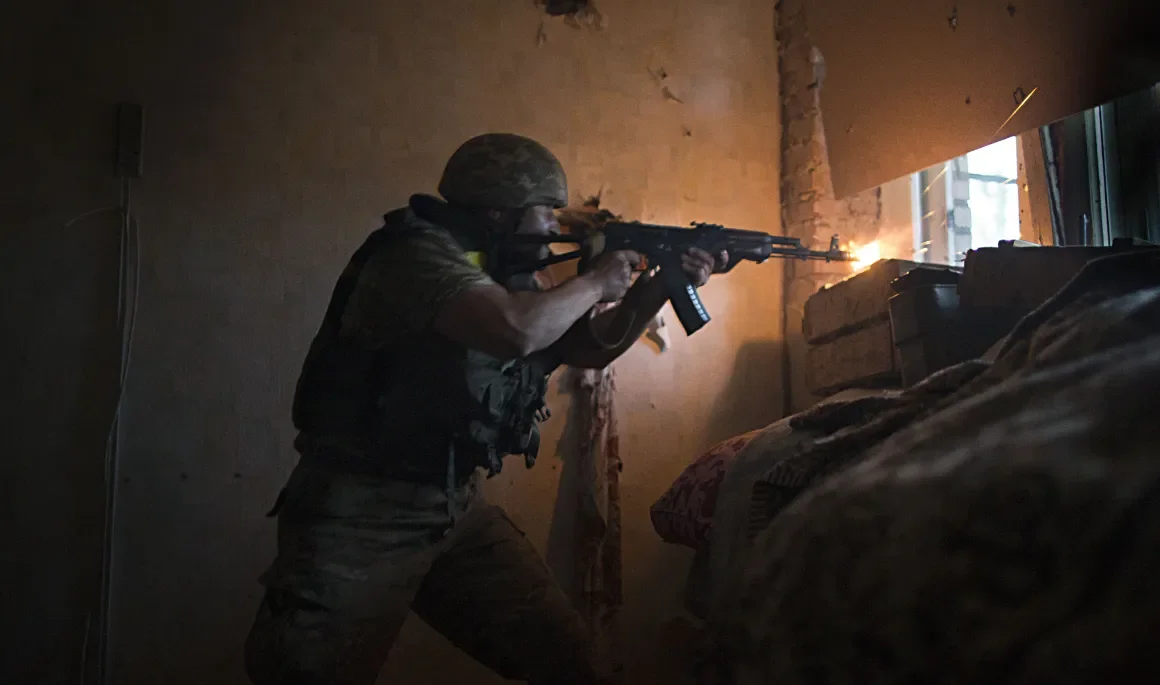
Dmitry Beliakov is a Russian photojournalist born in 1970 in the Vologda region of northwestern Russia. Over the course of his career, he has covered seven armed conflicts, including the Chechen wars, the war in Syria, and the war in eastern Ukraine. His work has received numerous international awards, including the Overseas Press Club of America Award. His photography has appeared in major international publications such as The Sunday Times Magazine, Paris Match, and The Wall Street Journal, among others. He was featured in the CBS News and Showtime Films documentary Three Days in September (2006), about the Beslan school hostage tragedy.
Beliakov’s work has been exhibited internationally, including in Russia, the United States, Armenia, France, Italy, and the United Arab Emirates. In February 2023, he presented his exhibition On the Margins of Europe: A War Before the War, featuring his work from the Donbas conflict, at the John and Mary Frances Patton Peace and War Center at Norwich University.
After publicly opposing Russia’s 2022 invasion of Ukraine, Beliakov relocated to the United States with his family, with support from the Andrei Sakharov Foundation. He subsequently received a fellowship at Norwich University in Vermont. He currently lives in Vermont, where he teaches conflict reporting, works as a commercial photographer, and continues his documentary practice across New England.