
Personal Growth: Expanding My Intellectual Borders
Cadets take a trip to Italy to attend the International Forum on Peace, Security, and Prosperity, and reflect on the trip and the educational experiences.
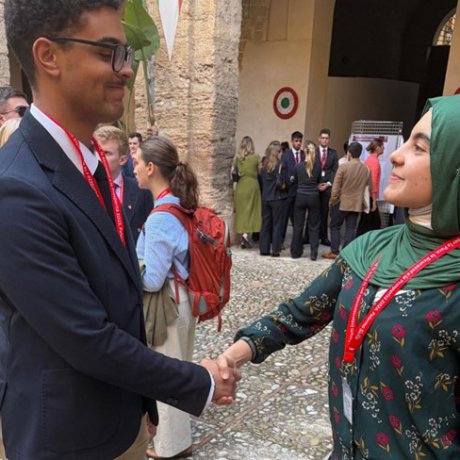
I traveled to Palermo, Italy, as part of a Norwich University delegation attending the International Forum on Peace, Security, and Prosperity (IFPSP). The delegation consisted of six cadets, and for me, this experience was particularly meaningful as it was my first time traveling abroad in an academic setting with peers, aside from a prior military trip to Macedonia. Traveling with Norwich and engaging alongside other students fundamentally changed how I viewed international experiences.
The forum itself was structured as a four-night, three-day conference. The first evening began with a reception, followed by two days of panels, workshops, and collaborative discussions. The primary focus centered on leadership development, particularly resilience and emotional intelligence. One of the most significant takeaways for me was the concept of multi-domain resilience — understanding that resilience is not simply a personal trait, but a
strategic asset that must be developed across psychological, informational, and organizational domains, especially in an era shaped by cognitive and information warfare.
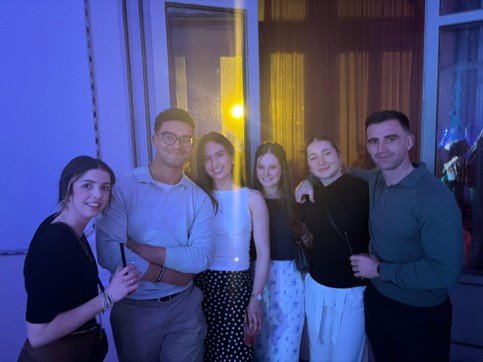
While the conference was formally organized, what stood out most was how informal and relationship-driven the experience became. Rather than focusing heavily on rigid geopolitical debate, the forum emphasized dialogue, connection, and shared understanding among participants from different countries.
This experience will significantly impact my development as a leader by reinforcing the importance of adaptability in communication and engagement, I entered the forum expecting structured, potentially contentious discussions on contemporary geopolitical issues; however, I quickly realized that effective collaboration across cultures requires a different approach.
I observed clear differences in communication styles. I found myself to be more direct and relaxed, while others — particularly participants from Germany and Sweden — demonstrated a more formal and measured approach. Rather than forcing my style, I worked to meet people where they were, adjusting my tone and delivery to better align with their expectations while still maintaining authenticity.
In many of the group discussions, I naturally assumed the role of facilitator. While I was not necessarily the most knowledgeable person in the room, I often had the confidence to initiate dialogue, keep conversations moving, and ensure all voices were included. This experience reinforced an important leadership lesson: effective leadership is not about dominating discussion, but about enabling others to contribute.
Additionally, I became acutely aware that I was not the smartest person in the room — and that was one of the most valuable aspects of the experience. It pushed me to listen more intentionally, prioritize understanding over speaking, and recognize the depth of knowledge others brought to the table.
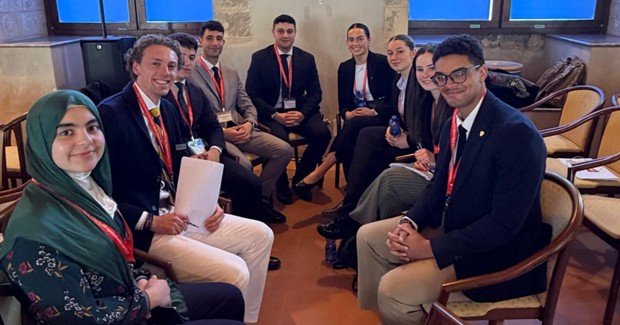
One of the most impactful moments of the trip occurred during a conversation with a member of the British delegation, Rabab, a Cambridge RAF student of Moroccan descent.
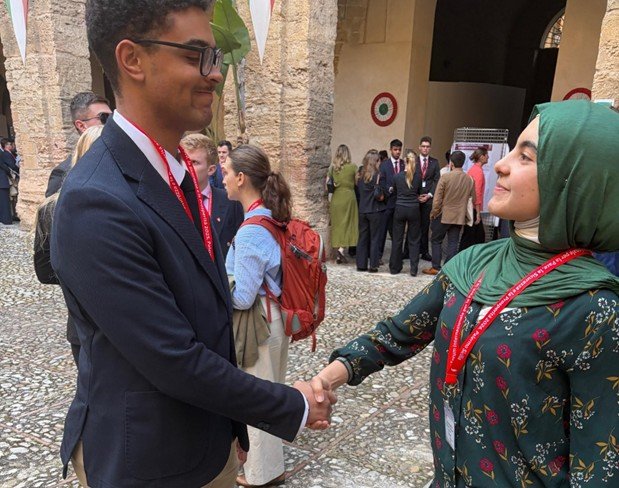
During our conversation, we discussed U.S. foreign policy and the future of NATO. I initially argued in favor of the importance of a rules-based international order, while she countered with the perspective that such an order is already largely illusory.
She articulated her position with a level of clarity and depth that ultimately led me to concede the argument. That moment — captured in the handshake — symbolized mutual respect, intellectual humility, and the value of being challenged.
This interaction reinforced that leadership is not about always being correct, but about being willing to engage, listen, and adapt when presented with stronger perspectives. It also demonstrated that disagreement, when conducted respectfully, can lead to meaningful understanding rather than division.
Beyond the conference, Palermo itself provided a powerful cultural experience.
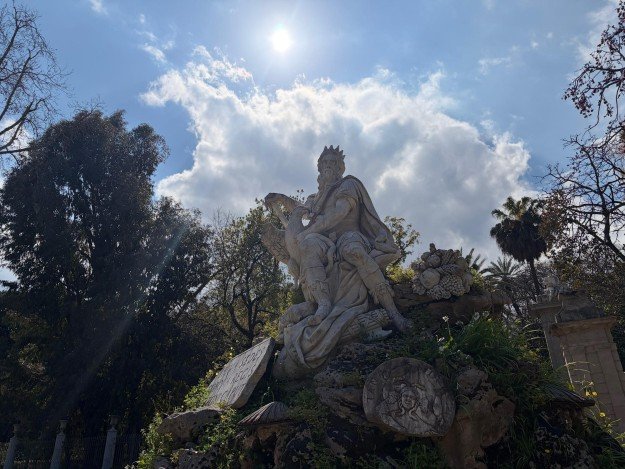
This sense of history was further reinforced through experiences such as visiting the
catacombs, where it became clear that Palermo is not only an old city, but one that has carried significance and continuity across generations.

Seeing the level of detail, investment, and community participation highlighted how deeply these traditions matter to the local population. It reinforced the idea that culture is not abstract--it is lived, visible, and often deeply emotional.
Throughout the trip, I spent a significant amount of time with members of my delegation, particularly close friends from Norwich. These informal moments--whether at dinners or social gatherings--were just as impactful as the formal sessions.These interactions allowed us to reflect on our experiences, share perspectives, and recognize how similar we were to the individuals we met from other countries. Despite different national backgrounds, there was a clear commonality in our interests, values, and motivations.
This realization challenged my preconceived notions about cultural differences. While I initially expected more rigidity or separation, I found that we were far more similar than different — especially as young leaders preparing for similar roles. The Palermo experience fundamentally reshaped my perspective on leadership, communication, and cultural understanding. It reinforced that effective leadership requires empathy, adaptability, and the ability to recognize shared humanity across diverse groups.
If I were to summarize the value of this experience, it would be this: exposure to different perspectives reduces intellectual narrowness and forces growth. It becomes immediately clear how limited a single perspective can be, and how much can be gained by actively listening to others. Moving forward, I will prioritize empathy and intentional listening in my leadership approach. Understanding that there is a commonality in every person — and leveraging that understanding — will allow me to lead more effectively in diverse and complex environments.
Read More
Norwich Design+Build Studio Wins Regional Architecture Award for Montpelier Playscape
By NU Marketing & Communications Office
American Institute of Architects New England honors student-built Little Rapids Playscape with a 2026 Citation Award.
2 min read

Norwich hosts hundreds of Vermont students for 'Day of Cyber'
By MyChamplainValley
This link takes the readers to an external article.
Norwich hosts hundreds of Vermont students for ‘Day of Cyber'
By WFFF Burlington
This link takes the reader to an external article.