
Norwich cadets take top two finishes at Bataan Memorial Death March
Alpha and Bravo teams continue the University's legacy of excellence in grueling New Mexico event.
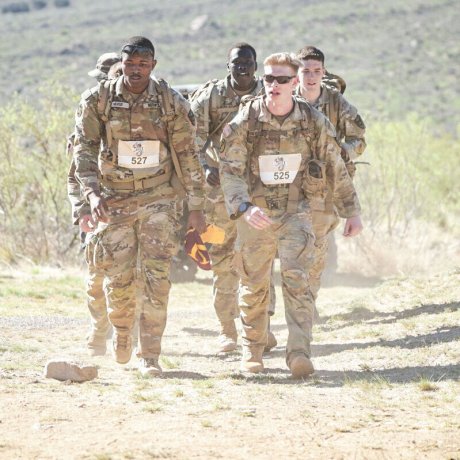
Two teams of Norwich University cadets claimed both first and second place in the ROTC Heavy Division at the 37th Annual Bataan Memorial Death March, continuing a multi-year streak of success in this demanding event.
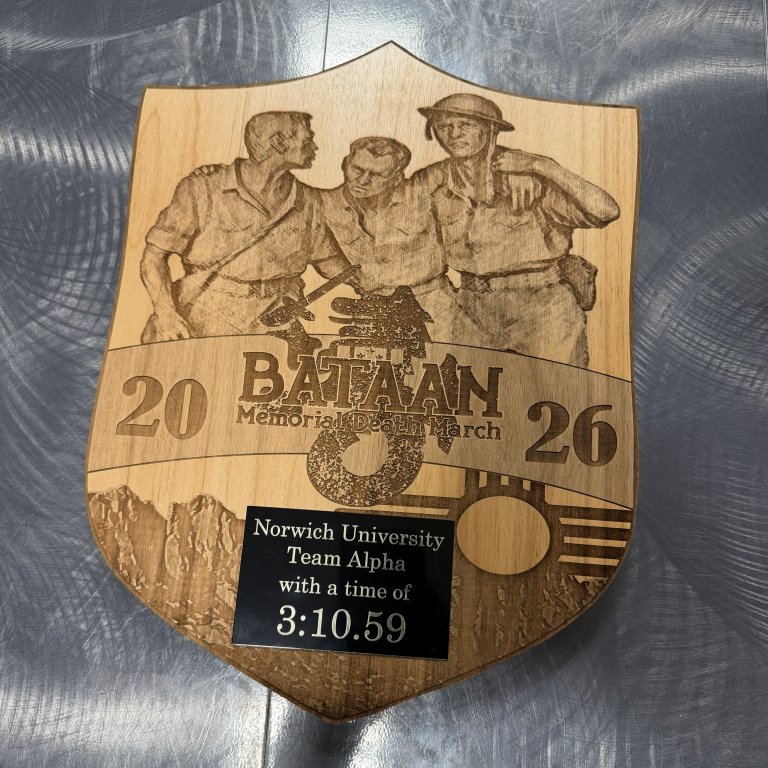
The Norwich University Alpha Team finished first with a time of 3:10.59, while Bravo Team secured second place, marking another dominant performance for the program at the White Sands Missile Range in New Mexico.
The annual march commemorates the sacrifices of both U.S. and Filipino soldiers who endured the Bataan Death March during World War II. In April 1942, approximately 75,000 troops were forced by Japanese forces to march roughly 65 miles under brutal conditions after surrendering in the Philippines. Thousands died from starvation, dehydration, and mistreatment during the march and subsequent imprisonment.
Established in 1989 by Army ROTC at New Mexico State University, the memorial event has grown into an international competition drawing thousands of military and civilian participants alike each year. Competitors choose between a 15.6-mile or 26.4-mile course, with ROTC teams competing in divisions that include the physically demanding heavy category, which requires participants to carry weighted rucksacks.
C/CPT Hunter Dixson '26 led the team as officer in charge (OIC) after participating in last year's as a member of Bravo Team. In this role, he organized tryouts, planned training, and ensured that the logistics surrounding the trip were planned.
"Beyond the organization and planning components of my role, I was also responsible for setting standards and establishing the team culture," said Dixson. "This was something that the team leaders, Kalvin Moise (Alpha Team) and Emmett Morin (Bravo Team), were hugely beneficial in reinforcing. I credit them entirely with this year's adherence to standards, team culture, and ultimately the success of both teams in this year's race."
For Norwich's teams, success in the desert environment comes after months of preparation far from the heat of New Mexico.
"Preparing for an event like the Bataan Death March requires physical training, mental preparation, and logistical planning," said Scott Caulfield, director of strength and conditioning and the team's advisor. "The physical training focuses on endurance, strength, mobility, and recovery."
That preparation includes long-distance rucking, structured recovery, and a focus on injury prevention — all critical for sustaining performance across the course.
"Mental preparation is critically important," he said. "Building resilience helps you push through discomfort, while team cohesion ensures mutual support during the march."
"From the team's perspective, we endure a 17-week training program that requires significant lifestyle alterations," said Dixson. "All members are selected through a 10-mile (35lbs) team tryout ruck where 13 members are selected."
While training was underway, it was not guaranteed that all team members and alternates would be on the team come march day.
"All positions for the next few months are tentative and can change based on performance on 3 key assessments," said Dixson. "These assessments include a 10-mile (45lbs) ruck, an 18-mile run, and 14 miles (35lbs ruck). After the final ruck, teams are permanently selected."
"Throughout this process, from tryouts on, these individuals train at minimum 3 days per week doing long runs, bikes, and strength trainings," said Dixson. "These require hours of dedication weekly and run through Thanksgiving, Winter, and Spring Break. The team made significant sacrifices to meet training goals and standards."
Training in Vermont presents an added challenge, as cadets must prepare for the harsh desert conditions without direct exposure to them.
"Environmental acclimatization, which means training in similar conditions to the event, helps participants adapt to the challenges they will face, and this factor is the most impressive aspect of this team's success over the years," said Caulfield. "The Death March takes place in New Mexico each year with very warm weather, and our team spends their entire time training and preparing indoors and outdoors in Vermont but they're still able to go and have this kind of success."
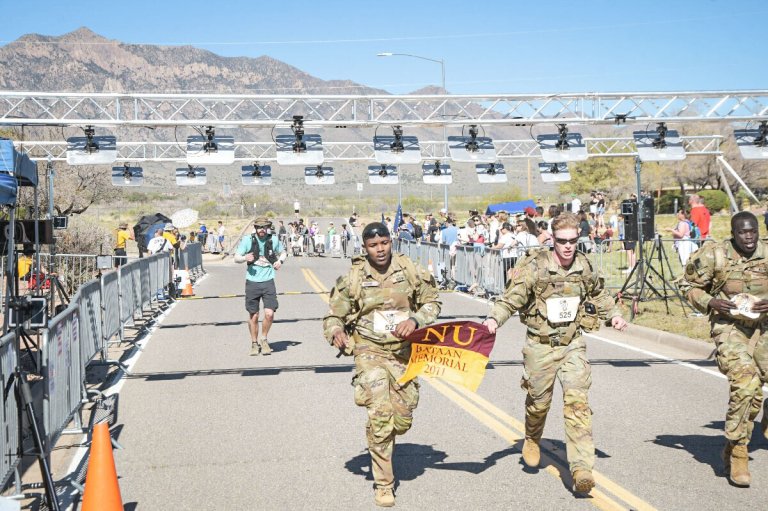
The results reflect not only physical readiness but also a sustained culture of discipline and teamwork within the program.
"The success of this year's teams who swept first and second at the race in the ROTC Team Heavy Division is credited entirely to the efforts of my teammates," said Dixson. "Their professionalism, dedication, and unrelenting grit drove our teams to achieve this result. I have never seen a more professional and lethal team in my entire time at Norwich or beyond. Universally upon sweeping first and second place, the teams felt immense satisfaction and appreciation."
"This team's legacy of success is a testament to the University's commitment to excellence, discipline, and teamwork," said Caulfield. "It reflects the institution's values of teamwork, leadership, and perseverance."
He also added that back-to-back top finishes underscore the dedication of the cadets behind the results.
"This team has lineage reaching back to the year 2011 and has come a long way since then. Each year we genuinely appreciate the support of our Norwich University leaders and alumni," said Dixson. "It is truly incredible to be able to secure the title of the fastest ROTC program in the country."
"Serving as the advisor for the team, it's incredibly rewarding to see our cadets planning and execution result in top finishes over the past three years," said Caulfield. "It validates our cadet's countless hours of planning, training, and dedication that went into preparation."
Beyond the competition, the march carries a deeper meaning for participants.
"I feel that everyone should know that the Bataan Death March is more than just a physical challenge, it's a tribute to the soldiers who endured unimaginable hardships during World War II," said Caulfield. "The Norwich team participates not only to compete, but to honor the legacy of those who came before them."
“For the last three years our teams have won this event, and I proudly display their plaques in the Commandant’s Conference Room for all to see. This level of excellence indicates the winning culture and high training standards this group of cadets has built and maintained. The months of training that it takes to compete at their level is impressive and shows what can be accomplished when a few dedicated cadets put their bodies and minds into a task. The fact that they choose to compete in this event that memorializes the sacrifice of our U.S. service members during the Bataan Death March also shows they know and honor history. They are faithful to the past, and I’m extremely proud of them.” — BG Bill McCollough '91, VSM, Commandant of Cadets and Vice President of Student Affairs.
"At the end of the day, this race is never about us. We race each year to commemorate those who endured Bataan and those who lost their lives serving selflessly," said Dixson. "We also race for our University and its students to make known the unique nature and abilities of a Norwich cadet."
While the march always carries meaning for Norwich cadets, the 2026 march was heavier than usual.
"This year we carried with us the loss of one of our own. CDT A. Jaspe unfortunately passed away a few days before our departure for the Death March," he said. "In her memory, both teams unanimously decided to wear her unit patch during the race to commemorate someone who fearlessly led their life and embodied the Norwich spirit — this race was for her."
The performances of Alpha and Bravo teams' performance reinforces Norwich University's continued prominence in the event, demonstrating both competitive excellence and a commitment to honoring the history and lives behind the memorial march.
Alpha Team
- Kalvin Moise (Team Leader)
- Andrew Clark
- Hunter Dixson (OIC)
- Gai Gai
- Adam Munn
Bravo Team
- Emmett Morin (Team Leader)
- Ryan Dugan
- Noah St. Germaine
- Tejuan Hammons
- Luis Perez
Read More
Victory on The Hill
By Zack Bennett
Six Norwich cadets, five opposing teams, and a weekend of punishing competition — when the final event of the Patriot Games “King of The Hill” finished, Norwich University stood atop the field.
10 min read
More Than a Campus Visit: Inside the Leadership Challenge Event
By Corrina Snow
Potential Rooks converge on the Northfield campus to get a taste of Norwich life.
7 min read

Norwich hosts AWS Generative AI Challenge for senior military colleges
By NU Marketing & Communications Office
Student teams from five institutions tackle a connected-vehicle cybersecurity case in annual competition.
3 min read