- Norwich Blogs
- Blogs
- After the Parade, the Offensive: How Does Russia Follow Its Victory Day Parade When Victory is Far from Assured?
After the Parade, the Offensive: How Does Russia Follow Its Victory Day Parade When Victory is Far from Assured?
By Dr. James M. Deitch
The article argues that Russia’s Victory Day parade is being used to signal a renewed summer offensive against Ukraine, with Volodymyr Zelensky warning that without faster Western military aid—especially air-defense systems—Russia could gain momentum both on the battlefield and across Europe’s security landscape. It contends that a stronger Russian position in Ukraine would increase pressure on the Baltic states, Moldova, and Finland through military threats, hybrid warfare, and political destabilization. The author concludes that NATO and its allies must rapidly expand military production, reinforce eastern Europe, and strengthen support for Ukraine and Moldova to prevent a broader regional conflict.
Disclaimer: These opinion pieces represent the authors’ personal views and do not necessarily reflect the official policies or positions of Norwich University or PAWC.
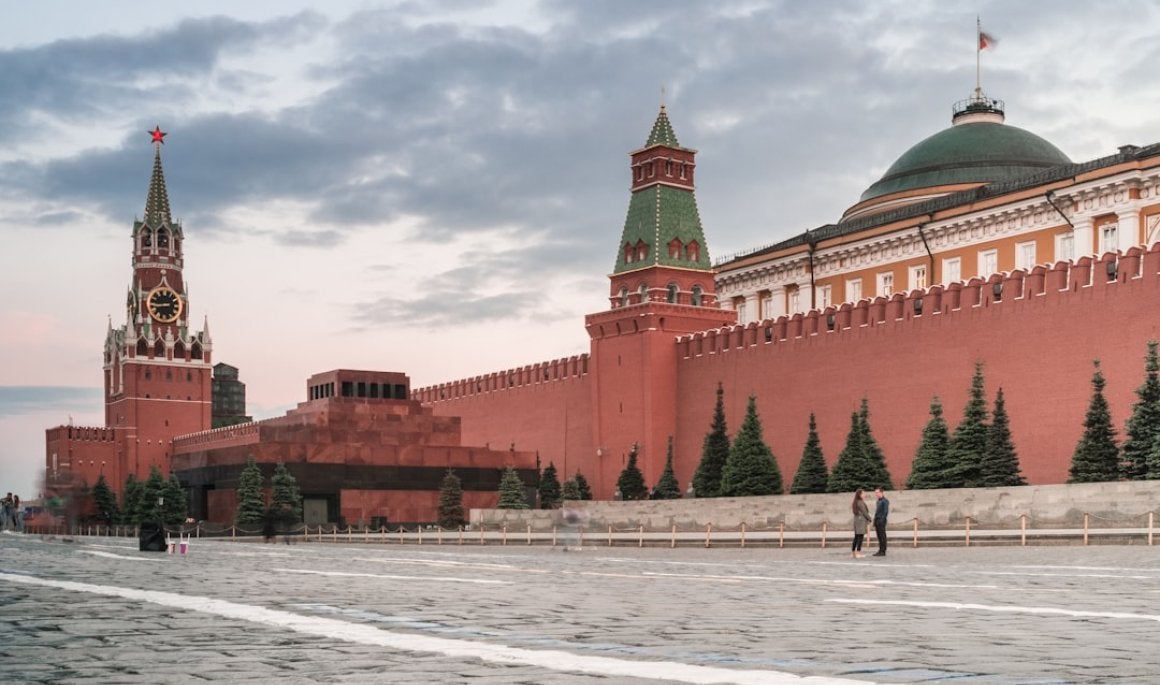
Russia’s Victory Day parade is designed to freeze time. Tanks roll across Red Square as if the past three years of war had been a pageant rather than a catastrophe. But this year’s choreography is not an end in itself. It is a curtain-raiser. The Kremlin is preparing to follow the symbolism of May 9 with the substance of a new summer offensive against Ukraine. The window to blunt that offensive—before it spills over into the Baltics, Moldova, or even Finland—is closing fast.
Kyiv understands this better than anyone. President Volodymyr Zelensky has warned European leaders and NATO that Russia is preparing a large-scale push in the coming months, despite heavy losses and a failure to secure decisive gains over the winter and early spring.[1] He has paired that warning with a blunt demand: accelerate deliveries of air-defense systems, especially Patriot batteries and interceptor missiles, or accept that Russia will be allowed to reshape the battlefield and the regional security order at missile range.[2]
The danger is not abstract. Ukraine’s proposal for a ceasefire during Russia’s war-commemoration period—beginning May 6 and extending through Victory Day—was met not with reciprocity but with more missile and drone strikes on Ukrainian cities.[3] Zelensky called Moscow’s insistence on parades while it continued to kill civilians a “strange and inappropriate” logic, a phrase that understates the cynicism of a regime that treats its own commemorations as cover for continued aggression.[4] The message from the Kremlin was unmistakable: there will be no pause, no humanitarian breathing space, and no respect for the symbolism of peace. There will be only the next phase of war.
For Ukraine, that next phase is likely to be a grinding summer campaign followed by another brutal winter of strikes on energy infrastructure. For Europe, it is something more dangerous still: the moment when the war ceases to be “over there” and becomes a live, proximate threat to NATO’s northeastern flank, to Moldova’s fragile sovereignty, and to Finland’s newly formalized role as the Alliance’s front‑line state.
Zelensky’s summer warning and the winter that follows
Zelensky’s recent appeals to Western leaders have been unusually explicit about timing. In conversations with European heads of government and NATO Secretary General Mark Rutte, he has warned that Russia is preparing a new offensive this summer, even as its forces admit in internal documents that they have failed to meet the objectives set by political leadership.[5] Russian units have bled for marginal gains around Avdiivka and elsewhere; the cost has been measured in thousands of casualties for a few ruined villages. Yet Moscow is still planning further offensive operations, betting that Western fatigue and distraction—especially the diversion of attention and munitions to the Middle East—will give it an opening.[6]
At the same time, Zelensky has pressed for a surge in air-defense systems to protect Ukraine’s energy grid ahead of another winter of intensive bombardment. The pattern is now familiar. When maneuvering on the front lines stalls, Russia turns to the systematic destruction of power plants, substations, and heating infrastructure, seeking to freeze Ukrainian cities into submission.[7] The Kremlin’s planners understand that winter has become a second front, where missiles and drones, not tanks, are the decisive weapons.
This is why Kyiv’s call for Patriot systems is not a luxury but a strategic necessity. Patriots are among the few widely produced systems capable of intercepting Russian ballistic missiles, including those targeting critical infrastructure.[8] Without them, Ukraine faces a double bind: a summer offensive that strains its ground forces and a winter campaign that targets its civilian resilience. With them, Ukraine can blunt both threats, preserving combat power at the front while keeping the lights on in Kyiv, Kharkiv, and Odesa.
The West’s response so far has been halting. Headlines about Ukraine pressing allies to speed up weapons deliveries ahead of the expected summer offensive capture the urgency but not yet the scale of what is required. The delay in providing long-range fires, air defense, and ammunition has already forced Ukraine into a defensive crouch in some sectors. If that delay continues into the summer, Russia will be able to dictate the tempo of operations, choosing when and where to escalate.
This is not just a Ukrainian problem. It is the precondition for a broader regional crisis.
The Baltic front that does not yet exist
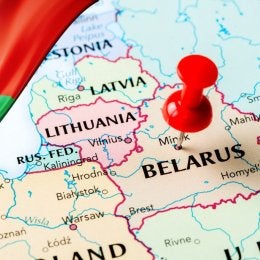
The Baltic states—Estonia, Latvia, and Lithuania—have spent the past four years living with the knowledge that Ukraine’s war is also a warning to them. They have been among Kyiv’s most committed supporters, providing aid well beyond what their size and GDP would suggest and pushing NATO to harden its eastern flank. Their leaders do not need to be convinced that a successful Russian offensive in Ukraine would embolden Moscow to test the Alliance elsewhere.
In recent months, that risk has shifted from theory to an explicit threat. Russian officials have warned that Baltic states that “aid Ukraine” could face consequences, including attacks on their territory.[9] These threats have been paired with a disinformation campaign accusing the Baltics of allowing their airspace to be used for Ukrainian drone strikes on Russian oil infrastructure in the Baltic Sea. Estonia, Latvia, and Lithuania have denied these claims, noting that any airspace incursions have been accidental and often the result of Russian air-defense activity.[10]
The context matters. Ukraine has intensified drone attacks on Russian oil terminals at Ust-Luga and Primorsk to degrade the export infrastructure that funds Moscow’s war. Those strikes have already reduced shipments from Baltic ports and caused visible damage to key facilities.¹¹ Russia has responded not only with air defense measures but also with information operations designed to portray the Baltics as co-belligerents, thereby justifying future “retaliation.”
At the same time, Baltic leaders have been asking NATO for more permanent forces, more air-defense assets, and more robust contingency planning. Reports of drones striking oil tanks in Latvia and of Russian threats to attack Baltic states that facilitate Ukrainian operations have sharpened those demands. The Foreign Policy Research Institute has chronicled how four years of war have deepened Baltic solidarity with Ukraine while heightening their sense of vulnerability. They know that if Ukraine is forced into a bad peace or a frozen conflict on Russian terms, the Kremlin will not view that outcome as a limit but as an invitation.
The summer offensive, then, is not just about the Donbas or the Zaporizhzhia front. It is about whether Russia can create facts on the ground in Ukraine to later intimidate NATO’s smallest and most exposed members. A Russia that emerges from the summer with momentum will be more willing to probe Baltic airspace, stage “accidents” near critical infrastructure, and test the credibility of Article 5 through hybrid attacks that fall just below the threshold of open war.
Moldova: the soft underbelly
If the Baltics are NATO’s exposed flank, Moldova is Ukraine’s exposed flank. A small, poor, and politically fragile state wedged between Ukraine and Romania, Moldova has faced sustained Russian pressure since the full-scale invasion began. Moscow has used energy blackmail, disinformation, and the unresolved Transnistrian conflict to keep Chişinău off balance. It has also sought to exploit domestic polarization to derail Moldova’s European integration.
A renewed Russian offensive in southern Ukraine—especially one aimed at Mykolaiv, Odesa, or the coastal corridor—would immediately raise the stakes for Moldova. Even if Russian forces cannot realistically reach Transnistria in the near term, the threat of such a move would be enough to destabilize Moldovan politics and to force Chişinău into crisis mode. The Kremlin does not need to occupy Moldova to weaponize it; it only needs to keep it weak, divided, and fearful.
The coming summer offensive could serve as a pretext. If Russia claims new gains along the Black Sea littoral, it can revive its narrative of a “land bridge” to Transnistria and use it to justify increased covert activity inside Moldova. That might take the form of orchestrated protests, cyberattacks, or manufactured border incidents. It might also involve renewed efforts to interfere in Moldovan elections, portraying pro-European parties as warmongers dragging the country into conflict.
For the West, the lesson is straightforward. Supporting Ukraine’s defense in the south also helps defend Moldova’s sovereignty. Providing Chişinău with energy support, economic assistance, and help countering disinformation is not charity; it is a relatively low-cost investment in preventing the war from opening a new front.
Finland and the long border
Finland’s accession to NATO was among the most significant strategic consequences of Russia’s invasion of Ukraine. It transformed a 1,300-kilometer border from a bilateral Finnish-Russian concern into a NATO-Russian frontier. For Moscow, this was a self-inflicted wound. For the Alliance, it was a major gain in depth, geography, and capability.
But Finland’s new status also makes it a target. Russian officials have already signaled that they view NATO’s presence on the Finnish border as a provocation and have hinted at “military-technical” responses. These could include increased troop deployments near the border, more aggressive air and naval activity in the Baltic Sea, and intensified hybrid operations—cyberattacks, GPS jamming, and orchestrated migration flows—aimed at testing Helsinki’s resilience.
The connection to Ukraine’s summer offensive is indirect yet real. A Russia that believes it is winning in Ukraine will be more confident in escalating pressure on Finland, calculating that NATO will be reluctant to respond forcefully while it is still struggling to keep Ukraine in the fight. Conversely, a Russia that is checked or bloodied in Ukraine will have fewer resources and less political capital to devote to adventurism along the Finnish frontier.
Finland, for its part, has moved quickly to integrate into NATO planning and to strengthen its defenses. It has increased defense spending, deepened cooperation with Sweden and the Baltic states, and signaled that it will not be intimidated by Russian rhetoric. Yet even Finland’s formidable resilience has limits. If the war in Ukraine drags on under conditions favorable to Moscow, the cumulative pressure on Helsinki—and on the broader Nordic-Baltic region—will grow.
Diplomacy in the shadow of escalation
Against this backdrop, Ukraine’s diplomatic efforts take on added significance. The arrival of Ukraine’s top peace negotiator, Rustem Umerov, in Miami for talks with U.S. envoys signals strategic urgency, not capitulation. Kyiv is seeking to secure long-term security guarantees, defense-industrial cooperation, and financial support at the very moment Russia is preparing to test Western resolve on the battlefield.
These talks are unfolding alongside Ukraine’s push for a global peace summit and its efforts to rally support from countries beyond the traditional Euro-Atlantic community. Kyiv understands that any eventual settlement will be shaped not only by lines on the map but also by the balance of international opinion. It also understands that Russia will use any pause in fighting to rearm, regroup, and prepare for the next round.
That is why Zelensky’s rejection of Russia’s Victory Day ceasefire theatrics matters. When Moscow unilaterally declares a ceasefire for its own commemorations while continuing to strike Ukrainian cities, it is not offering peace; it is staging a performance for domestic and foreign audiences. Zelensky’s description of this as “strange and inappropriate” was diplomatic shorthand for something harsher: a refusal to legitimize a regime that treats ceasefires as propaganda tools rather than as steps toward genuine de-escalation.[11]
The West should take the same view. It should treat Russian talk of “pauses” and “truces” around symbolic dates with deep skepticism and judge Moscow by its actions, not its declarations. The real test of Russian intent will be what happens after the parade, not what is said during it.
What must be done before summer
The hard truth is that time is not neutral. Every week of delay in delivering air defense systems, artillery shells, and long-range fires to Ukraine is a week during which Russia can shape the conditions for its summer offensive. Every equivocation on sanctions enforcement or energy restrictions signals to Moscow that the West is not yet serious about constraining its war-making capacity.
A hard‑edged assessment leads to simple, if politically difficult, conclusions.
First, Ukraine must receive the air defense systems it has requested, in the quantities needed to protect both its cities and its front-line forces. Patriots, IRIS-T, NASAMS, and other systems are not interchangeable; each has a specific role in a layered defense. The West should treat the provision of these systems as a strategic priority, not a bargaining chip.
Second, ammunition and artillery production must be accelerated to a wartime footing. Ukraine cannot hold its lines, let alone regain territory, if it is outgunned three-to-one. European states have begun ramping up production, but the gap between pledges and deliveries remains large. Closing that gap before the summer offensive is essential.
Third, NATO’s eastern flank must be reinforced in ways that are visible to Moscow and reassuring to the Baltics and Finland. That means more forward-deployed units, more integrated air-defense networks, and more frequent exercises focused on rapid reinforcement. It also means clear public messaging that any attack—kinetic or hybrid—on Baltic or Finnish territory will be treated as an attack on the Alliance as a whole.
Fourth, Moldova must be integrated into a more coherent framework of Western support. That includes energy assistance, economic aid, and support to counter Russian disinformation and covert influence. It also includes contingency planning with Romania and other neighbors for scenarios in which Russia seeks to destabilize Moldova under cover of developments in southern Ukraine.
Finally, the United States and its European allies must recognize that the cost of preventing escalation now is far lower than the cost of responding to escalation later. The choice is not between “escalation” and “restraint,” but between shaping the battlefield in 2026 and reacting to a more dangerous one in 2027 or 2028.
The warning from the future
Four years of war in Ukraine have already transformed Europe’s security landscape. They have brought the Baltics and Poland to the center of strategic debate, pushed Finland and Sweden into NATO, and exposed vulnerabilities in Europe’s energy and defense-industrial systems. They have also revealed something about Russia’s political culture: its willingness to absorb losses, to weaponize history, and to treat neighboring states as expendable buffers.
The impending summer offensive, coming on the heels of Russia’s Victory Day parade, is not just another phase in a long war. It is a hinge. If Russia can seize the initiative, wear down Ukrainian forces, and survive another winter of sanctions and attrition, it will emerge more confident in its ability to coerce its neighbors and divide the West. If, instead, Ukraine can blunt the offensive, hold its lines, and protect its cities, the Kremlin will face a different calculus: a war it cannot win quickly, a society that is growing restless, and a NATO that has proven more resilient than expected.
President Zelensky’s warnings are not rhetorical flourishes. They are the distilled judgment of a leader who has watched Russia escalate at every opportunity and understands that the war’s center of gravity is shifting from “whether Ukraine survives” to “what kind of Europe emerges from this conflict.” His insistence on more air defenses, more ammunition, and more clarity from the West is, at root, a call for Europe not to sleepwalk into a wider war.
The Baltics, Moldova, and Finland are not bystanders in this story. They are the next chapters. If the West fails to act before the summer offensive, it may find itself reading those chapters sooner than expected.
The parade will end. The missiles will not. The only real question is whether the democracies that claim to uphold peace and security will act in time to prevent the next phase of this war from engulfing more of the map.
Dr. James M. Deitch was born in Philadelphia and raised in Bucks County, Pennsylvania. He attended high school in Heinavesi, Finland. He spent most of his Marine Corps career as an operations chief, serving deployments in Saudi Arabia, Kuwait, Iraq, and Norway, and aboard the USS Saratoga. Deitch holds a master’s degree in military history from Norwich University and a doctoral degree in intellectual history from Liberty University. He serves as a Senior Fellow at the Patton Center for Peace and War at Norwich University. His published doctoral dissertation focuses on the role of ethnic Germans in early American history. His published works can be found in Total War Magazine, Concealed Carry Magazine, Real Clear Defense, Voices on Peace and War, and the Journal of the American Revolution.
[1] “Zelenskyy warns of Russian summer offensive, urges air defences,” MSN, accessed May 2026.
[2] “Zelenskyy asks partners for air defense to protect energy infrastructure in winter and warns of Russian summer offensive – Bloomberg,” UNN (Kyiv), May 6, 2026.
[3] “Zelenskyy warns of Russian summer offensive, urges air defences,” MSN.
[4] “Zelenskiy says Russian war commemoration ceasefire shows ‘strange and inappropriate’ logic,” Reuters, May 2026.
[5] “Zelenskyy asks partners for air defense to protect energy infrastructure in winter and warns of Russian summer offensive – Bloomberg,” UNN.
[6] Ibid.
[7] Ibid.
[8] “Zelenskyy warns of Russian summer offensive, urges air defences,” MSN.
[9] “EU warns Russia after threats over Baltic airspace dispute,” MSN, accessed May 2026.
[10] Ibid.
[11] “Zelenskiy says Russian war commemoration ceasefire shows ‘strange and inappropriate’ logic,” Reuters, May 2026.