
The Berlin Culture: A Community Health Perspective
Students in the nursing school explore community health while experiencing the healthcare system in Berlin.
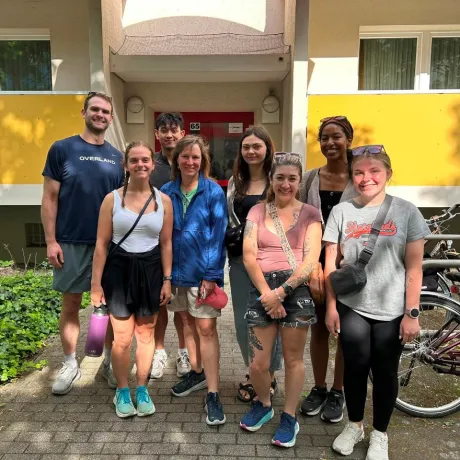
When we got to Berlin, we saw that it is a vibrant, multicultural, and highly connected city. Berlin has lots of accessible transportation, is very walkable, and has great community engagement. During our stay in the Kreuzberg district, we observed a diverse population, active public spaces, extensive transportation options, and many community resources that contribute to residents' quality of life. At the same time, we noticed several challenges, including visible homelessness, litter, smoking, and barriers faced by refugee and migrant populations. These observations provided valuable insight into how social and environmental factors influence health within an urban community.
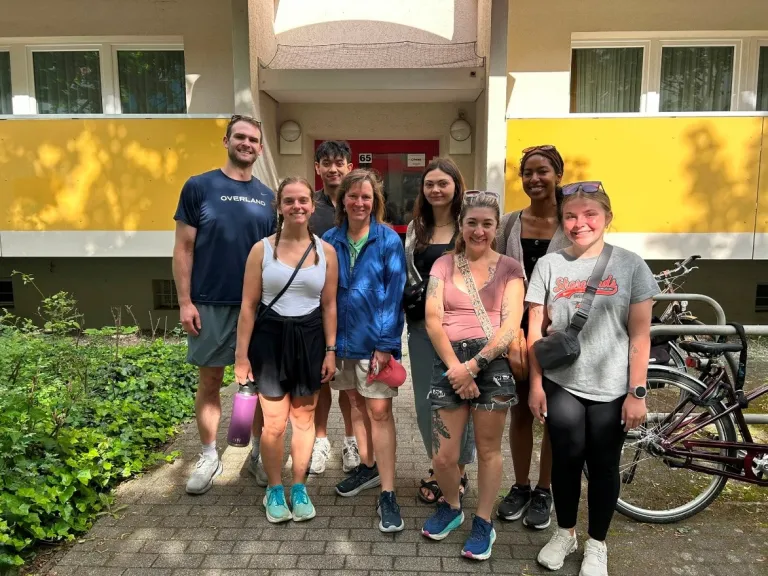
From a safety and wellness standpoint, Berlin generally felt safe and accessible. Streets were well lit at night, public transportation was reliable and easy to navigate, and sidewalks and bicycle lanes encouraged active transportation. Kreuzberg's parks, cafés, community gathering spaces, and recreational areas promoted social interaction and physical activity. Public spaces such as Görlitzer Park offered opportunities for exercise, community events, and cultural expression through art, music, and activism. These all support both physical and mental well being by encouraging residents to remain active and socially connected.
Compared to a typical city in the United States, Berlin appeared to prioritize public transportation and pedestrian mobility to a much greater degree. The city's integrated network of trains, buses, trams, and subways allows residents to travel easily without relying on personal vehicles. Many American cities are heavily car dependent and may lack extensive public transit systems. Berlin's widespread bicycle infrastructure and walkable neighborhoods promote healthier lifestyles through routine physical activity. Another aspect of Berlin that initially stood out that is different than the United States was the prevalence of graffiti throughout the city. In many parts of the United States, graffiti is often associated with crime or neighborhood decline. However, in Berlin, graffiti is accepted as a form of artistic and cultural expression. Murals and street art reflected the neighborhood's identity, diversity, and history. This difference highlights how cultural perspectives shape the interpretation of the physical environment.
Despite many positive observations, many community health concerns were present. Smoking appeared highly normalized, with cigarette use commonly observed in public spaces, restaurants, and outside businesses. Litter and broken glass were also present in many areas in Kreuzberg, despite the availability of public trash and recycling cans. There was visible homelessness and the challenges faced by refugees illustrated ongoing social and economic inequalities. Visits to refugee housing centers showed barriers to healthcare access, mental health services, housing, and social integration. These experiences demonstrated how social determinants of health can significantly affect vulnerable populations, even within a city that offers many public resources.
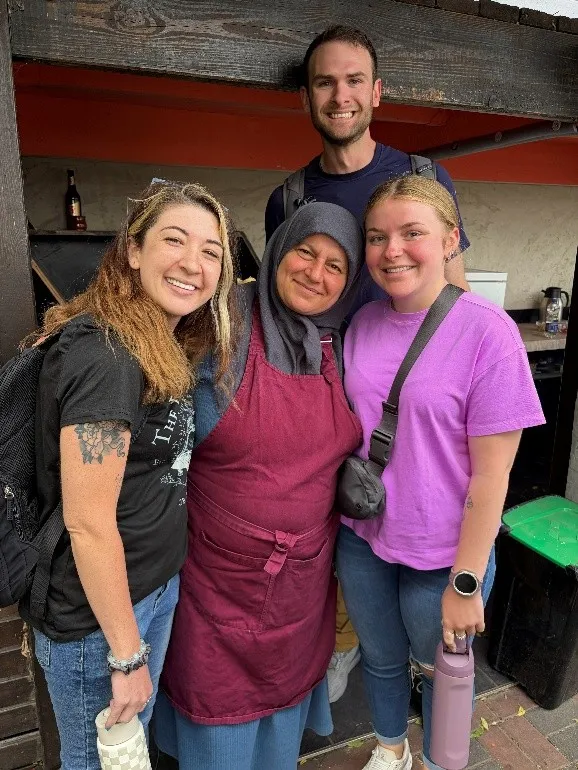
Berlin is an excellent location for the Norwich School of Nursing to experience global health because it provides exposure to a wide range of public health and community health issues. Students can observe how transportation systems, housing, environmental conditions, cultural diversity, and social policies influence health outcomes. Berlin's multicultural population and significant refugee community offer opportunities to learn about health equity, migration, mental health, and access to care. The city also has its own strengths and challenges within an urban healthcare environment, allowing nursing students to see how communities address complex social and health related needs.
Berlin provided a valuable global health learning experience for our class. The city's strong infrastructure, diverse population, and commitment to community engagement create many conditions that support health and well-being. At the same time, ongoing challenges related to smoking, homelessness, and refugee integration highlight the importance of addressing social determinants of health. Observing these factors firsthand enhanced our understanding of community health and reinforced the importance of considering cultural, environmental, and socioeconomic influences when providing nursing care.
Read More
Learning in the Field
By Dr. Michael Gangone
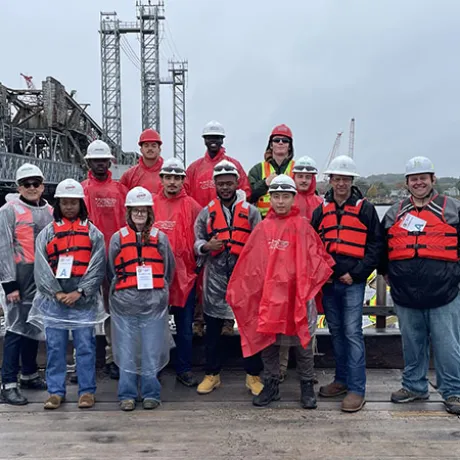
Engineering students take their learning into the field as they visit major infrastructure projects.
2 min read
Architecture in Action: Students Present During Homecoming
By NU Marketing & Communications Office
Architecture students present their work during Homecoming, one of the University's busiest weekends on campus.
2 min read

2026 Military Writers’ Symposium: How Cinema Shapes Our Perception of War
By Zack Bennett
Two days of programming on media and war features student research, expert panels, and a look at Darby’s Rangers.
3 min read