Blogs
Featured commentaries, articles, and photo-journalism from the Norwich University community and fellows.

Featured commentaries, articles, and photo-journalism from the Norwich University community and fellows.

Russia and the Taliban formalized a military-technical cooperation agreement in May 2026, reflecting a broader Russian effort to deepen ties with Afghanistan’s Taliban government through diplomatic recognition and security cooperation rather than a formal military alliance. The agreement focuses on maintaining and repairing Afghanistan’s existing Soviet- and Russian-made military equipment, allowing Moscow to become a key security partner for the Taliban while expanding its influence in Central Asia amid rising tensions with Pakistan. The author argues that the deal is part of a larger geopolitical trend in which Russia and other authoritarian states fill the strategic vacuum left by U.S. disengagement from Afghanistan, highlighting the need for continued American attention and regional engagement despite not recognizing the Taliban regime.
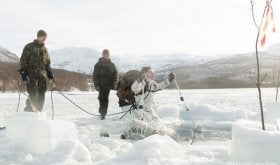
As the Arctic becomes more accessible, U.S. security vulnerabilities grow. Russia and China pursue opportunities along emerging maritime routes, while the U.S. lacks a sufficient presence to deter militarization. This article examines Arctic policy, military activity, and the Unified Command Plan, and calls for a stronger U.S. approach.
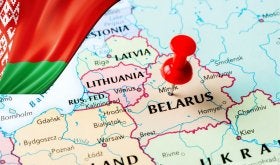
The article argues that Belarus is undergoing a significant strategic shift, reassessing its longstanding alignment and policies in response to changing regional security and geopolitical pressures, particularly those stemming from Russia’s influence and broader European dynamics. It examines how this change could affect Belarus’s future role in Eastern Europe, suggesting that the country may be moving in a direction that could alter regional power relationships and security calculations

This article evaluates the strategic, fiscal, and operational efficacy of the U.S. Army force posture within the European Command (EUCOM) Area of Responsibility (AOR). Specifically, it conducts a comparative analysis between the permanent forward stationing of an Armored Brigade Combat Team (ABCT) and the current rotational model executed under Operation Atlantic Resolve (OAR).
The article highlights Norwich University’s Strategic Studies programs, which combine classical strategic theory with contemporary issues—including information warfare, collective security, economic statecraft, and emerging technologies—to prepare future leaders for evolving global security challenges.

The article argues that geography remains a decisive force in global conflict and strategy, and that Geospatial Intelligence (GEOINT) has become essential for understanding and responding to modern challenges ranging from warfare to climate change and information operations. It highlights Norwich University’s GEOINT program as a continuation of its historic mission, preparing ethically grounded leaders with interdisciplinary skills to maintain national readiness in an increasingly complex, spatially driven world.
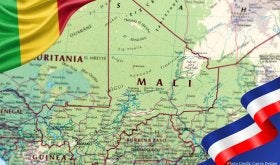
Mali exemplifies how overlapping crises—state fragility, jihadist insurgency, and great-power competition—have created openings for external actors, particularly Russia, whose security support prioritizes regime survival and resource extraction rather than stability or reform. Disillusionment with Western interventions, especially France and the UN, led Mali’s junta to embrace Russia’s “security without conditions” model, which appeals to authoritarian leaders but has worsened violence, exploited gold resources, and deepened instability. Ultimately, Mali’s case highlights a broader shift toward authoritarian peacebuilding in Africa, where sovereignty is used to shield regimes from accountability, raising concerns that future peace operations may prioritize geopolitical influence over civilian protection and sustainable conflict resolution.
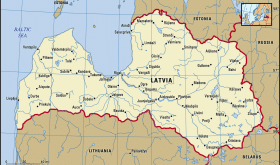
The article argues that Latvia is facing an increasingly dangerous pattern of Russian hybrid provocations, including drone incursions, airspace violations, cyber activities, and disinformation campaigns, that may be laying the groundwork for a potential false-flag incident designed to test NATO cohesion. It highlights how Latvia has responded by strengthening its military capabilities, expanding conscription and territorial defense forces, enhancing counter-drone and civil defense measures, and deepening cooperation with NATO and Nordic allies. The author concludes that while Latvia has taken significant steps to prepare for escalation, NATO must remain vigilant and ready to respond rapidly to ambiguous threats, as future aggression in the Baltics may begin through hybrid tactics rather than conventional military attacks.

The article argues that while violence against Christians in Nigeria is real and severe, framing it solely as religious persecution oversimplifies a complex security crisis involving economic hardship, multiple armed groups, and broader instability. It critiques U.S. policy — especially under President Trump — for focusing too narrowly on protecting Christians, which limits effective solutions. Instead, it advocates a comprehensive approach that includes economic development, support for moderate Muslim voices, governance reforms, and strengthened Nigerian military capacity to address the root causes of violence.
The article argues that hybrid warfare — combining conventional military force with cyber operations, information campaigns, economic pressure, and proxy actors — creates a level of complexity and ambiguity that traditional military education is ill-equipped to address. To prepare officers for this environment, professional military education must prioritize four interconnected capacities: systems thinking, multidomain literacy, epistemic humility, and values-based decision-making, enabling leaders to adapt, learn, and exercise judgment under conditions of uncertainty. Ultimately, the author contends that future military success will depend less on technology or force structure than on developing reflective practitioner-strategists who can think critically, navigate complexity, and uphold ethical standards in rapidly changing conflicts.