Voices on Peace and War
Peace & War Center
John and Mary Frances Patton Peace & War Center—a Norwich University academic center of excellence

John and Mary Frances Patton Peace & War Center—a Norwich University academic center of excellence
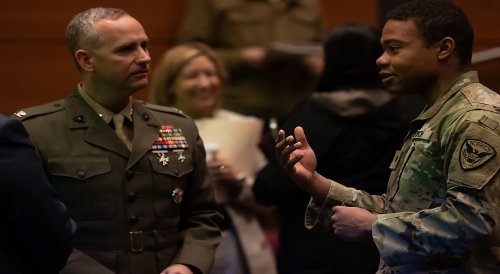
The John and Mary Frances Patton Peace and War Center is a Norwich University academic center of excellence for students, scholars, and practitioners seeking to advance interdisciplinary knowledge on the relationship between peace and warfare at local, national, and global levels.

The 2025 issue focuses on the theme “Latin America in the 21st Century: Retreat or Progress?”
Our geospatial intelligence program is designed to support the early stages of a student’s professional development in GEOINT competencies, recognizing their impact across education, industry, and government. This certificate is an excellent enhancement to any student's academic experience.
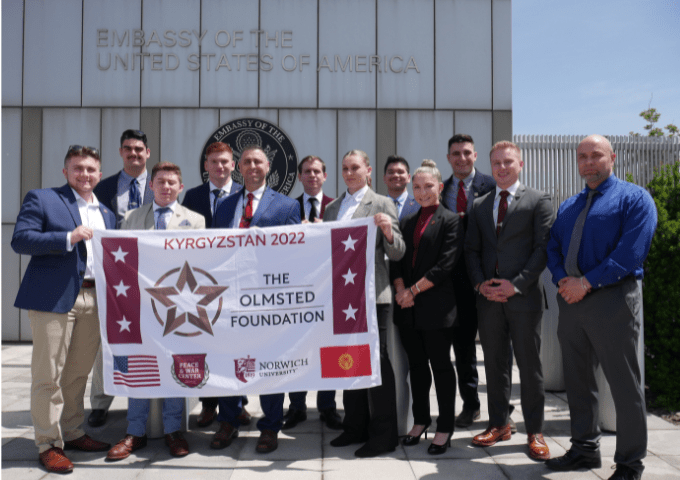
The John and Mary Frances Patton Peace & War Center sponsors and promotes academic enhancement with hands-on learning experiences for students interested in peace and war topics. Students affiliated with the us take on leadership roles in the activities that we promote.
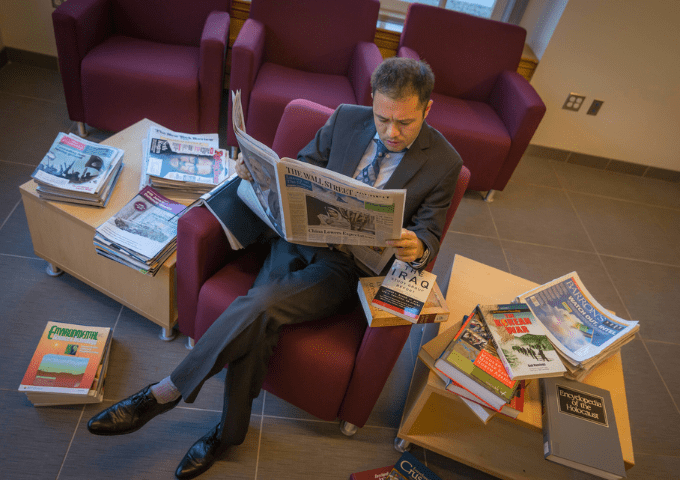
The John and Mary Frances Patton Peace and War Center supports the field of military writing and research in three ways - by producing it, by encouraging it, and by awarding it.
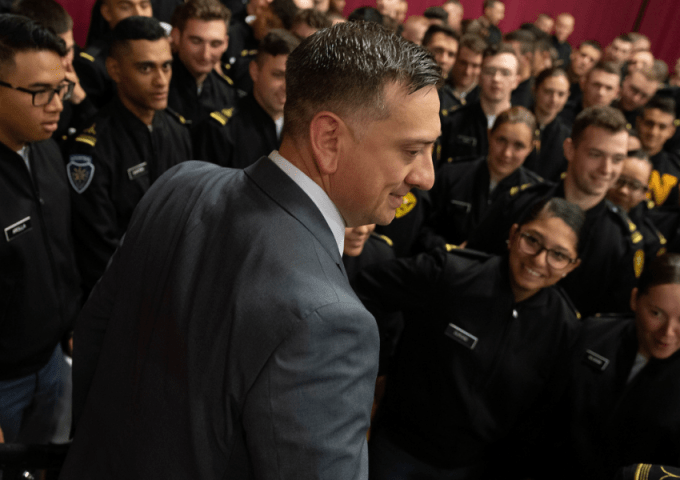
The John and Mary Frances Patton Peace & War Center is home to the annual Norwich University Military Writers’ Symposium which convenes authors and experts in the fields of military history, intelligence, and current affairs to offer important perspectives on pressing global concerns.
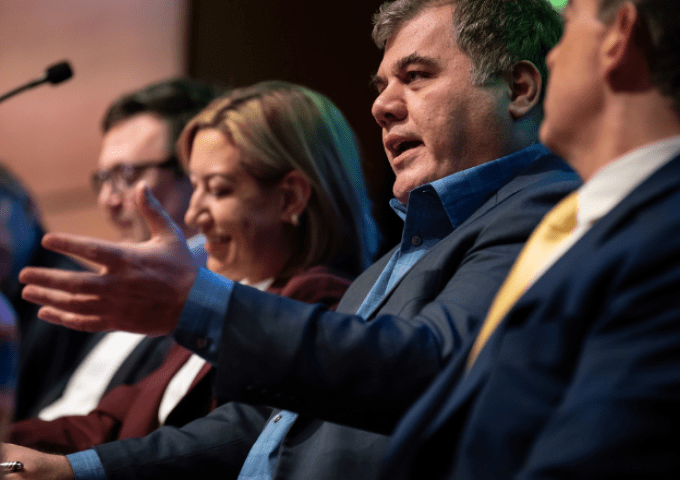
The John and Mary Frances Patton Peace & War Center annually hosts the Peace & War Summit which seeks to address some of today's most challenging topics in foreign policy and international relations by bringing together experts in the field for provocative conversations. The summit is followed by the publication of the Journal of Peace and War Studies.
The John & Mary Frances Patton Peace & War Center publishes a weekly newsletter that features our Voices on Peace & War forum, student experiences, articles and videos by our Senior Research Fellows and a variety of other items focused on the topics of peace and war. Subscribe to receive the newsletter in your email for free.

Russia and the Taliban formalized a military-technical cooperation agreement in May 2026, reflecting a broader Russian effort to deepen ties with Afghanistan’s Taliban government through diplomatic recognition and security cooperation rather than a formal military alliance. The agreement focuses on maintaining and repairing Afghanistan’s existing Soviet- and Russian-made military equipment, allowing Moscow to become a key security partner for the Taliban while expanding its influence in Central Asia amid rising tensions with Pakistan. The author argues that the deal is part of a larger geopolitical trend in which Russia and other authoritarian states fill the strategic vacuum left by U.S. disengagement from Afghanistan, highlighting the need for continued American attention and regional engagement despite not recognizing the Taliban regime.
Ainsworth Hall houses the School of Justice Studies and Sociology, home to the Criminal Justice program, the most popular major at Norwich. Raised in 1910, the building originally served as a United States Weather Bureau.

Jackman Hall houses a number of administrative offices, including the President’s, Development and Alumni Relations, Commandant’s, Dean of Students, Human Resources, Registrar and Bursar. Army and Air Force ROTC offices occupy the lower level.