
Our Indispensable Index
A son's search for his father's past reveals a moving family connection and highlights the Norwich Archives' role in preserving alumni stories.
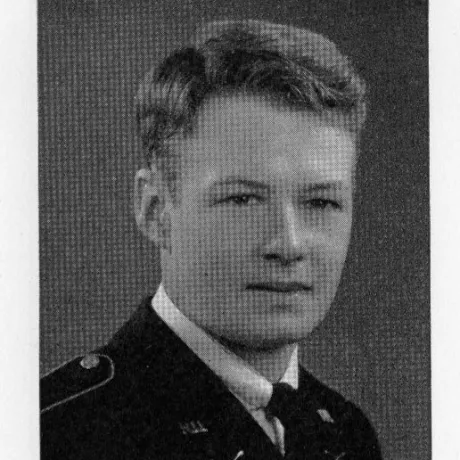
The Norwich Archives is proud to be the repository of the University's history, including its alumni. This responsibility involves housing a diverse range of materials, but one of the most useful resources we preserve is the university's publications, such as the newspapers: the Reveille, Norwich University Record, and the Guidon. These are currently indexed through the early 2000s. The process involves an indexer reviewing an issue of the paper and identifying names, events, and other topics to create a comprehensive list of terms for quick reference, much like a textbook index. This newspaper index [pictured below] is often the fastest, and sometimes the only way to find information on a particular subject.

Of the thousands of students who have studied at NU, we have collections for only a tiny fraction of them, mostly obtained through donations. When we receive a request for information about an alumnus, sometimes we only have a name in a catalog, a photo in the War Whoop, or an obituary that provides a brief summary of an entire life lived.
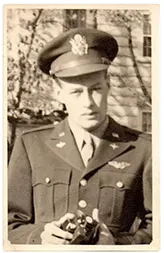
Recently, we received a request from a man named Bruce. He is the youngest in the family, and, due to changes in his family as a child, he explained that he was doing his best to learn what he could about his father, whom he never got to know well. He had not even been aware that his father had been a prisoner of war during WWII until after his father’s passing. Bruce’s father had attended Norwich in the 1940s, and he wanted to know what we could provide.
Like so many others, the Archives had a small biographical file with a few clippings for Bruce’s father, George W. Burke Junior, a photo in the War Whoop, but no collection or personal materials. However, we did have several listings for George in the newspaper index.
Fortunately, George had provided updates on his life to the Norwich University Record. We even had a notice that had been sent in by George’s mother, Bruce’s grandmother, advising that George “was shot down over France June 2, 1944, and he now is a prisoner of the Germans. Although distressing news, George’s classmates would have wanted to know.
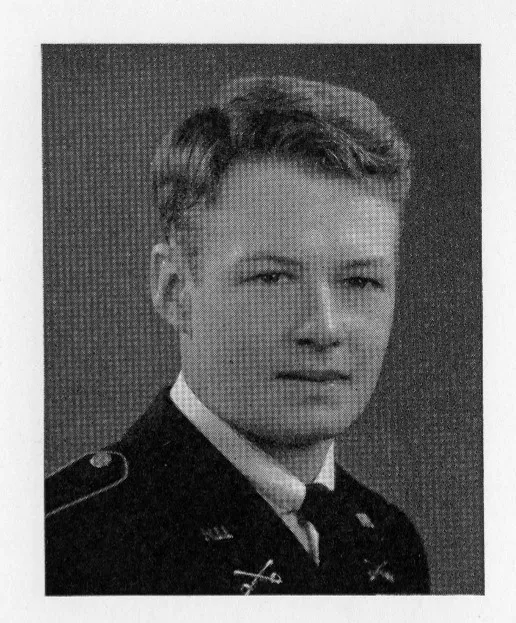
Most of the content that George supplied to the Record was about his service, especially his experience as a POW, but the last update we have, dated in the early 1960s, included a paragraph at the end that was especially meaningful to Bruce’s search: "Our family numbers seven, including the two of us. Three girls arrived first and finally number four was a boy, and my joy became complete when number five, also a boy, came along just four months ago."
Bruce was that four-month-old who completed his father’s joy.
I was deeply touched by Bruce’s efforts to learn more about his father after his passing, whom he describes as “a great man who dedicated his life to serving our country and raising a family.” While we are not always able to find meaningful content to share with family members and others about an alumnus, I did want to highlight what a wonderful resource the newspaper index is, and this reference request was a perfect example. I asked Bruce’s permission to share this story, and Bruce not only agreed, but offered additional information that he had uncovered, including that George was “marched from Stalag 3 to another prisoner camp because the Soviets were moving closer to Stalag 3 and they were marched through a blizzard in the middle of winter to the next camp.”
All the additional information Bruce has supplied will be added to George’s biographical file in the Archives for future researchers, family, and beyond. George wrote one final paragraph in his last letter to the Record. It speaks to the feelings of many of our alumni, as well as a sentiment of the Archives:
"In closing, I wish to repeat that I would like to renew old friendships; so, boys, please drop me a line and let me know about yourselves. You will find a most willing correspondent."
Read More
Two Norwich Generals, One Enduring Commitment to Service
By NU Alumni Relations
Two Norwich alumni mark a transition in leadership at the Armed Forces Retirement Home, continuing their shared legacy of service to veterans and the nation.
3 min read
Honoring All Who Served: Veterans Day Observance
By Dartmouth University
This link takes the reader to an external article.

The Chairman's Remarks: Charles A. Dana
By Al Gobeille '86
The chairman of the Board of Trustees shares his remarks during an event honoring the Charles A. Dana Grant and Charles A. Dana Research and Curriculum Development Fellowship recipients.
4 min read