
The CSI Experience
The CSI Experience allows Norwich University students to participate in a competitive educational experience under the supervision of both faculty and real-world experts.
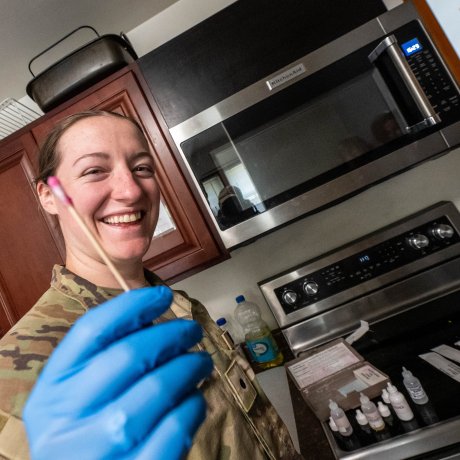
Now in its sixth year, the CSI Experience, hosted by Norwich University’s School of Criminology and Criminal Justice (SCCJ), centers on a comprehensive crime scenario that unfolds across campus. Within this framework, faculty from multiple disciplines design immersive “puzzle rooms” that require students to think critically, analyze evidence, and apply knowledge from their respective fields. The result is a dynamic, hands-on learning environment where theory is put into practice, challenging students to navigate ambiguity and develop the problem-solving skills essential to real-world investigations.
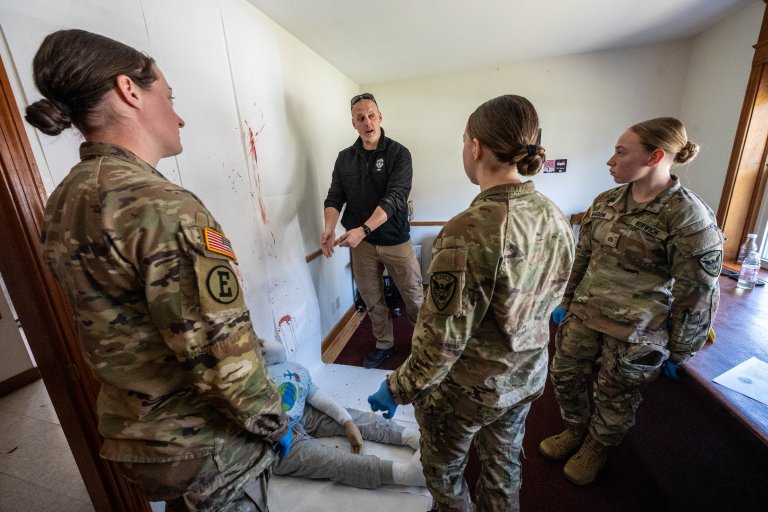
SCCJ faculty begin by developing an overarching crime scenario grounded in a realistic setting, detailed offender profiles, and a carefully constructed sequence of events that reflect multiple criminological theories and contemporary criminal behavior. Each scenario is designed to incorporate varying levels of investigation, from initial response and crime scene processing to follow-up detective work, intelligence gathering, forensic analysis, and interagency collaboration. To further enhance the investigative experience, scenarios often include both physical and digital evidence, such as forensic findings, surveillance footage, documents, and electronic communications, requiring students to critically analyze, interpret, and connect information throughout the investigative process.
Students compete in interdisciplinary teams led by alumni mentors, strengthening Norwich’s tradition of practitioner-scholars and fostering meaningful professional connections. This team-based structure reflects the collaborative nature of real-world investigations, where investigators, analysts, and subject-matter specialists must work together to manage complex cases effectively. Throughout the experience, students develop and apply critical professional skills such as crime scene management, communication, teamwork, and decision-making under pressure; competencies that are essential for success in criminal justice and related professions. Reflecting on her experience, student participant and CSI winner Kiley noted, “Thank you for the opportunity to participate in the CSI experience. I love how we were able to see and put a face to the things that we have learned in our CJ classes throughout the years and put them into action.”
Utilizing a multidisciplinary academic approach, students gain an understanding of how diverse fields such as nursing, chemistry, biology, languages, and mathematics, each contribute to crime scene investigations. This approach encourages students to recognize the value of collaboration and to appreciate how professionals with specialized academic backgrounds and technical expertise play a critical role in conducting thorough and effective investigations.
The CSI Experience is built on sustained collaboration with a range of external agencies that have, over the years, served as the primary responding entities within the scenarios. Past partners have included the Vermont State Police, the Bureau of Alcohol, Tobacco, Firearms and Explosives (ATF), the Vermont Intelligence Center, the Biddeford, Maine Police Department, and Vermont Fish & Wildlife. Their involvement ensures operational realism, reinforces the factual integrity of each scenario, and brings specialized expertise and professional credibility to the learning environment.
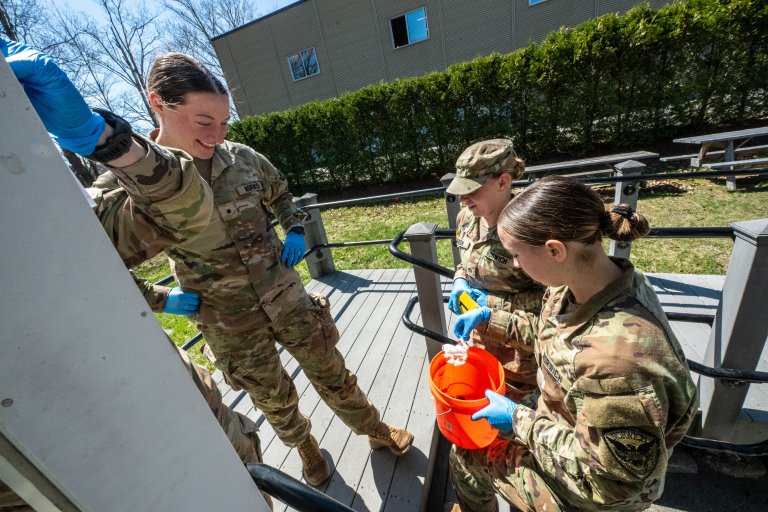
This year’s experience further strengthened that foundation through the support of the Concord, New Hampshire Police Department, including Norwich alumnus and chair of the SCCJ advisory board, Sgt. Dana Dexter '03, as well as the Vermont National Guard’s 15th Civil Support Team. Their participation expanded both the scope and authenticity of the exercise, particularly within the bioterrorism scenario, and enhanced the depth of interagency coordination central to the learning objectives. Reflecting on the program’s impact, Sgt. Dexter notes: “By bringing together students, faculty, alumni, and professional partners, we create a collaborative environment that reflects the realities of modern investigations while also serving as a meaningful networking opportunity across the Norwich community.”
Based on the continued success of the CSI Experience, SCCJ is excited to start developing a dedicated simulation space for advanced experiential criminal forensic education. This initiative aligns with the current national trend of universities incorporating dedicated campus space for curriculum-based criminal forensic investigations as well as evidence collection and crime-scene reconstruction.
The CSI Experience is made possible in part through the generous support of alumni, including this year’s $1,000 cash prize awarded to the winning student team. In addition, the winning team received a specialized training workshop led by Vermont State Police detectives and evidence technicians, providing hands-on exposure to advanced crime scene investigation techniques. This partnership with alumni and VSP highlights SCCJ’s commitment to experiential learning and sustained professional engagement, ensuring students develop practical skills and gain direct insight into methods routinely used by practitioners in the field.
Retired Vermont State Police detective Sgt. Aimee Nolan, an adjunct faculty in SCCJ who regularly teaches courses in criminal forensics, crime scene and death work investigations, states: “having been a crime scene investigator for 17 years, I love sharing my experience with students”. She also notes, “So many people enjoy watching CSI-type shows on television, so giving students the chance to actually practice the skills and learn how these things work in the 'real-world' from a practitioner's perspective is of great value to the students. Teaching at Norwich is something I am not only proud of, but the quality of students in the criminology and criminal justice programs fuels my passion to continue sharing my knowledge and experience. With Norwich joining an elite group of universities and colleges that offer a dedicated space to practice skills will most definitely boost their experience and make scenarios more realistic and exciting.”
By integrating criminological theory, alumni mentorship, multidisciplinary collaboration, investigative complexity, and evidence analysis, the annual SCCJ CSI Experience provides students with a highly realistic and immersive experiential learning opportunity that strengthens critical thinking, problem-solving, and the practical application of criminal justice principles. The addition of a dedicated “crime scene house” further enhances the program by creating a dynamic, hands-on environment where students can deepen their academic knowledge, refine investigative techniques, and engage in interdisciplinary approaches essential to effective crime scene investigation and analysis. Alongside the Boston Simulation Experience and the Washington, D.C. Experience, the annual CSI event reflects SCCJ’s broader commitment to experiential learning by preparing students for careers in criminology and criminal justice through immersive, practice-based learning that extends well beyond the traditional classroom.
Read More
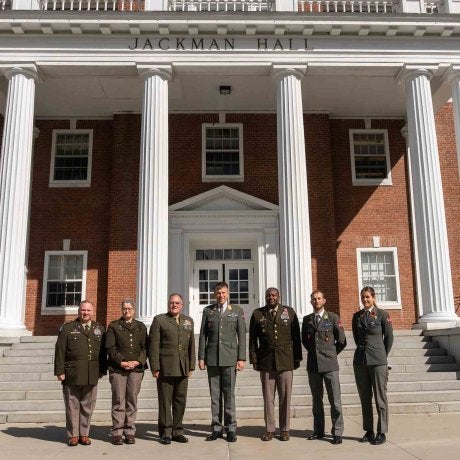
Delegation from Austria’s Theresian Military Academy visits Norwich
By NU Marketing & Communications Office
Visitors from Austria’s military academy meets with University leaders, the Vermont adjutant general, and Austrian exchange cadets on the Northfield campus.
4 min read

Norwich Design+Build Studio Wins Regional Architecture Award for Montpelier Playscape
By NU Marketing & Communications Office
American Institute of Architects New England honors student-built Little Rapids Playscape with a 2026 Citation Award.
2 min read
Norwich hosts hundreds of Vermont students for 'Day of Cyber'
By MyChamplainValley
This link takes the readers to an external article.