
COL William Lyons, USA (Ret.), envisions future NATO leadership development at MILCON'26
The leader of the College of Graduate and Continuing Studies takes the international stage.
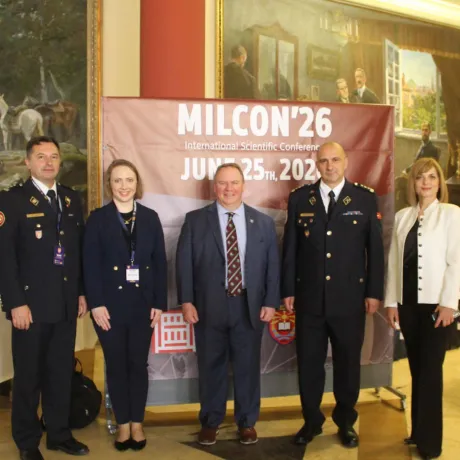
COL William F. Lyons Jr., USA (Ret.), vice president for distance education at Norwich University, presented his latest research at the MILCON'26 International Scientific Conference in Skopje, North Macedonia, joining military professionals, scholars, and policymakers from across the Euro-Atlantic community to examine the future of defense and security in a rapidly changing strategic environment.
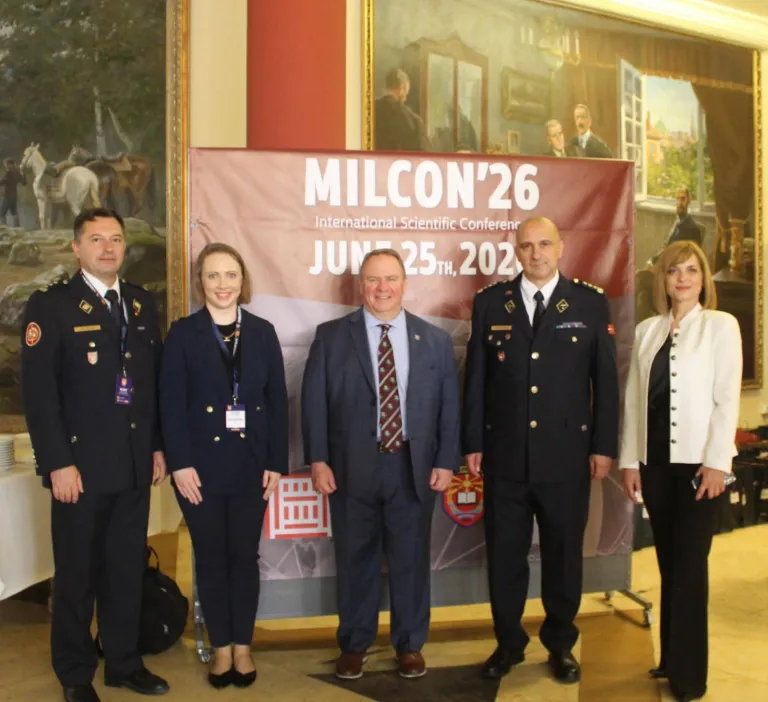
Hosted by the Military Academy "General Mihailo Apostolski" and supported by the Ministry of Defence and Armed Forces of the Republic of North Macedonia, the conference centered on adapting defense institutions to emerging challenges including cyber warfare, hybrid threats, critical infrastructure resilience, and next-generation military education.
Lyons delivered a presentation titled "Preparing Future NATO Military Leaders for Hybrid Warfare: Professional Military Education Requirements in the Twenty-First Century," arguing that officer development must evolve alongside the changing character of conflict. His research contends that the traditional industrial-era model of military education is increasingly mismatched with a battlespace shaped by ambiguity, information competition, cyber operations, and nontraditional forms of coercion.
Drawing on scholarship from NATO, the European Union, and the European Centre of Excellence for Countering Hybrid Threats in Helsinki, Lyons identified four essential capacities for future leaders: understanding complexity, practicing epistemic humility, making principled decisions under uncertainty, and building adaptive resilience. Together, he argues, these attributes form the foundation of effective leadership in hybrid conflict environments.
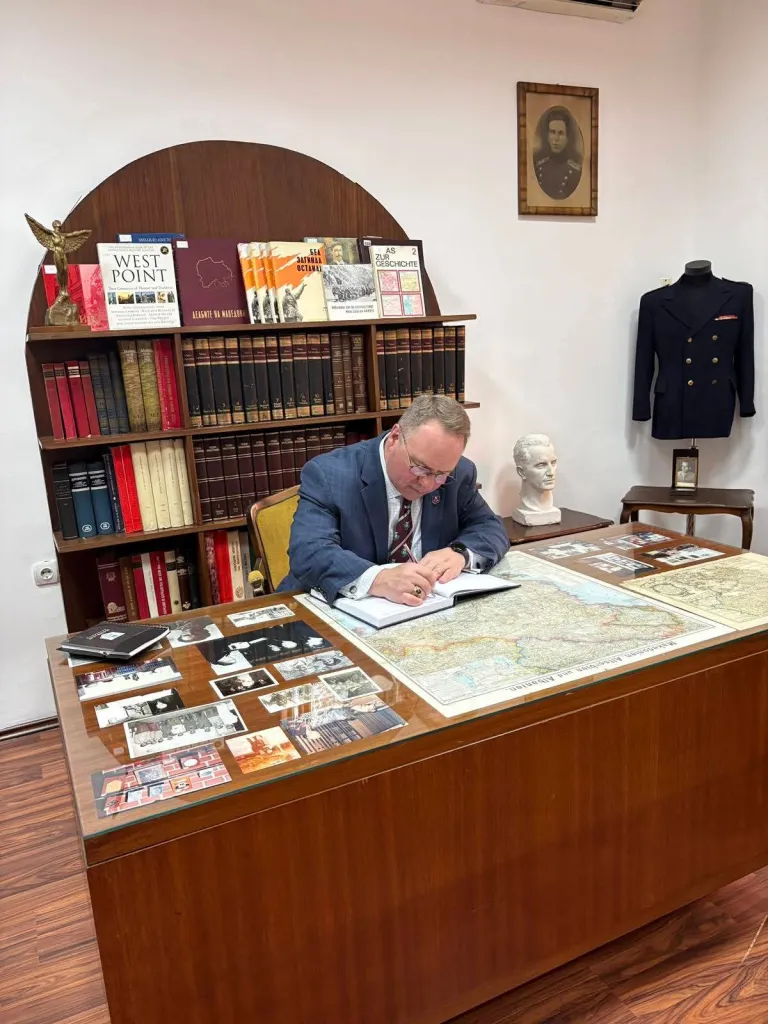
The presentation emphasized that higher education institutions, including military academies, war colleges, and universities, serve as critical partners in preparing leaders for contemporary security challenges. Developing intellectual agility, ethical reasoning, interdisciplinary understanding, and cultural awareness, Lyons noted, is as important as technological advancement or doctrinal innovation.
The themes explored at MILCON'26 closely aligned with the conference's broader objective of fostering holistic approaches to defense and security that integrate military capability, international cooperation, resilient institutions, and human dimensions of security. Particular attention throughout the event focused on hybrid threats that span physical, cyber, informational, and technological domains.
For Lyons, whose 31-year career in human intelligence collection and operations supported special operations and strategic intelligence missions, the challenge is fundamentally educational. Preparing military leaders for future conflict requires cultivating the ability to operate effectively amid uncertainty, adapt to rapidly changing conditions, and think across traditional organizational and disciplinary boundaries.
His participation at MILCON'26 reflects Norwich University's enduring engagement with global conversations surrounding leadership, security, and professional military education. Through research, teaching, and collaboration with international partners, Norwich faculty and alumni continue to contribute to the ideas shaping the next generation of military leaders.
As hybrid threats evolve and strategic competition intensifies, Lyons' work offers a clear message: intellectual adaptability and lifelong learning are not supplementary qualities for military professionals. They are prerequisites for effective leadership in the twenty-first century.
Read More
Norwich hosts Vermont ASCE Geo-Institute meeting
By Dr. Michael Gangone
Norwich University brings Vermont engineers, faculty, and students together to explore geological challenges, emerging technologies, and advances in geotechnical research.
1 min read
Learning in the Field
By Dr. Michael Gangone
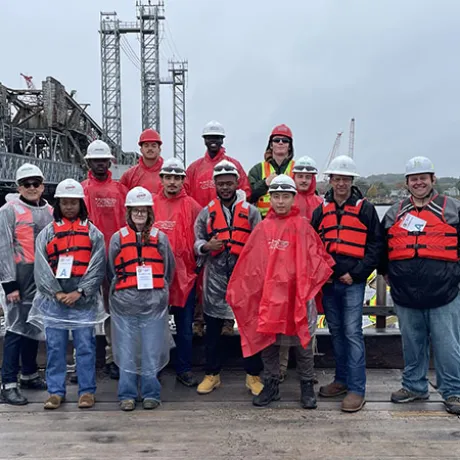
Engineering students take their learning into the field as they visit major infrastructure projects.
2 min read
Architecture in Action: Students Present During Homecoming
By NU Marketing & Communications Office
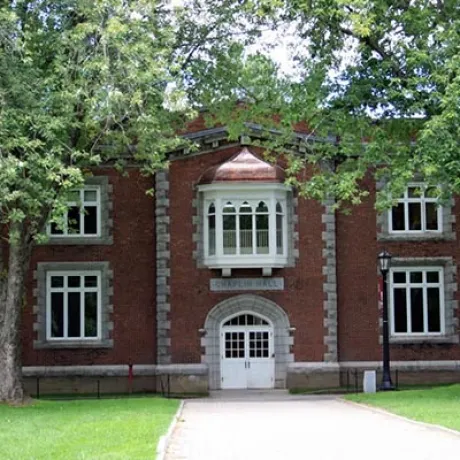
Architecture students present their work during Homecoming, one of the University's busiest weekends on campus.
2 min read