
Exhibitions
Sullivan Museum’s Current, Highlighted, and Past Exhibitions.
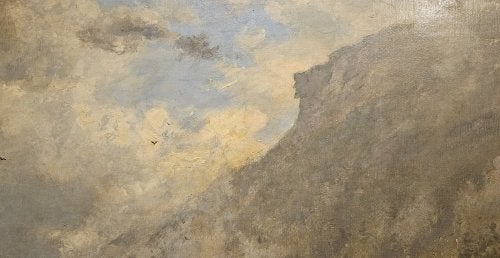
The Sullivan Museum and History Center invites visitors to explore the rich 200-year history of Norwich University in a 21st-century, state-of-the-art facility. Engaging exhibits, artifact displays, audio, and visual installations bring the story of Norwich and its alumni to life. Exhibits throughout the museum present Norwich objects related to military history, academics, music, and sports.
The Sullivan Museum presents a wide range of exhibitions, and new exhibitions open every academic year. Planned changes to our exhibitions allow us to rotate artifacts that are on display, helping to preserve fragile collection items. Current exhibitions remain on view for the duration of the academic year. Learn about past exhibitions previously on display in the museum.
Quick Links:
Current and Future Exhibitions:
The Sullivan Museum’s exhibitions include materials from its collection, archival items, and loans from other institutions and individuals. Each exhibition is designed to showcase the strengths of the museum’s varied collection. Exhibitions typically open at the beginning of the academic year and close or change after the academic year ends.
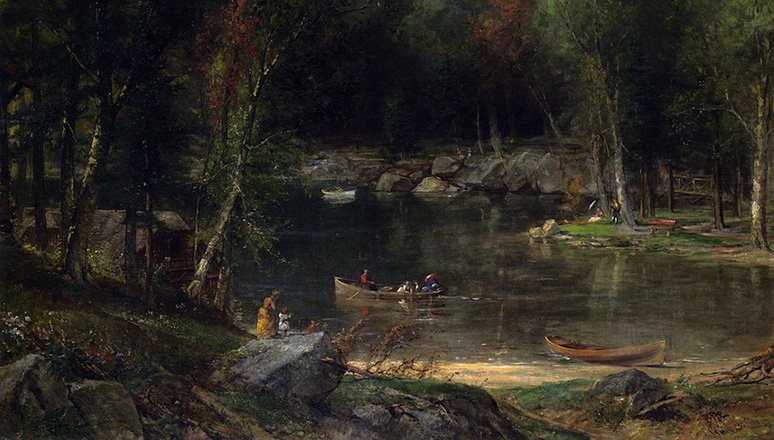
Hidden Gems: Highlights from the Sullivan Museum Collection Vault
The Sullivan Museum collection includes many objects and artworks that are not regularly displayed. This exhibition features some of the museum’s most precious and unusual items, along with the stories they tell about Norwich, its history, and its community.
Learn about Hidden Gems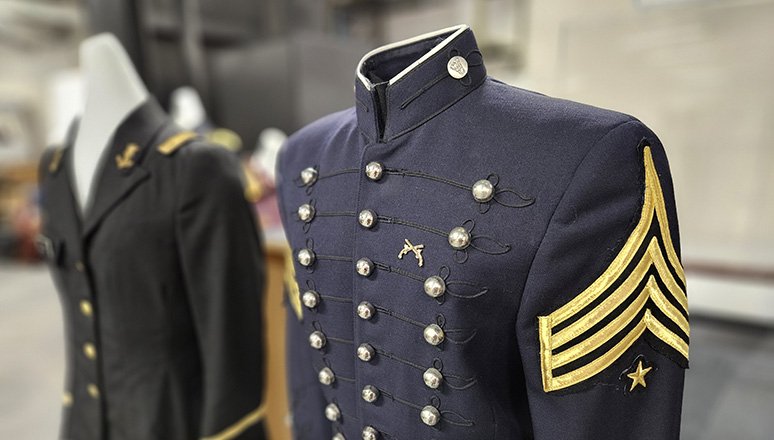
Uniforms
An exhibition focused on uniforms in the museum’s collection will include examples from the 19th, 20th, and 21st centuries.
Admiral George Dewey
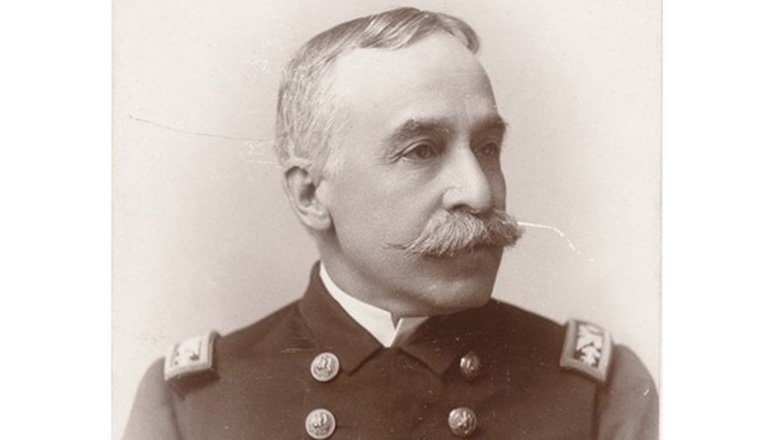
No other individual in the history of America was honored with more commemorative items than ADM George Dewey following his victory at Manila Bay during the Spanish-American War. This exhibit will present the history and the aftermath of this famous battle through the lens of the objects created to celebrate his achievements.
Now Open: Hidden Gems: Highlights from the Sullivan Museum Collection
Hidden Gems and Their Stories
Learn about the stories behind some of the Sullivan Museum’s most iconic objects.
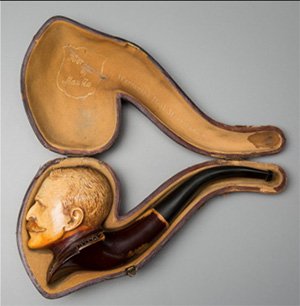
Admiral George Dewey’s connection to Norwich University marks an early and formative chapter in the life of one of America’s most celebrated naval heroes. Dewey entered Norwich in 1852 as a young cadet, but his time at the institution was short-lived. In 1854, he was expelled for disciplinary reasons, most commonly described as involving drunkenness and a notorious incident in which sheep were herded into the barracks. Though his departure from Norwich was abrupt, it did not end his ambitions. Soon afterward, he secured an appointment to the United States Naval Academy at Annapolis, beginning the naval career that would eventually bring him national and international recognition.
Dewey was a native Vermonter, born in Montpelier in 1837, and his later achievements became a source of deep pride for the state. Following his victory at Manila Bay, Vermont celebrated him with great enthusiasm, including public tributes and commemorations such as “Dewey Day.” His legacy remains especially visible at Norwich University, where Dewey Hall was named in his honor. Even in Montpelier, his presence lingered in memory long after his lifetime. The house where he was born no longer stands; the site today is occupied by a state office building, a quiet but meaningful reminder of the humble beginnings of one of Vermont’s most famous sons.
That recognition came dramatically in 1898 during the Spanish–American War. As commander of the U.S. Asiatic Squadron, Dewey led American forces to a decisive victory at the Battle of Manila Bay. The triumph was swift and overwhelming, and news of it electrified the American public. Almost overnight, Dewey became a household name. Cities held parades in his honor, newspapers celebrated him as a national hero, and his likeness became one of the most recognizable images of the era.
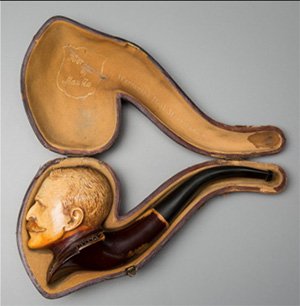
Dewey’s sudden national fame produced an enormous body of commemorative material culture, ranging from prints and medals to everyday objects bearing his likeness. The meerschaum pipe in the museum’s collection is one such example. In the late nineteenth century, manufacturers responded quickly to public enthusiasm by producing decorative and functional objects that allowed Americans to display their admiration for national figures. Plates, cigar boxes, postcards, and small personal items were all used to commemorate Dewey’s victory and preserve his image in homes across the country.
The meerschaum pipe at the Sullivan Museum and History Center reflects both this wave of popular commemoration and the craftsmanship associated with the material. Meerschaum, a soft mineral prized for its ability to be finely carved, was especially popular for portrait pipes. In this piece, Dewey’s head forms the bowl, capturing his distinctive mustache and uniform in careful detail. Over time, the pipe would have developed a rich patina from use, adding to its character and individuality.
This object serves as a tangible link between Dewey’s rise to national fame and the broader culture that celebrated him. It also offers a meaningful connection back to Norwich University, where his story began in far more modest and turbulent circumstances. From an expelled cadet to the hero of Manila Bay, and from a boy born in Montpelier to one of the most notable Vermonters in history, Dewey’s legacy remains deeply rooted in both the state and the university.
If you ask most cadets where Norwich got its motto, they will often point to Truman B. Ransom, the second president of Norwich University, and his role at the Battle of Chapultepec in September 1847 during the Mexican-American War. A 1924 issue of the Norwich University Record states that “Col. Ransom had stated the day before that he and his men would enter the fort or die in the attempt. This is the origin of the famous motto on your coat-of-arms, ‘I Will Try.’” The Record repeated the story in a 1945 reprint of an editorial from the Burlington Free Press, which claimed that when ordered to capture the fortress, Ransom replied, “Essayons,” translated as “I will try,” and that this became the motto of Norwich men thereafter.
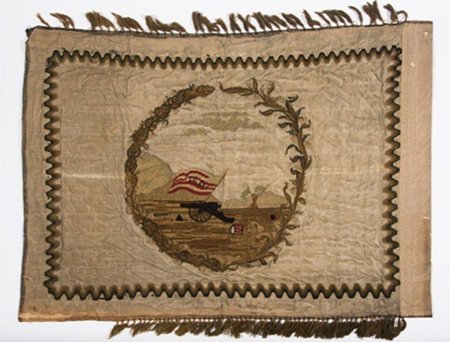
Later retellings reinforced the legend. A 1954 edition of the Record, discussing the dedication of Ransom Hall, reported that when General Winfield Scott asked if the objective could be taken, Ransom replied, “Essayons — we will try,” and was killed by a musket ball at the moment of victory. The article concluded that his words formed the basis for the Norwich motto, officially adopted in the early 1850s and incorporated into the university seal. A 1957 article repeated the same claim, further cementing the story in Norwich tradition.
Yet the phrase “I’ll Try” was already associated with Norwich before Chapultepec. As early as August 1844, the Young Ladies of Norwich, Vermont, presented a flag to the Cadets of Norwich University. One side depicts a mountain landscape with a stack of hay, a red drum, black cannonballs, and a black cannon in the foreground. Attached to the cannon wheels is a red-and-white striped flag bearing the words “I’ll Try.” The reverse side features a floral wreath and the inscription: “Presented by the Young Ladies of Norwich to the Cadets of Norwich University, August AD 1844.” This artifact clearly demonstrates that the motto was in use at least three years before Ransom’s final campaign.
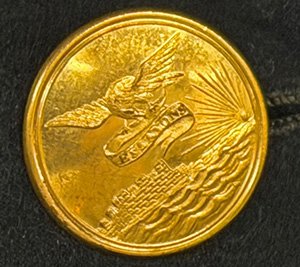
To understand the deeper origins of the phrase, it is helpful to look to the U.S. Army Corps of Engineers, whose motto is the French term “Essayons,” meaning “let us strive” or “let us try.” The expression reflects both the contributions of French engineers to America’s struggle for independence and the lasting influence of French engineering traditions on the early United States military.
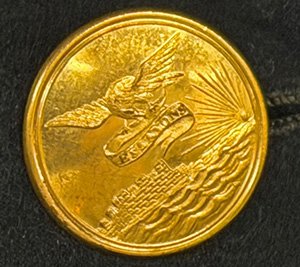
“Essayons” was incorporated into the culture and imagery of the Corps of Engineers early in its history. Sometime between 1802 and 1814, a distinctive “Essayons Button” was developed as part of the Corps of Engineers uniform. At the time, the Corps’ primary mission was the construction of coastal fortifications, and Major Jonathan Williams — first Chief Engineer and first Superintendent of the United States Military Academy — was given wide latitude to design uniform items for both engineer officers and West Point cadets. A map of the coastal fortifications at Charleston, South Carolina, drawn in 1806, shows an eagle holding a scroll in its beak bearing the word “Essayons,” the earliest known appearance of the term on a formal Corps document. A map of the defenses of New York Harbor made the following year also featured an eagle, the word “Essayons,” a water bastion, and rays representing the rising sun. By 1807, the key elements of what became known as the Essayons Button had been adopted and were in use among engineer officers.
The earliest written reference to the button comes from BG George D. Ramsey, who recalled his days as a West Point cadet in 1814 and noted that “Captain Partridge was never known to be without uniform… His was that of the Corps of Engineers, with the embroidered collar and cuffs and the Essayons Button.” The Essayons Button is visible on the uniform (NU2.1) in the Sullivan Museum’s collection, worn by CAPT Alden Partridge at West Point. Influenced by historic ties with French engineers, the leadership of the Corps had adopted the French term and incorporated it into a symbol representing the engineers’ principal mission — fortification.
CAPT Partridge, who served as the fourth Superintendent of West Point from 1814 to 1817, was clearly immersed in the traditions of the Corps of Engineers and already closely associated with the motto, its meaning, and its symbolism. When he founded the American Literary, Scientific and Military Academy in 1819, it is likely that he adapted the spirit of “Essayons” into English as “I will try.” The phrase was evidently well established by the 1840s, as demonstrated by the 1844 presentation flag bearing the words “I’ll Try.”
Rather than originating solely in Ransom’s reported words at Chapultepec, the Norwich motto appears to have deeper roots in the traditions of the Corps of Engineers and in the influence of Partridge himself. By the time of Ransom’s heroic final campaign, “I’ll Try” was already a familiar expression within the Norwich community — one that reflected perseverance, duty, and determination long before it became part of the university’s enduring legend.
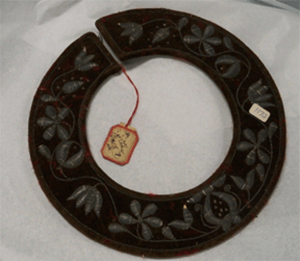
In the museum world, objects are sometimes mislabeled. Although the university has maintained a museum since 1902, there was no permanent home for the collection or dedicated exhibit space until the Sullivan Museum and History Center opened in 2007. From those early beginnings to today, the collection has grown to include more than 20,000 objects. With a collection that large, some items are bound to be mislabeled, as was the case with this halskrage (collar) from Iceland. For many years, it sat in a box in storage labeled “Native American Girl’s Collar Donated by Mrs. Charles Plumley” and was stored with other Native American artifacts, including a small purse. Neither item appeared Native American, especially given the silver embroidery on both pieces.
During preparation for our Bicentennial exhibit, we conducted research and found a similar collar at the Nordiska Museet (Nordic Museum) in Sweden. We contacted the museum, and the staff confirmed that the piece was a halskrage, part of a traditional costume worn by Icelandic women. The curator was unable to identify the second object, suggesting it might be a purse, but recommended contacting the National Museum of Iceland in Reykjavík for further information.
The museum in Reykjavík confirmed that the collar was a typical embroidered piece worn with a festive dress, most likely dating to the second half of the eighteenth century or the early nineteenth century. The “purse,” however, had also been misidentified; it was actually a traditional baptismal cap.
With this new information, we searched the Norwich University Archives and discovered that the collar and baptismal cap had not been donated by Mrs. Charles Plumley after all. Page 20 of the March 1908 edition of The Reveille provided the correct attribution. Under “Gifts to the Museum,” it states: “Mr. L. H. Janvrin, ex-’03, who has just returned from abroad, has presented the museum with some very interesting and valuable articles from Iceland.” Among the listed items were “some very fetching two-thumbed mittens, a christening cap, scraped sealskin shoes, [and a] girl's silver embroidered collar.”
Sometimes, mislabeled items are easily recognized. Other times, the truth comes to light by chance. Take, for example, the samurai armor that was labeled “Chinese Armour” for more than 100 years before a cadet noticed it was Japanese, not Chinese. It’s a fascinating story — learn more about it below!
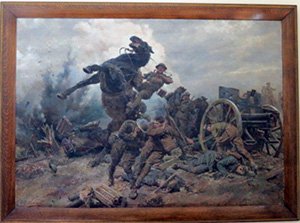
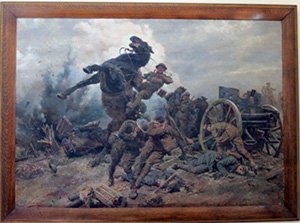
Fortunino Matania (1881–1963) was one of the most accomplished and widely admired illustrators of the early twentieth century, renowned for his extraordinary ability to capture the drama, realism, and human intensity of modern warfare. His work, shaped by a meticulous eye for detail and a commitment to accuracy, brought the First World War to life for audiences at home, translating the chaos of the battlefield into images that were both immediate and deeply moving. Among the works connected to this legacy is A Capture Under Shell-Fire: British Troops Bringing in a Captured German Battery under Fire, now in the collection of the Sullivan Museum and History Center, a painting that reflects both Matania’s technical brilliance and his powerful storytelling.
The painting depicts a moment of urgent confusion and danger during a World War I engagement. At its center, a horse rears violently, its rider thrown backward and out of the saddle. The motion is sudden and dramatic, capturing the raw unpredictability of combat. Just in front of the horse, two soldiers crouch low, taking cover after a mortar strike that has exploded in the background. To one side stands a cannon that appears ready to fire, while in front of it lie several fallen men, suggesting the heavy cost of the battle unfolding around them. Behind the rearing horse, another horse lies dead on the ground, and, slightly farther back, an unmounted rider stands near his mount, adding to the sense of confusion and motion. The entire composition is charged with tension — figures moving, falling, or bracing for impact — conveying the disorienting immediacy of warfare rather than a single heroic moment.
Matania’s ability to orchestrate such complexity came from years of experience as an illustrator. Known for his work with publications such as The Sphere, he was celebrated for his exacting realism and careful observation. A Capture Under Shell-Fire appeared in the 22 June 1918 edition of the newspaper. Matania studied uniforms, equipment, and battlefield conditions with a near-documentarian precision. Yet beyond accuracy, his images conveyed emotion: fear, urgency, bravery, and the fragile balance between survival and loss. In this painting, the rearing horse becomes a focal point not only of movement but of instability, symbolizing the sudden, uncontrollable nature of battle. The fallen soldiers, the ready cannon, and the crouching figures all contribute to a scene that feels immediate and human rather than distant and staged.
Equally compelling is the museum’s related study for the painting: a watercolor on board laid over a pencil sketch. In this preparatory work, the artist first outlined the basic forms in graphite, establishing the structure and movement of the composition. He then applied watercolor in a way that, at first glance, appears almost splashed onto the surface. Closer examination reveals a careful, methodical hand. The coloring anticipates the tones and energy of the later oil painting, suggesting that Matania was already shaping the emotional and visual rhythm of the final piece. Signed in the lower left in his distinctive script, the study provides a rare glimpse into his process — how an initial concept, built from lines and color, evolved into a fully realized battlefield scene.
This connection between study and finished painting is especially significant when considered in the context of Matania’s personal history. During the Blitz of World War II, his London studio was bombed, and many of his original paintings and materials were destroyed. For an artist whose career spanned decades and whose works documented pivotal moments in modern history, this loss was profound. Entire chapters of his visual record of war vanished in an instant. As a result, surviving original works and preparatory studies take on added importance. They are not only examples of artistic achievement but also remnants of a body of work that was, in part, lost to history.
Seen in this light, the Sullivan Museum and History Center’s painting and its associated study represent more than a single image. They are part of a story of survival — of art that endured when so much else was destroyed. The university most likely acquired the painting not long after it was created, though its early display history is unclear. At some point, the study resurfaced through the Illustration Art Gallery, where the museum’s registrar recognized its importance and arranged for its purchase. That rediscovery helped secure a work that might otherwise have disappeared, joining many others lost to war.
Today, the painting stands as both a vivid depiction of World War I and a testament to Matania’s skill. Through the chaos of rearing horses, crouching soldiers, and fallen men, the artist captured the immediacy of battle in a way few others could. The accompanying study deepens our understanding of how he built such scenes, from pencil outline to layered color and motion. Together, they preserve not only a moment of conflict but also the memory of an artist whose work, though partly lost in the devastation of another war, continues to speak with clarity and power.
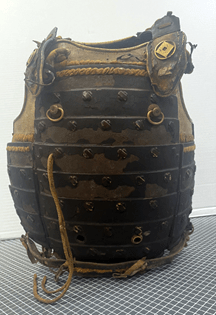
When this iron and leather cuirass entered the university museum in 1902, it bore a simple label: “Chinese Armor.” It had been taken two years earlier from the Palace of the Seventh Prince of the Blood in Peking (Beijing) by BG Charles A. Coolidge, Norwich ’63, during the Boxer Rebellion. In the upheaval of war, objects were gathered, shipped home, and identified according to where they were found. For decades, this armor’s story began — and ended — in China.
Yet the object itself told another tale.
The brown-lacquered iron plates, arranged in horizontal bands and fastened with neat rows of rivets, correspond not to Chinese military forms but to Japanese samurai armor of the 16th or early 17th century. Constructed primarily of iron plating with bronze edging and secured internally by leather supports, it fits the type known as yokohagi okegawa ni-mai dō, or “clamshell” armor. This style, emerging in the mid-1500s, opened at the side and was tightened with leather straps, a practical design suited to the changing nature of warfare.
That change came in 1543, when a Chinese junk carrying Portuguese traders was blown off course and landed in Japan. With them came firearms. The introduction of the rifle reshaped Japanese armor construction. Earlier lamellar styles gave way to solid iron plates capable of better resisting gunfire. The Sullivan Museum cuirass reflects this evolution: smooth iron surfaces, hand-forged plates, and sturdy internal reinforcement.
Its details are as refined as its structure is functional. Gold shoulder clasps form circles enclosing diamond shapes. A cotton-and-wool neck guard, lined with blue-and-white floral fabric, softens the transition between iron and skin. Five waist guards hang below, their orange cotton strips woven through steel or brass plates, with secondary blue weaving that echoes the collar above. Even in stillness, it conveys both craftsmanship and aesthetic intention.
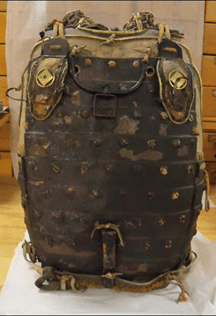
Stylistically, the armor may be either a hishinui dō, characterized by cross-lacing construction so prominent it defines the form, or the rarer munemenui dō, distinguished by horizontal “running stitch” lacing resembling dotted lines across the surface. Both reflect sophisticated variations within Japan’s late medieval armor tradition.
But how did a Japanese samurai cuirass end up in a Chinese prince’s palace?
In 1900, COL (later BG) Charles Coolidge commanded the 9th U.S. Infantry during the Boxer Rebellion. The Society of the Righteous and Harmonious Fists — known to Westerners as the Boxers — rose in northern China against foreign and Christian influence. From June to August, they besieged the foreign diplomatic quarter in Beijing. An international relief force, including American troops, entered the city in August. On Aug. 14, 1900, Coolidge led the first American detachment into the Forbidden City after the death of Colonel Emerson H. Liscum.
The rebellion ended with the Boxer Protocol of 1901, which imposed heavy reparations on China and reinforced foreign influence under the U.S. Open Door Policy. Amid that military intervention, this centuries-old armor was removed from the palace and eventually donated to Norwich.
Its earlier journey remains uncertain. It may have arrived in China through trade, diplomatic exchange, or as a collectible curiosity. The object itself offers no clear answer, only evidence of long travel.
In 2016, renewed research challenged its longstanding misidentification. Through a Norwich Summer Research Fellowship, the armor underwent close material study. X-rays performed at the Central Vermont Medical Center revealed hand-forged iron plates supported by leather straps and previously unknown leather buttons beneath the collar — details confirming traditional Japanese construction methods.
Further testing pushed the inquiry into unexpected territory. Using Zar-Pro lifters — technology developed for cold-case forensic investigations — researchers examined darkened stains on the leather beading of the gorget. Under alternate lighting, portions fluoresced while others darkened, suggesting the presence of aged blood. DNA extraction confirmed human biological material, possibly between 100 and 500 years old. The initial analysis indicated that the DNA was African rather than Japanese, though subsequent testing was never conclusive.
That result opened an intriguing historical possibility. In the late 16th century, an African man known as Yasuke arrived in Japan in the service of Jesuit missionary Alessandro Valignano. Summoned by the powerful daimyō Oda Nobunaga, Yasuke entered Nobunaga’s service and is remembered as Japan’s first foreign-born samurai. Granted a stipend, residence, and sword, he served until Nobunaga’s death in 1582.
Did this armor belong to Yasuke? Almost certainly not; there is no evidence linking the two. Yet the DNA result reminds us that early modern Japan was not isolated. Africans, Europeans, and Asians intersected in moments of trade, religion, and war. The armor stands as a material witness to that global entanglement.
Today, the cuirass rests in the Sullivan Museum and History Center — its lacquer worn, its gold fittings still catching the light. It has traveled from 16th-century Japan to a Chinese royal palace, from the violence of the Boxer Rebellion to a university museum gallery. Along the way, it was mislabeled, reconsidered, and reinterpreted.
What began as “Chinese Armor” is now understood as Japanese samurai armor, but even that label only gestures toward its complexity. It is an object shaped by technological change, carried by imperial conflict, examined through modern science, and shadowed by mystery.
We may never know the name of the warrior who wore it. Yet in its iron plates and faded textiles, the armor continues to tell a story — of craftsmanship, conflict, and the long, unpredictable journeys of objects across the world.
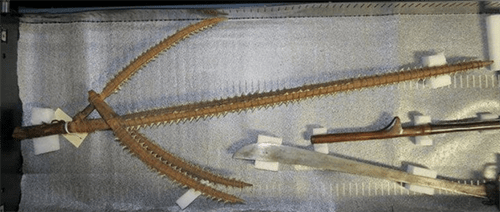
Gilbertese shark tooth swords are among the most striking and distinctive weapons produced in the Pacific Islands. Originating in the Gilbert Islands — today the nation of Kiribati in Micronesia — these weapons were crafted using locally available materials and reflect both the ingenuity and cultural traditions of the island communities that made them. Most surviving examples date from the 18th and 19th centuries, though the techniques used to create them are much older.
Unlike metal swords, Gilbertese blades were constructed from carved wood. Along the edges, rows of sharpened shark teeth were set into grooves and secured with coconut fiber cord and plant resins. The result was a serrated cutting edge capable of inflicting deep, tearing wounds. In combat, these weapons were used in conjunction with protective armor made from thickly woven coconut fiber, and they played a central role in ritualized warfare between island groups.
Sharks held symbolic importance in Pacific Island cultures, representing strength, skill, and protection. Incorporating shark teeth into weapons was not only practical but also imbued the object with cultural meaning. Variations of these weapons included long swords, daggers, and spears, each adapted to different fighting styles and purposes.
The Sullivan Museum and History Center holds an example of a Gilbertese shark tooth sword in its collection, donated by Mrs. Jesse Gove. Though the exact path by which this Pacific artifact came into her possession is unknown, its presence at Norwich University reflects the global networks of travel, exploration, and collecting that brought objects from distant regions into American collections during the 19th century. Today, the sword stands as a powerful reminder of the craftsmanship, traditions, and cultural heritage of the Gilbert Islands.
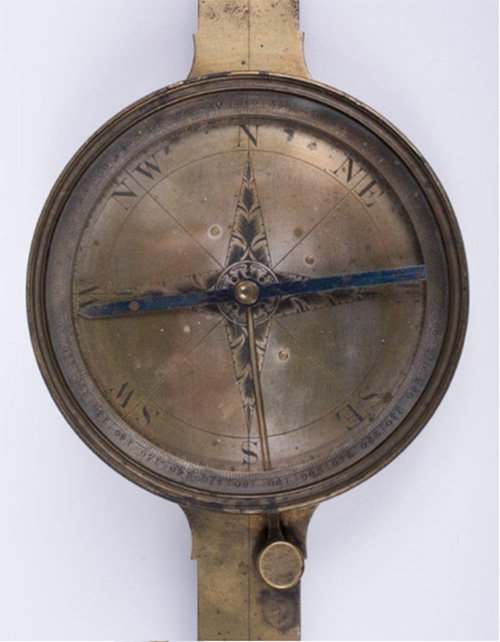
Captain Alden Partridge’s commitment to experiential learning — learning by doing — was central to how civil engineering and surveying became foundational parts of the curriculum at the American Literary, Scientific and Military Academy (now Norwich University). For Partridge, engineering was not an abstract science to be studied only in books; it was a practical discipline best understood in the field through direct observation, measurement, and comparison. Instruments such as the barometer, transit, and surveyor’s chain were not simply technical tools — they were teaching devices that trained students to see, measure, and understand the physical world.
An illuminating example of this philosophy can be found in Partridge’s correspondence with Thomas Jefferson between 1815 and 1818, when Partridge was Superintendent of West Point. Their exchange focused on determining the elevations of mountains and highlighted two competing methods of measurement: Partridge’s barometric hypsometry and Jefferson’s trigonometric calculations. On September 6, 1815, Partridge wrote to Jefferson critiquing earlier observations by Jonathan Williams and enclosed a chart of mountain heights in the Northeast. Using his barometric method, Partridge calculated Mount Washington to be 6,634 feet — only about 346 feet higher than its actual elevation of 6,288.2 feet, an error of roughly 5 percent.
Jefferson responded on October 12, 1815, explaining that he preferred a trigonometric method and planned to test it at the Peaks of Otter in Virginia using a theodolite. In January 1816, Jefferson reported his results, calculating Sharp Top at 2,946.5 feet. The actual height is 3,875 feet, leaving Jefferson off by 928.5 feet — nearly a 25 percent difference. He was unable to compare his findings with Partridge’s barometric approach because he lacked a portable barometer suitable for fieldwork. Partridge continued to defend and explain his method in subsequent letters, including one dated February 4, 1817, and in later correspondence in 1818 concerning peaks in the Green Mountains.
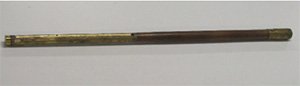
This exchange illustrates more than a scientific debate; it reflects the intellectual environment that shaped Partridge’s educational philosophy. He valued firsthand measurement, repeated trials, and the refinement of technique through practice. Surveying and civil engineering emerged as core components of the Academy’s curriculum precisely because they demanded this kind of active engagement. Students trained with the same types of instruments Partridge used — barometers to estimate elevation, transits to measure angles, and chains to determine distance — learning to apply mathematics directly to the landscape.
Partridge’s belief in experiential learning did not end with instruments in a classroom or controlled field demonstrations — it extended directly into the landscape itself. Long before founding the Academy in 1819, he was an avid and determined mountain walker, climbing peaks across Vermont and New Hampshire with little more than a knapsack and barometer. These journeys served as both scientific testing grounds and personal proving grounds, reinforcing his conviction that the natural world was the best possible classroom.
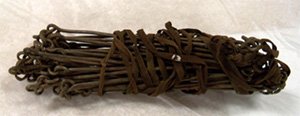
When he established the Academy, he built this philosophy into its daily practice. Cadets did not simply study surveying and civil engineering indoors; they marched, climbed, measured, and mapped. Extended excursions became a hallmark of Partridge’s system. In 1822, for example, cadets undertook an eight-day, roughly 100-mile march from Norwich to Montpelier and back, combining physical endurance with observation of the landscape and its features. These were not recreational outings but structured learning experiences that reinforced mathematics, engineering, and practical geography.
Other expeditions took students into the Green Mountains of Vermont and the White Mountains of New Hampshire, where Partridge had already been conducting scientific climbs and observations since at least 1811. These excursions established the mountains as an “outdoor laboratory” where students could test measurements, practice surveying, and develop physical stamina alongside intellectual discipline. With transits, chains, and barometers in hand, cadets learned to calculate elevation, measure distance, and map terrain just as Partridge himself had done while comparing methods with Jefferson. The hikes transformed abstract scientific debates into lived experience.
Because of Partridge’s integration of civil engineering into a broader “citizen-soldier” curriculum that emphasized practical, real-world knowledge, Norwich University has been designated a National Historic Civil Engineering Landmark by the American Society of Civil Engineers in recognition of its distinction as the first private college in the United States to offer formal instruction in civil engineering and its enduring global influence on the profession.
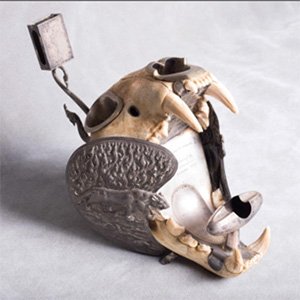
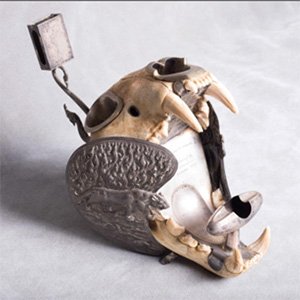
The tiger skull smoking apparatus in the museum’s collection is at once striking, unsettling, and deeply evocative of a particular moment in 20th-century diplomatic and military culture. President Emeritus Richard Schneider once called it one of the ugliest items in the museum’s collection. The object combines natural history, craftsmanship, and personal commemoration into a single functional work of art. Created in Thailand and presented on December 25, 1960, it bears an engraved silver plate reading: “To Major General Briard P. Johnson From Field Marshal S. Dhanarajta (Snidi Dhanarajta) Bangkok.” As a gift exchanged between high-ranking military figures, the piece reflects the ceremonial practices and personal relationships that often underpinned international alliances during the Cold War era.
At its core is a real tiger skull, its teeth largely intact though slightly chipped with age, the great fangs still conveying the animal’s former power. Over this natural form, artisans added carefully shaped silver adornments, transforming the skull into a smoking stand complete with a cigar or cigarette holder, matchbox rest, and multiple small bowls. A cylindrical stand set near the mouth holds a cigar or cigarette upright, while a hollow core allows ashes to fall neatly below. Additional silver bowls placed within the nasal cavity, eye sockets, and sinus areas likely served as ash receptacles or as places to discard spent matches and cut cigar ends.
The decorative elements reveal a strong symbolic language. Highly embossed plates on the sides of the skull depict a tiger on one side and an elephant on the other—two animals deeply associated with Thailand’s natural and cultural identity. The tiger represents strength, danger, and command, while the elephant, long linked to Thai royal and military traditions, suggests endurance and loyalty. Together, these motifs transform the skull from a simple curiosity into a piece that communicates authority, prestige, and respect.
At the back of the skull, a richly engraved silver adornment is fixed directly to the bone with small brad-style nails. This extension supports a matchbox holder, thoughtfully designed with striking surfaces on each side. Two small silver feet, projecting from the side plates, stabilize the skull and allow it to stand upright as a tabletop object. The result is a piece that is both ornamental and practical, intended to be used in social settings where smoking and conversation were integral parts of military and diplomatic hospitality.
As an object, the tiger skull speaks to the cultural intersections of its time. It is part trophy, part luxury smoking accessory, and part ceremonial gift. In Southeast Asia, tiger imagery has long carried associations with strength and protection, and the use of the skull suggests both reverence for the animal and a fascination with its power. In a mid-20th-century military context, such a gift would have conveyed honor, camaraderie, and mutual respect between leaders.
Today, the piece stands as more than a curiosity. It is a reminder of the personal side of international relations, when meaningful and sometimes unusual objects were exchanged as tokens of esteem. Blending artistry, symbolism, and function, the tiger skull smoking apparatus preserves a moment in time when craftsmanship and ceremony helped express the bonds between nations and the individuals who represented them.
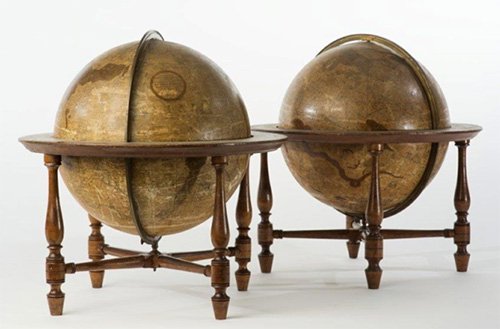
James Wilson (1763–1855) of Bradford, Vermont, is remembered as America’s first globe maker and as a powerful example of self-education and determination in the early republic. Raised as a farmer and trained as a blacksmith, Wilson had little formal schooling. After seeing European globes at Dartmouth College, he became fascinated by geography and astronomy and began teaching himself mathematics, engraving, and instrument making. Through persistence and experimentation, he produced some of the first commercially successful globes made in the United States, making geographic learning more accessible to American students.
The Sullivan Museum and History Center preserves both a large 1811 terrestrial globe and a celestial globe made by Wilson that were used by cadets of the American Literary, Scientific, and Military Academy. These globes were obtained for instructional use by Captain Alden Partridge, whose curriculum emphasized practical, hands-on learning. A letter in the Norwich University Archives documents Wilson’s connection to the Academy and arrangements for delivering the globes:
“Albany 25th July 1820
[Respect?] Sir,
Yours of the 20th is before us - I shall perform my journey in a Chaise, my Lady & two Babes will accompany me. It will therefore be out of my power to bring you the Globes. Had you not better ascertain as soon as possible whether or not Mr Wilson can bring you them & if no other mode of conveyance should present itself you might probably wish them shiped [sic]. We shall wait your orderRespectfully
James Wilson & Co”
— Norwich University Archives, James Wilson & Co. to Alden Partridge, July 25, 1820
These globes represent more than educational tools; they reflect the achievements of a self-taught Vermonter whose work supported the Academy’s mission to teach geography, navigation, and astronomy through direct study of the world and the heavens.
Their historical importance has long been recognized. Years ago, before the Norwich University Museum became the Sullivan Museum and History Center and prior to its designation as a Smithsonian Affiliate, the Smithsonian Institution requested to borrow the Wilson globes for an exhibition. At the time, the request was declined, and the globes remained at Norwich. The story speaks to both the rarity and significance of these objects and underscores the pride the institution has long taken in preserving them. Today, as a Smithsonian Affiliate, the museum continues to steward these remarkable artifacts as part of a shared commitment to education, scholarship, and public history.
Past Exhibitions
The Sullivan Museum and History Center invites visitors to explore the rich 200-year history of Norwich University in a 21st-century, state-of-the-art facility. Engaging exhibits, artifact displays, audio, and visual installations bring the story of Norwich and its alumni to life. Exhibits throughout the museum present Norwich objects related to military history, academics, music, and sports.
The Sullivan Museum presents a wide range of exhibitions, and new exhibitions open every academic year. Planned changes to our exhibitions allow us to rotate artifacts that are on display, helping to preserve fragile collection items. Current exhibitions remain on view for the duration of the academic year. Here, learn more about past exhibitions previously on display in the museum.

The year 2025 marked the thirtieth anniversary of the establishment of the School of Architecture and Art (SoA&A) at Norwich University. This exhibition included a wide range of projects pursued by the faculty and students of SoA&A over the years, a testament to a way of learning that is deeply human, deeply local, and deeply committed to shaping a better built environment. Vermont Interludes, a series of paintings by Dr. Cara Armstrong, Associate Professor and Assistant Dean of the College of Professional Schools, was also featured in this exhibition. Dr. Armstrong’s work immersed viewers in a series of architectural spaces designed to invite viewers not only to observe, but to inhabit and dwell in space emotionally and imaginatively.
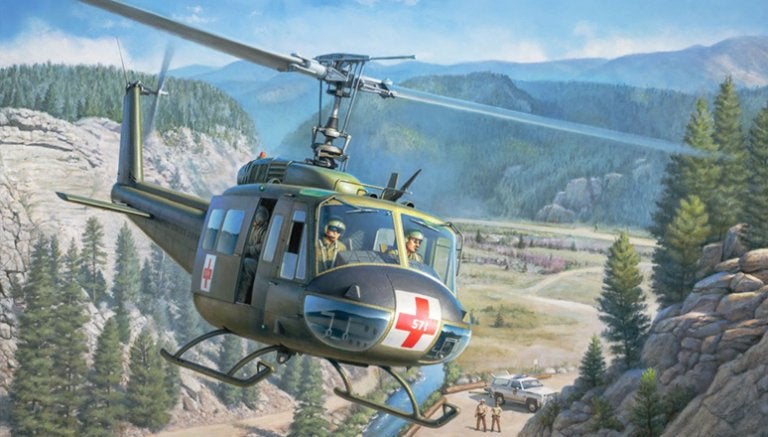
Unveiled at Homecoming 2025, Selfless Service was the third in a series of three paintings by Jim Laurier honoring members of the Norwich community who embodied the university’s most cherished values. This painting was dedicated to MAJ Richard C. Bulliner (NU ’70), a pilot of the Military Assistance to Safety and Traffic (MAST) Program who died in the line of duty rescuing an injured hiker in Colorado in 1982. The Selfless Service painting project was funded by Frederick and Linda Morsheimer (NU ’70) and COL Barry Wright (ret.) (USA) (NU ’70), and the painting was commissioned by LTC Christopher M. Siedor (ret.) (USA) (NU ’70), MAJ Bulliner’s friend and former roommate.
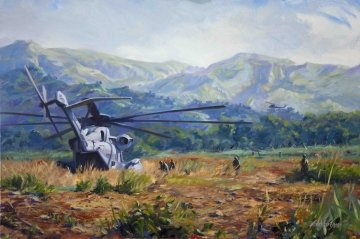
This exhibition was acquired on loan from the National Museum of the Marine Corps with the generous support of the Marine Corps Heritage Foundation. Prepared by Curator Emeritus Lin Ezell, this exhibition celebrated the contributions of Marines who served as combat artists, the foundation of the Combat Art program. Combat artists, in the words of artist COL Craig H. Streeter, capture on-the-ground realities while, at the same time, infusing people, places, and events with emotion and meaning. This exhibition included 33 pieces of original art from the Marine Corps Art Collection and a small sampling of recruiting poster art. It traced the history of how the Marine Corps has used aircraft to support Marines on the ground by providing surveillance, firepower, emergency extraction, transport to battle, and the delivery of supplies and services to those in need — always as part of an air-ground team.
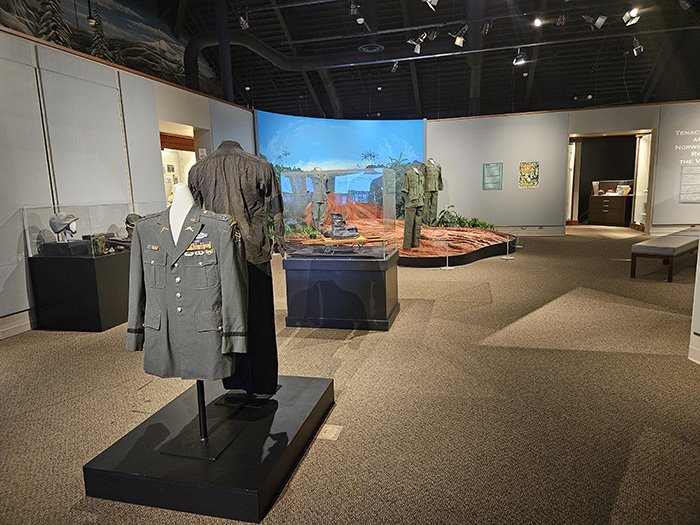
The Vietnam War lasted nearly twenty years and was the United States’ longest conflict prior to the 21st-century War in Afghanistan (2001 – 2021). The war affected generations of Americans, including Norwich students, professors, administrators, and alumni, many of whom responded to the call for military service. As the 50th anniversary of the Fall of Saigon (1975) approached, this exhibition recalled this monumental conflict and the ways the Norwich community fit into that story. Norwich University students, faculty, staff, alumni, and friends served in all stages of this conflict, and many were decorated for their bravery. Many were wounded, some lost their lives, and all were affected by the conflict in different, profound ways. Enrolled Norwich students grappled with many of the same complex questions voiced on college campuses across the country, leading to public discussions with their peers and leaders on campus. This exhibition honored the fallen and recalled the many ways Norwich University was touched by, and participated in, the Vietnam War.
The year 2024 marked the 50th anniversary of a significant milestone in Norwich University’s history. A half-century ago, women formally became part of Norwich University’s on-campus residential population and women, for the first time, joined Norwich’s Corps of Cadets. This exhibition recognized Norwich’s trailblazing women and the accomplishments of its alumnae. Norwich University has consistently prepared women graduates, both in the Corps and civilians, to succeed in multiple capacities as students and beyond. Objects on display included many women’s uniforms, some representing their time in the Corps of Cadets and others demonstrating their achievements after graduation.
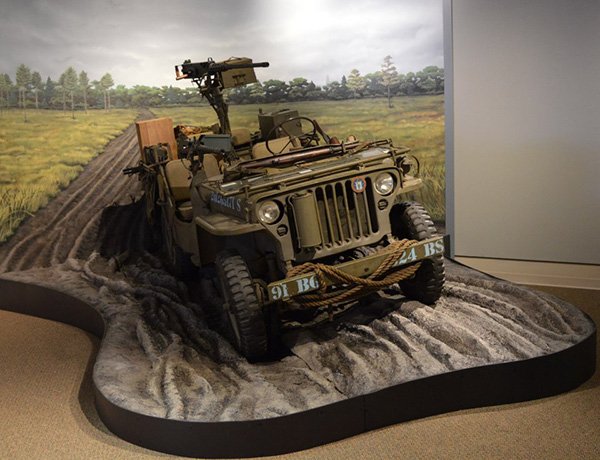
This exhibition presented the history of a cultural icon, the Jeep, and its complex legacy.
It featured a built environment by The Arcana Workshop of Barre that recreated a Western European landscape and a restored World War II Jeep on loan from Paul Abare of Northfield. The Jeep was developed during the early years of World War II in the United States, fulfilling the need for a lightweight reconnaissance vehicle that could navigate rough terrain while also carrying needed supplies, weapons, and soldiers. Following the war, manufacturers adapted the rugged vehicle for civilians, sparking a unique culture around the vehicle that continues today.
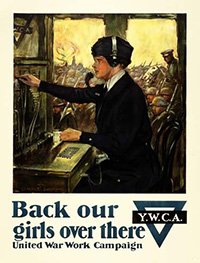
The Sullivan Museum’s collection includes a wide range of propaganda posters from World War I and World War II. This exhibition presented many of the best and most unique pieces in the collection, and uniforms and objects depicted in the posters were also on display.
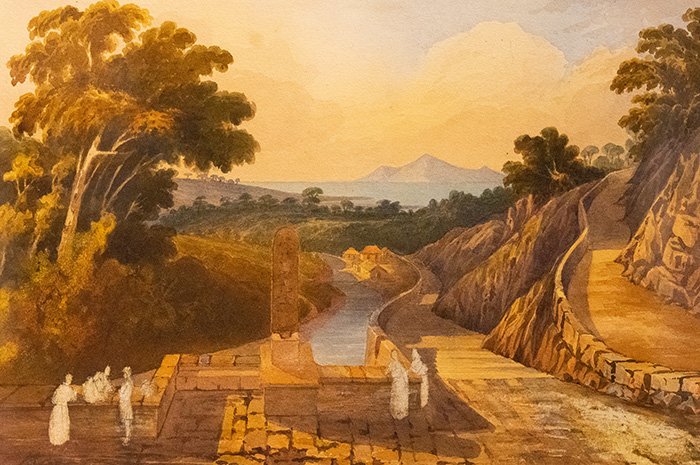
Artists and the military enjoy a very long, if underappreciated, history of collaboration. Whether through the reconnaissance of planning a fortification, military academies incorporated art instruction into their curricula. Alden Partridge integrated education in art and drawing into the curriculum of the American Literary, Scientific, and Military Academy, later known as Norwich University. William Brenton Boggs, Class of 1828, spent his career in the Navy with official duties as an artist. He served as an artist for the North Pacific Exploring and Surveying Expedition, also known as the Rodgers-Ringgold Expedition. Truman Seymour began attending Norwich University in 1840 and remained at Norwich for two years before transferring to West Point. A career soldier, he served in the Mexican-American War and the U.S. Civil War. Between the wars, he was employed as an Assistant Professor of Drawing at West Point. After his retirement from the Army, Seymour and his wife embarked on a Grand Tour of Europe, and Seymour filled his sketchbooks with scenes from England, France, Spain, North Africa, and Italy.
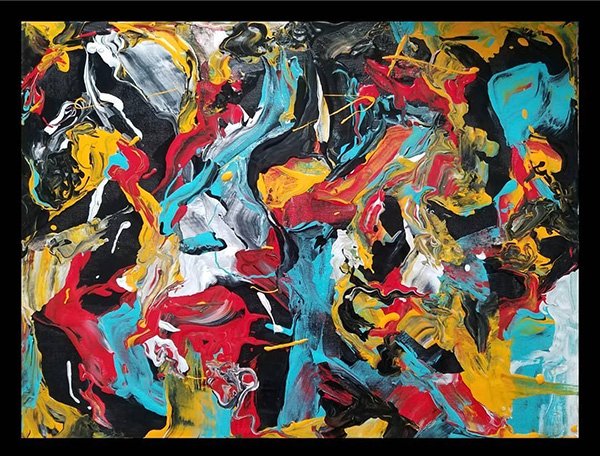
Jennifer’s collection of abstract artworks conveys current states of mind, visually encapsulating the ebbs and flows of manic depression and capturing moments otherwise dulled by short-term memory loss. Jennifer’s work is a statement about mental health and the importance of self-care and healing. A self-taught artist since 2018, Jennifer is employed in the mental health sector, working with children, where the importance of coping strategies encourages growth and self-regulation. By integrating and regenerating feelings and moments on canvas, Jennifer hopes to bring awareness of mental illness and encourage its destigmatization. Born in Berlin, VT, Jennifer received her education in Central Vermont and began school at Norwich University at 16 years old, ultimately graduating with highest honors at 20. Jennifer’s family enjoys a long history at Norwich, including her grandfather, Pop Bryan, who was a Professor of Geology; her grandmother, Vivian Bryan, a long-time librarian; Shawn Bryan, NU ’70 and MBA class of 2003; Helen Bryan, Housing Officer and Adjutant for the Commandant’s Office for 15 years; and Rachel Bryan, NU ’99.
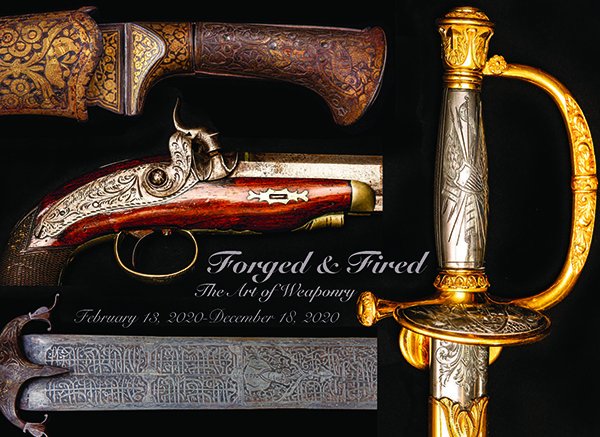
Swords and firearms were used by soldiers for battle, as well as for hunting, self-defense, and sport. Weapons, with their elaborate designs, fine craftsmanship, and opulent materials, are highly valued by collectors. This exhibition featured the skilled artistry and practical design of swords and firearms from various cultures. This exhibition also explored the depiction of weapons in art and the role they play as visual storytellers. Many of the Sullivan Museum’s finest and most significant weapons were displayed, and this exhibition included loans from The International Spy Museum, The Fleming Museum of Art, University of Vermont, Vermont Historical Society, Fenimore Art Museum, Northfield Historical Society and other private lenders.
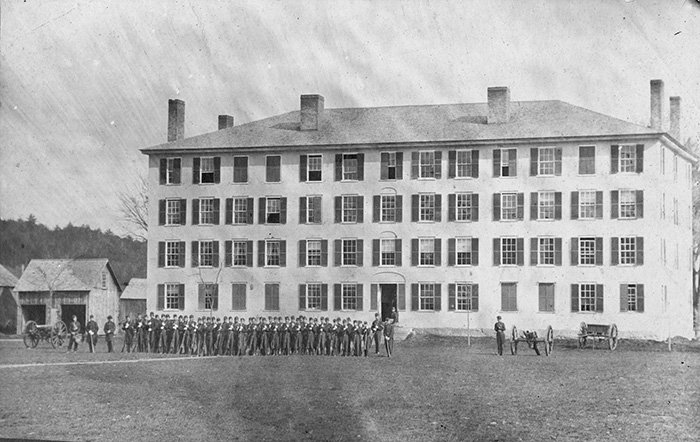
When Captain Alden Partridge purchased two Wilson globes for his academy in 1820, he took the first steps toward building a collection that ultimately would become the pride of Norwich University. The Sullivan Museum and History Center preserves and houses Partridge’s legacy, a legacy that, today, represents the contributions of all citizens and soldiers who have walked the campus of Norwich University. The Sullivan Museum and History Center exhibited 200 objects from its collection, many of which had never been on display, in the final year of the celebration of the bicentennial of Norwich University. As Norwich honored the history, education, and tradition that began with Captain Partridge, visitors were invited to explore and to determine how they, too, fit into the history of this remarkable university.
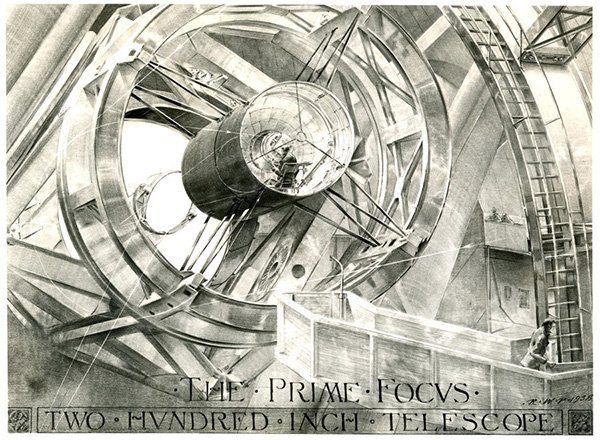
The history of Norwich University is peppered with stories of its successful alumni and the innovative contributions they made to the wider world. Several significant Norwich alumni were highlighted in this exhibition, including Russell Porter (NU 1891), Edward Dean Adams (NU 1864), William Rutherford Meade (NU 1864), and Grenville Dodge (NU 1851). This exhibition also explored other amazing individuals who left Norwich University and began exciting career paths that shaped and changed our nation. Projects by Norwich students enrolled in Architecture + Art and Engineering programs were also presented in this exhibit.
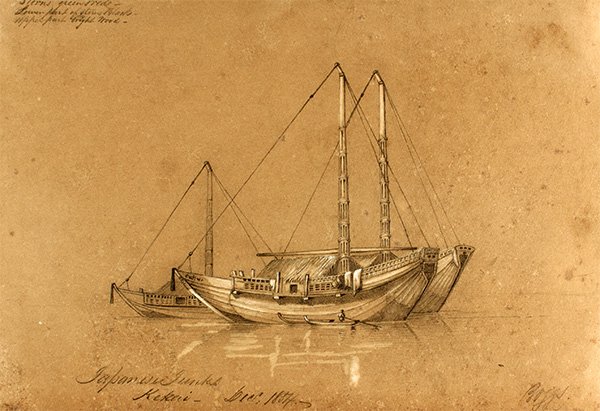
The exhibition featured the exceptional individuals who followed many different, yet equally exciting, career paths after Norwich University from the mid-19th to the early 20th centuries. Objects from many nationally-significant events were on view, including items from the construction and completion of the Transcontinental Railroad and the construction of the Panama Railroad. This exhibit also incorporated objects from exploratory expeditions, including the United States Exploring Expedition (also known as the Wilkes Expedition), the Rodgers-Ringgold Exploring Expedition, and unofficial excursions made by Norwich alumni to the Northwest Passage and to the interior of newly-acquired lands west of the Mississippi. Follow Hiram Paulding, George M., and George P. Colvocoresses, George M. Totten, General Grenville Dodge, William Brenton Boggs, Truman Seymour, and many others who traversed the nation, the continents, and the world in search of new lands, new opportunities, and new discoveries. This exhibition was supported in part by the TAWANI Foundation and several major museums in the Northeast.
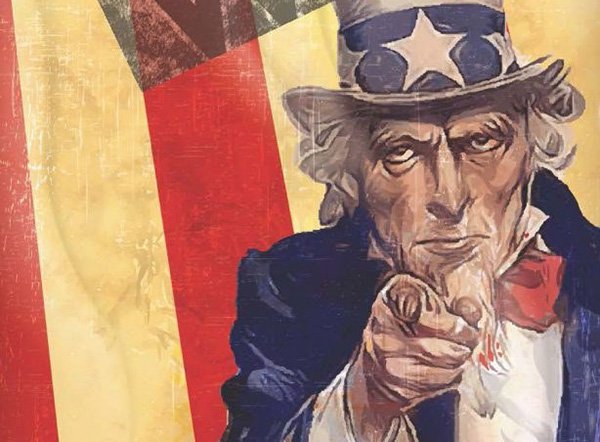
This exhibit examined the many ways World War I and World War II defined the relationship between the United States and the wider world. Featured objects included propaganda posters from the Sullivan Museum’s own collection and others on loan from the Robert Hull Fleming Museum in Burlington and the Pritzker Military Museum in Chicago. These posters offer a fascinating look into how war objectives were communicated to the country. This exhibit also included a rare and complete “Hello Girls” uniform from World War I, a loan from Norwich alumnus James Mullin. Other objects on display included trench art, uniforms, medals, and objects from the field.
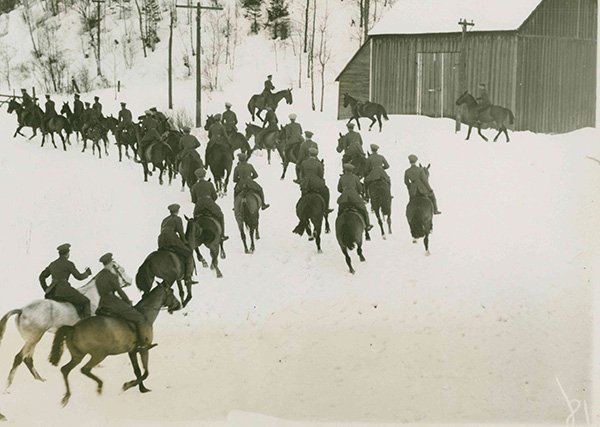
The story of the Norwich Cavalry evokes images of the days when horses functioned as part of daily life at Norwich University. Fascinating facts and “firsts” at Norwich came to life in this exhibition, with life-size imagery, sounds, and objects from the university’s cavalry history. The exhibition offered an in-depth look at the distinguished history of the cavalry at Norwich, and it included details of daily riding instruction and care of the three breeds of horses in the program.