- Norwich Blogs
- Blogs
- The New Russian Roulette: Taliban Edition
The New Russian Roulette: Taliban Edition
By Naweed Kawusi
Russia and the Taliban formalized a military-technical cooperation agreement in May 2026, reflecting a broader Russian effort to deepen ties with Afghanistan’s Taliban government through diplomatic recognition and security cooperation rather than a formal military alliance. The agreement focuses on maintaining and repairing Afghanistan’s existing Soviet- and Russian-made military equipment, allowing Moscow to become a key security partner for the Taliban while expanding its influence in Central Asia amid rising tensions with Pakistan. The author argues that the deal is part of a larger geopolitical trend in which Russia and other authoritarian states fill the strategic vacuum left by U.S. disengagement from Afghanistan, highlighting the need for continued American attention and regional engagement despite not recognizing the Taliban regime.
Disclaimer: These opinion pieces represent the authors’ personal views and do not necessarily reflect the official policies or positions of Norwich University or PAWC.
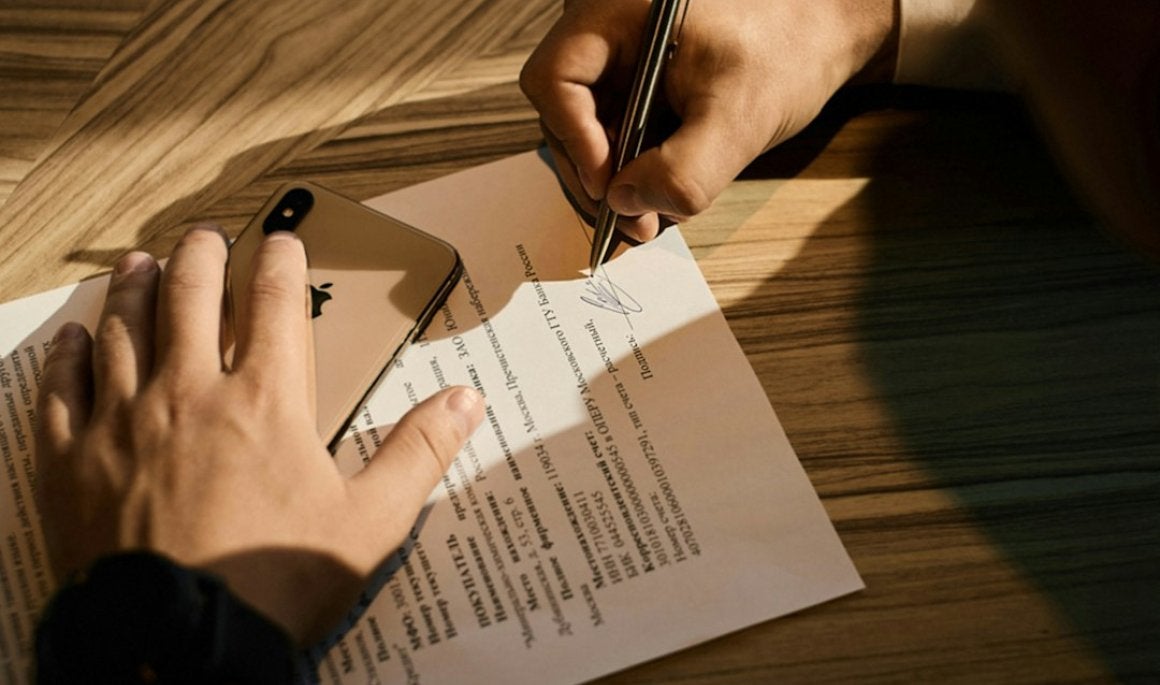
On May 27, 2026, on the quiet sidelines of a regional security summit outside Moscow, Sergei Shoigu, the secretary of Russia’s Security Council, sat down across a table from Mullah Mohammad Yaqoob Mujahid. Mujahid, also known locally as Mullah Yaqoob, is the Taliban’s de facto defense minister and the son of Mullah Omar, the movement’s founder. Together, the two men signed a formal agreement on military-technical cooperation.[1]
After that, no one saw the full text of the agreement, and analysts who track the region were quick to caution that the document was likely more symbolic than substantive. They described it as a formalization of an already warming diplomatic friendship rather than the birth of a binding military alliance.[2] They might be right, but politically speaking, it was an “enemy of my enemy is my friend” kind of situation for both sides of the agreement, given the world’s geopolitical landscape.
The agreement, albeit low-key, did not emerge out of thin air, as those who keep track know; this represents the latest step in a deliberate, multiyear Russian effort to court the Taliban that most of the world, understandably preoccupied by wars in Ukraine and Gaza, has barely registered.[3] In April 2025, Russia’s Supreme Court quietly removed the Taliban from its official list of designated terrorist organizations. Three months later, in July 2025, Moscow became the first capital on earth to grant formal diplomatic recognition to the Taliban as Afghanistan’s legitimate government. It was a prize Kabul had sought since its return to power in August 2021, and one that no other state, from Beijing to Islamabad, had been willing to extend.[4] By 2024, Vladimir Putin was already referring publicly to the Taliban as allies in the fight against international terrorism, with the May 2026 accord simply the next, entirely predictable step on a path Moscow has been laying in plain sight.[5]
What the agreement actually does
It is worth being precise about what this military-technical agreement actually represents: it is not a mutual defense treaty, and it will definitely not send Russian battalion tactical groups to the Hindu Kush, nor will it dispatch Taliban fighters to the trenches of Eastern Europe.[6] The practical scope of the deal is narrower, more mundane, and ultimately far more effective: the maintenance, repair, and technical overhaul of Russian-origin military hardware.[7]
This distinction matters immensely, as when the United States and its allies departed Kabul in August 2021, they left behind billions of dollars’ worth of high-tech NATO equipment. Yet the Taliban had no structural capacity to keep those American weapons operational, lacking specialized spare parts, technical manuals, and international supply chains. As a result, much of that Western hardware has steadily degraded into scrap metal.
What remains functional in the Taliban military inventory today is overwhelmingly the older Soviet- and Russian-designed equipment that predates the 20-year American intervention. That legacy inventory, consisting of armored vehicles, transport helicopters, and heavy artillery, is precisely what Moscow is now stepping in to preserve.[8]
Here lies the quiet brilliance of the Russian strategy. Moscow is not selling the Taliban a fleet of advanced jet fighters, but rather it is positioning itself as the only global power capable of keeping the regime’s existing arsenal functional. In the transactional world of great-power competition, becoming indispensable is vastly superior to being generous.
There is also a pressing military logic pushing both sides together. Since early 2026, armed clashes along the Durand Line have escalated dramatically, at least in terms of the performance side. Pakistani airstrikes inside Afghan territory have destroyed significant portions of the Taliban’s border infrastructure and command posts while simultaneously targeting numerous civilian infrastructures.[9] This gives the Taliban a pretty compelling excuse to make deals with another neighboring nation, even if that neighboring nation happens to be Russia, whose invasion of Afghanistan was the very basis for the creation of Mujahideen and the Taliban’s jihad starting as early as the 1980s. At the same time, a Russian state, dreaming of the former glory days of the USSR, eager to expand its influence across Central Asia and create buffer zones against the West, has every incentive to be the provider of that support. Neither side is acting out of ideological affection. As I said earlier, the concept of the enemy of my enemy being my friend is clearly illustrated here.
Washington’s instinct to look away
Washington’s instinct, naturally, is to treat all of this as a minor distraction. Afghanistan dropped out of the top tier of American strategic priorities the moment the last aircraft cleared Kabul airspace in August 2021. Despite the over-the-horizon counterterrorism measures and the alleged weekly payoffs to the Taliban leadership to assist with counterterrorism in the region, nothing about a vaguely worded maintenance agreement between two governments that the United States does not recognize seems likely to alter that mindset. At least not publicly.
However, indifference carries a steep price, and that price is being paid in the political vacuum left behind by American withdrawal. Russia has continuously hosted the Moscow format dialogues on Afghanistan since 2021, keeping regional powers engaged at a time when Western multilateral forums on the country have gone dormant. Meanwhile, China, the United Arab Emirates, Uzbekistan, Türkiye, and Pakistan have all quietly elevated their diplomatic representation in Kabul to the ambassadorial level.[10]
This dynamic illustrates an emerging, broader pattern in modern global politics, as authoritarian regimes no longer require shared values or formal treaties to work together in today’s multipolar world. They build functional, highly flexible networks designed to bypass Western sanctions, project power, and slowly destroy democratic influence. Moscow does not care that the Taliban oppresses its own population, just as the Taliban does not care that Russia is waging a war of aggression in Europe, and it’s increasingly ironic that this is the same Russia whose predecessor’s invasion of Afghanistan gave birth to the Taliban and what came before them.
Not recognition, but not disengagement either
None of this means Washington should rush toward recognizing the Taliban. The regime in Kabul continues to deny Afghan women and girls their most basic human rights, oppressing men and boys, detaining, torturing, and killing former members of the Afghanistan National Defense and Security Forces (ANDSF) and enforcing a system of total exclusion that makes it unfit for normalized international relations. However, there is a wide expanse between full diplomatic recognition and total strategic disengagement, and the fact that this lack of focus paves the ground for other players to step in.
The United States has practical, low-cost options to counter this trend if it chooses to act. The shuttering of the Special Inspector General for Afghanistan Reconstruction in December 2025 eliminated the last standing independent mechanism for tracking international money and institutional dynamics inside the country.[11] Rebuilding a version of that oversight capacity, even through independent, nongovernmental research bodies, would cost Washington very little. Doing so would strip Moscow and Beijing of the informational darkness in which this kind of quiet consolidation thrives. Additionally, sustained engagement with Afghanistan’s neighbors, particularly Central Asian states that are currently hedging their bets, would help ensure that regional security alignments do not harden permanently around Russian and Chinese interests.
The trend line that matters
The uncomfortable truth is that Afghanistan did not stop mattering to global security when American troops left; it just wasn’t a priority for American policymakers anymore. Russia’s new military-technical agreement with the Taliban is not an immediate national security emergency on its own. It is, however, a clear data point on a long-term trend line, in which the United States disengages out of frustration or fatigue, and opportunistic powers patiently move in. A superpower that ignores that trend for long enough will eventually wake up to a world it no longer recognizes, nor does it lead.
Naweed Kawusi is a retired colonel who served in the Afghan National Police and as director general of international cooperation at Afghanistan’s Ministry of Interior, where he managed the Law and Order Trust Fund for Afghanistan, a 22-nation, $3.1 billion police development fund. He is the founder of Kabul Institute, an Afghan-led policy and research organization, and teaches at the University of São Paulo. He is the author of “The Bleeding Nation: Superpowers, Ethnic Politics, and Afghanistan’s Collapse” and the forthcoming “The Brave and the Corrupt.”
Notes
1. Farangis Najibullah, “In Sign of Deepening Ties, Russia and Afghan Taliban Sign Military Deal,” Radio Free Europe/Radio Liberty, May 28, 2026.
2. Ruslan Suleimanov, quoted in “Moscow Signs Military Partnership With the Taliban,” The Moscow Times, May 28, 2026.
3. “Taliban, Russia Sign Deal Expanding Military and Technical Cooperation,” Kabul Now, May 2026.
4. International Crisis Group, “Russia Becomes First State To Recognise Taliban as Rightful Afghan Government,” July 4, 2025.
5. “Moscow Signs Military Partnership With the Taliban,” The Moscow Times, May 28, 2026.
6. Zamir Kabulov, cited in “Russia’s Dual Afghan Strategy and Pakistan’s Shrinking Room for Maneuver,” The Diplomat, June 2026.
7. SpecialEurasia, “Assessing Russia-Afghanistan Military-Technical Cooperation,” June 1, 2026.
8. Ibid.
9. The Diplomatic Insight, “Russia Signs Military Cooperation Agreement With the Taliban,” June 1, 2026.
10. Hudson Institute, “Russia-Taliban Relations Are Growing: Implications for US Policy,” June 27, 2026.
11. SIGAR shutdown, December 2025 (as referenced in Kabul Institute, “The House Built on Sand: The Inevitable Collapse of the Afghan Republic, 2001-2021,” Sept. 2026).