Whether you want to advance within your field, refocus your career, or expand your knowledge and skills in an area you’re passionate about, Norwich University Online can help you achieve your professional and personal goals.
Explore the challenges and opportunities that await you on campus and beyond. Find a program that matches your passion, talent, and grit. Discover the benefits of joining the Corps of Cadets. Map out your Norwich path that leads to a career you love, igniting your sense of purpose -- in the private, public sectors, or the armed forces.
Explore the online learning experience at Norwich. Find the bachelor's or master's program that matches your ambition. Discover how Norwich Online delivers education to you -- wherever you are. Meet our unique community that provides individual support and creates opportunities to network and build lasting relationships that will accelerate your career.
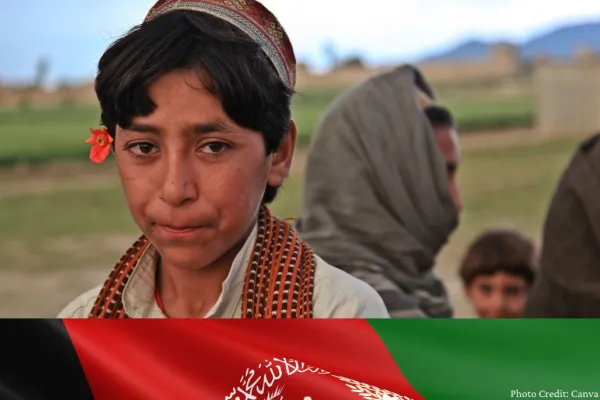
Billions of dollars in humanitarian assistance have been directed toward Afghanistan since 2021. But how much of that funding can actually be traced to its ultimate use?
In this edition of Voices on Peace and War, Shoaib Alami examines a troubling gap between international humanitarian appeals and public accountability. Drawing on research from the Kabul Institute, he explores why only 9 percent of $8 billion in reported humanitarian funding can be traced beyond its initial recipients—and what greater transparency could mean for the millions of Afghans who depend on that assistance.
Alami, Head of Partnerships at the Kabul Institute, brings more than 18 years of international development and infrastructure experience to the discussion.
His latest article, The Appeal Without the Account, leads this edition, accompanied by two earlier contributions to Voices on Peace and War.
Together, these articles invite readers to consider the complex challenges of conflict, humanitarian assistance, and the pursuit of lasting peace.
The Appeal Without the Account examines the transparency and accountability challenges surrounding humanitarian aid in Afghanistan. Drawing on research from the Kabul Institute, Shoaib Alami explores how limited tracking of humanitarian funding weakens donor confidence and raises concerns about aid effectiveness. The article highlights the need for stronger financial reporting, greater transparency in aid delivery, and increased support for Afghan-led organizations. It argues that improving accountability is essential to sustaining international humanitarian assistance and ensuring aid reaches vulnerable Afghan communities.
Russia and the Taliban formalized a military-technical cooperation agreement in May 2026, reflecting a broader Russian effort to deepen ties with Afghanistan’s Taliban government through diplomatic recognition and security cooperation rather than a formal military alliance. The agreement focuses on maintaining and repairing Afghanistan’s existing Soviet- and Russian-made military equipment, allowing Moscow to become a key security partner for the Taliban while expanding its influence in Central Asia amid rising tensions with Pakistan. The author argues that the deal is part of a larger geopolitical trend in which Russia and other authoritarian states fill the strategic vacuum left by U.S. disengagement from Afghanistan, highlighting the need for continued American attention and regional engagement despite not recognizing the Taliban regime.
As the Arctic becomes more accessible, U.S. security vulnerabilities grow. Russia and China pursue opportunities along emerging maritime routes, while the U.S. lacks a sufficient presence to deter militarization. This article examines Arctic policy, military activity, and the Unified Command Plan, and calls for a stronger U.S. approach.