Student Research Showcase
The Student Research Showcase is a month of applauding the academic and creative work by the Norwich community.
Message From the Program Director
Welcome to our 24th spring celebration of student research. Norwich students are curious and creative critical thinkers. They work independently and on teams to tackle complex problems, never forgetting the Norwich motto “I will try”. We are so excited to celebrate the amazing research and creative work our students have completed over the past year, including research fellowships, honors theses, senior capstone projects, and more. This year, in addition to the Poster Session and Award Ceremony (April 14, 4:30-6 p.m. in Plumley Armory), we’re gathering research products and presentations from across campus in one place to showcase the amazing and diverse research and creative work undertaken by Norwich students. We invite you to explore the work submitted so far below, and encourage students whose work is not yet here to reach out so we can celebrate your work, too.
Enjoy the showcase!
Allison Neal, Ph.D., undergraduate research program director
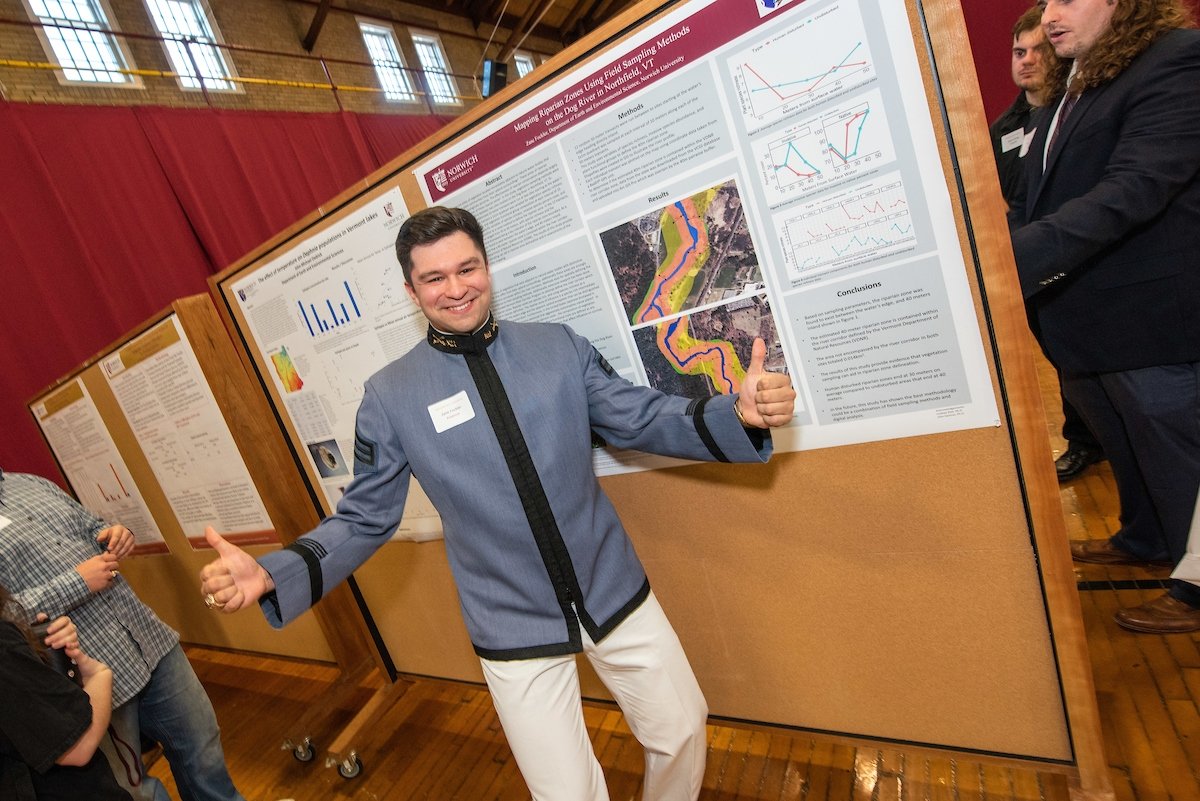
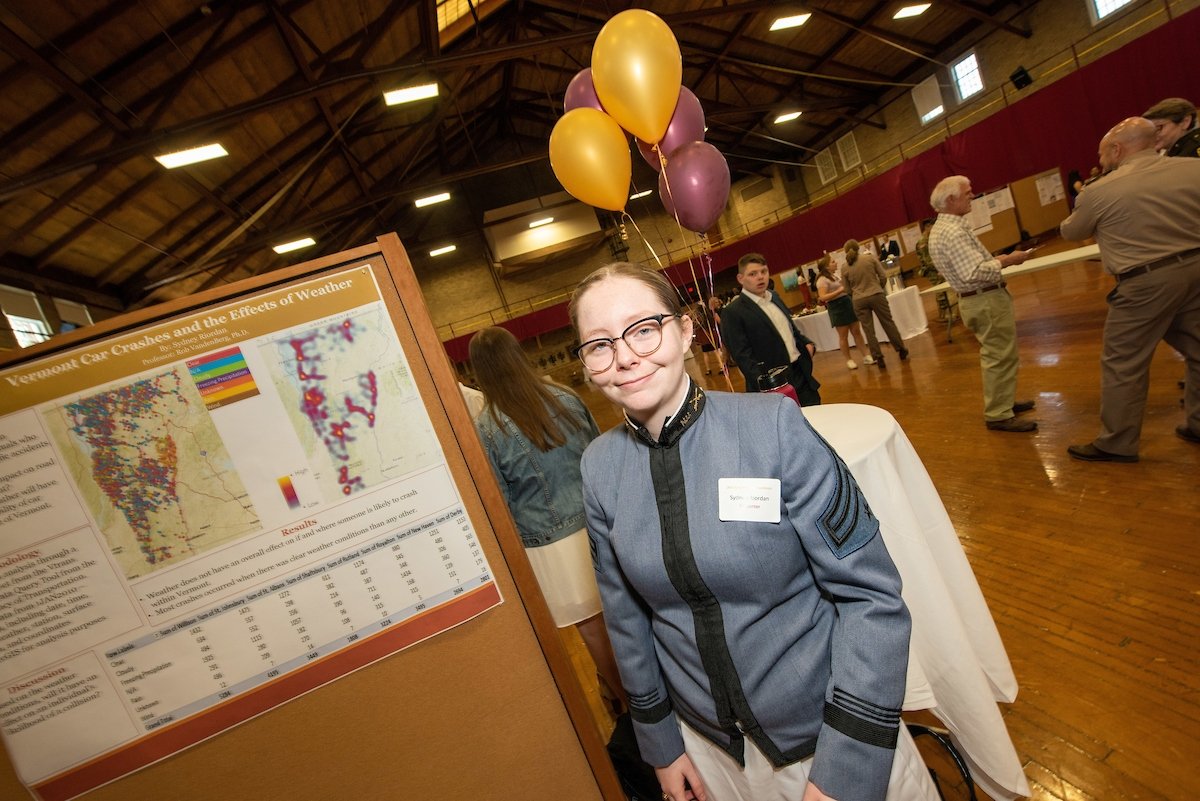
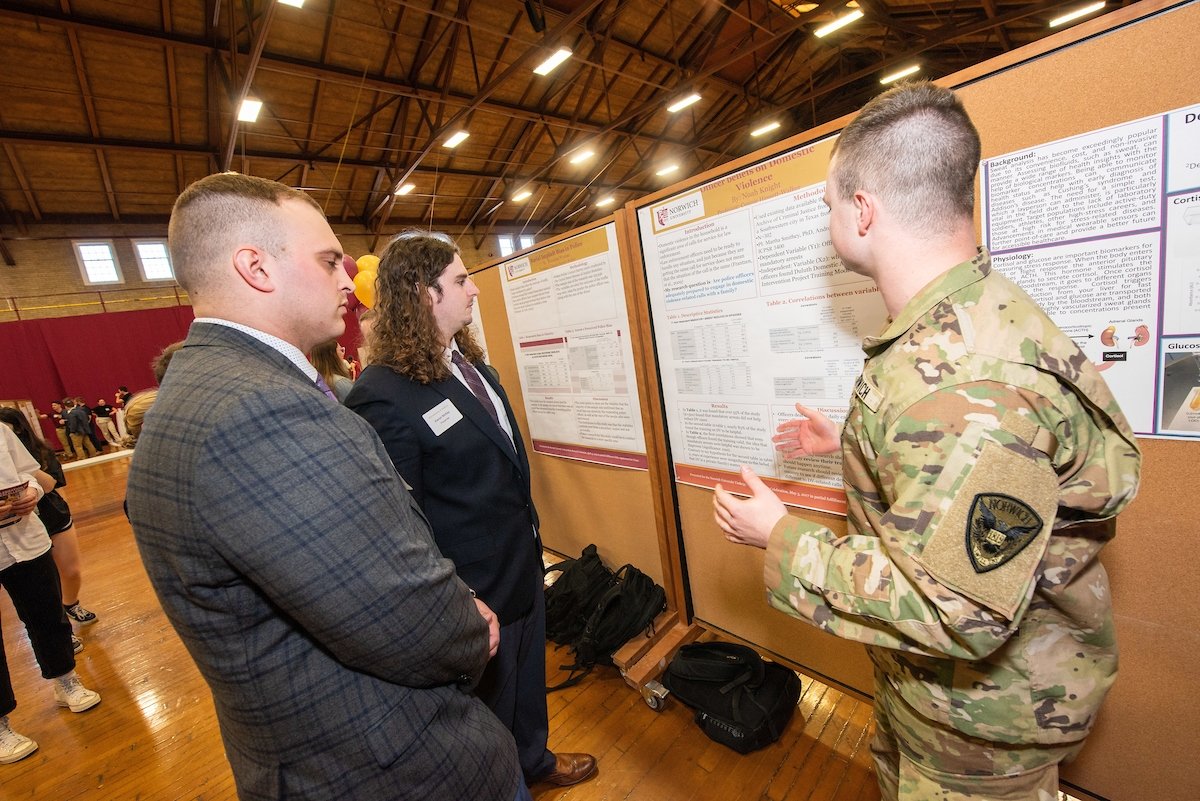
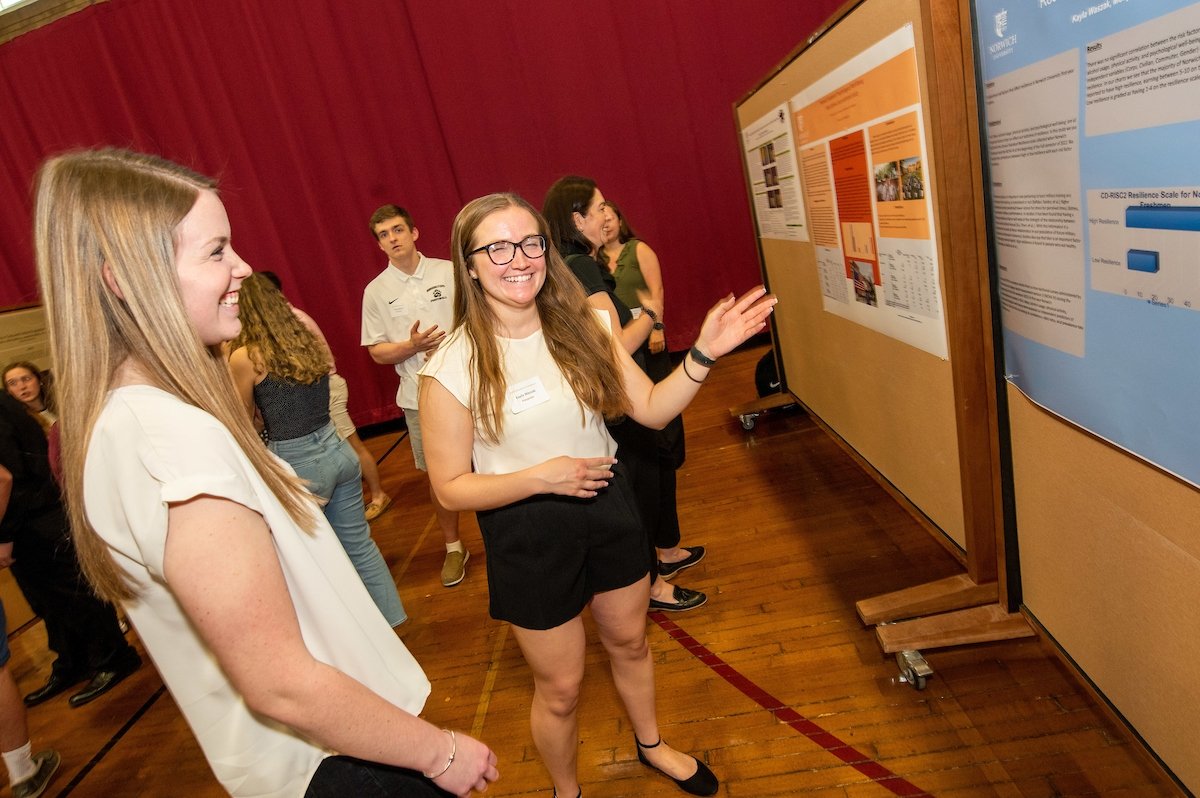
April 14, 2026 | Poster Session Program
4:30-6 p.m. | Plumley Armory
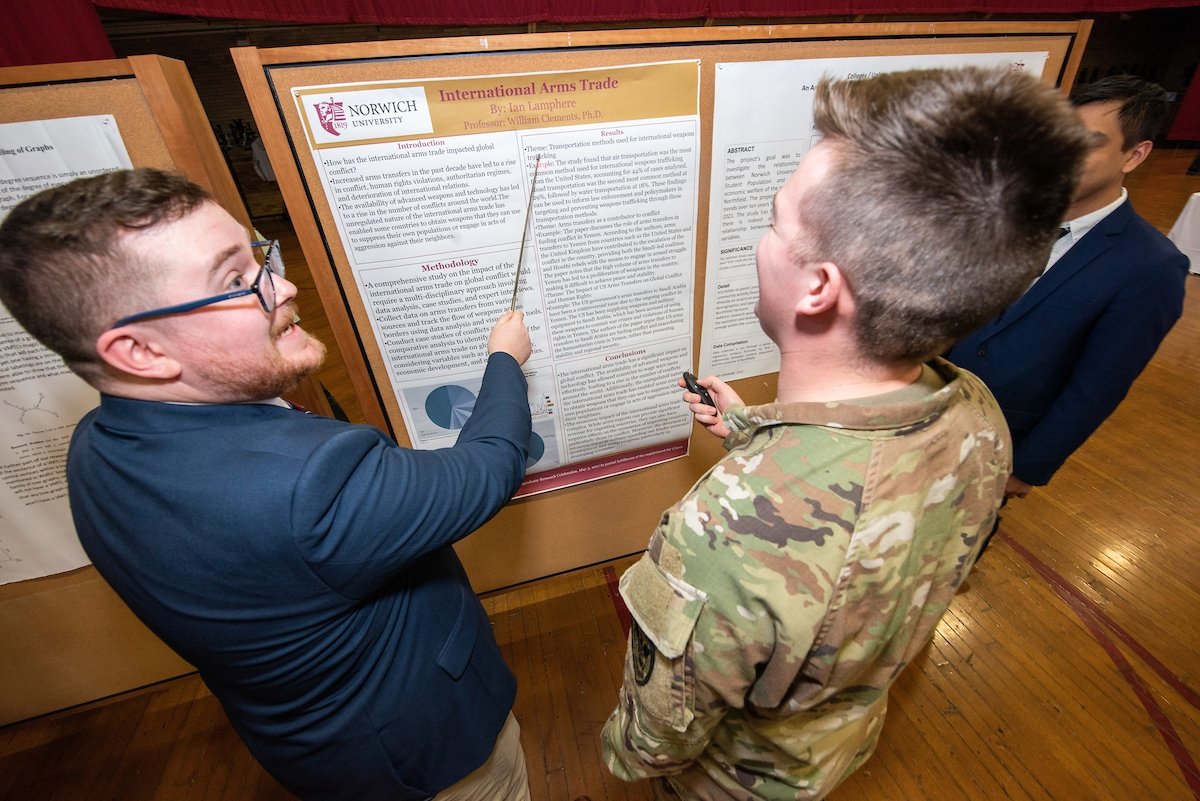
Come explore research posters by students from diverse academic disciplines and celebrate the recipients of several research awards and fellowships. Refreshments will be served.
-
External Grants & Fellowships
Roger Bos
Sponsor: Randolph Friend
Comparative Spectroscopic Study of Dysprosium Doped Crystals and Glasses for Visible-IR Laser ApplicationsAbstract details
Dysprosium-doped materials offer rich emission spectra spanning the visible and mid-infrared (mid-IR) regions, making them promising for advanced solid-state laser applications. We report a comparative spectroscopic study of Dy³⁺ in two low-phonon-energy crystals (KPb₂Cl₅, “KPC”, and BaF₂) and two glass hosts (indium fluoride, InF₃, and a gallium–germanium–sulfide “GGS” chalcogenide). All samples were excited at 405 nm and 450 nm to probe visible emissions (420–800 nm), and at 910 nm to probe mid-IR emissions (2100–5000 nm). Under blue-laser excitation (405/450 nm), the Dy³⁺ ions exhibit characteristic visible luminescence, including strong blue (~480 nm) and yellow (~573 nm) bands. Under 910 nm excitation, multiple Dy³⁺ transitions in the near- and mid-IR are observed, notably emission peaks around 2.9 µm and 4.3 µm, enabled by the low maximum phonon energies of these hosts.
The crystalline hosts (Dy:KPC and Dy:BaF₂) show significantly stronger mid-IR emission and longer excited-state lifetimes (~1–3 ms for key levels) than the glasses, with Dy:KPC yielding the highest mid-IR output due to its extremely low phonon cutoff (enabling Dy³⁺ emissions to ~9 μm). This performance is attributed to reduced nonradiative multiphonon relaxation in the crystals, consistent with energy-gap law predictions for low-phonon materials. Dy:InF₃ and Dy:GGS glasses, while exhibiting broader emission bandwidths, have shorter lifetimes due to higher phonon-induced losses. Our results highlight that Dy³⁺-doped low-phonon materials (especially KPb₂Cl₅) can support efficient mid-IR emission up to ~5 µm, holding great potential for compact mid-IR laser sources in environmental gas sensing and infrared countermeasure applications.
Azalea Khanal
Mentor: Helene Sisti
Analysis of EEG and Behavioral DataAbstract details
Predicting human behavior from neural activity remains a central challenge in computational neuroscience. This study explored the effectiveness of various machine learning frameworks in predicting behavioral performance using frequency-domain Electroencephalogram (EEG) data. We implemented a comparative analysis of ensemble methods—including Support Vector Machines (SVM), Random Forests, and Hypergradient Descent—alongside a Convolutional Neural Network (CNN) trained on time-frequency representations of multi-channel signals. Furthermore, we investigated whether the integration of baseline behavioral scores as an independent variable could enhance predictive accuracy
for subsequent performance and learning improvements. While the models encountered significant challenges in achieving statistical significance (R≅0,MSE>4), the results highlight critical hurdles in utilizing neural data, mainly the large variance inside signals, and the requirement of large data for any significant analysis. However, this study provides a framework for analysing larger datasets of behavioral and EEG data later.
Lauren Steverson
Mentor: Morgan Moeglein
Exploring Leaf Dissection in Embryonic Leaves from Winter Buds Across Six Species Using Image-Based MorphometricsAbstract details
Leaf shape varies widely among species, yet its developmental drivers remain unclear. We quantified embryonic leaves from winter buds across six species to test whether spatial constraints influence leaf dissection. Morphological traits were measured using image-based analyses and summarized at the bud level. Leaf dissection and edge complexity both increased with the number of leaves per bud, supporting a role for spatial constraints in shaping early leaf morphology.
Amrutaa Vibho, Ashley Parker, Dabira Ojeyomi, and Mikalya Holmberg
Mentor: Kylie Blodgett
How do changes in mental health affect dietary behaviors in first-year students at a senior military college?Abstract details
This study investigated the correlation between mental and behavioral predictors and diet quality as the outcome for three cohorts of first-year students at Norwich University, America’s oldest private senior military college. Statistical analysis was conducted in Python using statsmodels on Likert-type data collected through intake and exit surveys conducted at different times during the academic year. Ordinal Logistic Regression was selected as the model to identify the key predictors of diet quality (FFQ) among resilience, sleep, psychological distress, and psychological well-being. The model identified resilience (BRS) as the only statistically significant predictor (p-value = 0.013), with higher resilience levels associated with better diet quality. The process used self-report data and, therefore, might contain bias, and the dataset was affected by participant attrition. Multicollinearity among the predictors was also evident in the model. However, the findings underscore the critical role of psychological resilience in maintaining a healthy diet, especially among first-year students, cadets, and civilians at a senior military college.
4:30-6 p.m. | Plumley Armory
Come explore research posters by students from diverse academic disciplines and celebrate the recipients of several research awards and fellowships. Refreshments will be served.
-
Research Centers
Kirsten Atuhaire
Mentor: Kahwa Douoguih
Mapping the Digital Divide in Vermont: A Study of Internet Access in Montpelier, Vergennes, and RoxburyAbstract details
The study investigates disparities in internet access between urban and rural Vermont communities. Using surveys and interviews, we aim to identify how geography, income and infrastructure affect residents’ ability to participate in education and economic opportunities. The research fills a gap in state-level digital divide analysis and could inform rural broadband policy in both Vermont and developing countries.
Maverick Landry
Mentor: Ali Al Bataineh
Enhancing Predictive Maintenance: Evaluating Recurrent Neural Network Approaches for Turbofan Engine RUL Prediction Using NASA DatasetAbstract details
Turbofan Engines are ubiquitous in commercial aviation and form the backbone of modern aerospace propulsion. Given its critical role, reliable maintenance is essential. This research evaluates recurrent neural network approaches for predicting the remaining useful life (RUL) of turbofan engines based on NASA’s FD001 dataset. The goal of the research is to determine which of the recurrent neural network models is best for the time series regression task of predicting the RUL. The four main AI architectures implemented in this project were the Simple Recurrent Neural Network (SimpleRNN), the Long Short-Term Memory model (LSTM), the Bi-directional LSTM (Bi-LSTM), and the Gated Recurrent Unit (GRU). The FD001 dataset has a training set, a testing set, and validation for the test set. Some of the key methods implemented to improve results include Sliding Windows, RUL Clipping, Importance ranking, Early Stopping, and Adaptive learning rates. The project yielded significant results with the GRU achieving the best R2 value with 0.87, and RMSE of 14.9 cycles, outperforming all previous publications. This project concludes that RNN models, when combined with tuned preprocessing, can be used to process highly complex datasets in the aerospace industry.
Nikita Ponomarenko
Mentor: Fritz Burkhardt
AI-Driven Optimization of Waste Management Operations in the United StatesAbstract details
The U.S. waste management industry faces mounting pressure to reduce costs and improve environmental performance, yet adoption of artificial intelligence remains uneven across firms of different sizes. This research investigates which company size, large, mid, or small cap, achieves the greatest return on investment from AI implementation in core waste management operations.
Using Bloomberg Terminal data, we analyze six U.S. waste management companies across three market capitalization tiers, including Waste Management, Republic Services, and Casella. Methods include financial data collection, cost driver analysis, AI product landscape research, correlation analysis, and discounted cash flow modeling to quantify projected ROI from AI adoption in areas such as route optimization, material recovery, and predictive maintenance.
We anticipate that mid cap firms will demonstrate the strongest relative ROI, benefiting from sufficient operational scale without the legacy infrastructure constraints facing large cap operators. Results will be assessed across four dimensions: cost efficiency, environmental impact, community outcomes, and financial return.
These findings matter because even modest reductions in collection costs, which represent 40 to 55 percent of revenue, can substantially improve net margins in a thin margin industry. This research provides actionable guidance for investors, operators, and policymakers evaluating AI investment in the environmental services sector.
4:30-6 p.m. | Plumley Armory
Come explore research posters by students from diverse academic disciplines and celebrate the recipients of several research awards and fellowships. Refreshments will be served.
-
Senior Capstones & Course-Based Research
Belle Baca
Mentor: Emma Barret
Radical Scavenging Abilities of Naturally Derived PeptidesAbstract details
When foods are exposed to reactive oxygen species (ROS), lipids undergo peroxidation which degrades the food's nutritional value and produces undesirable byproducts that affect its flavor, aroma, color, and texture. Chemical preservatives are added to food to prevent this spoilage. Common preservative used in foods today such as sodium nitrate, sodium nitrite, propylparaben, and others are proven to be carcinogenic/toxic when consumed in large quantities. Due to this there is a high demand to develop naturally derived food preservatives to combat ROS and prevent food spoilage without posing any health risks. Antioxidant peptides derived from natural sources have the potential to serve as effective and safe food preservatives. We aim to explore the option of using soybean derived antioxidant peptides as a potential alternative to the harmful preservatives used currently.
Herein, we report the synthesis of a novel soybean derived peptide that utilizes non-natural amino acid 2-thiohistidine (2-thioHis), which is the amino acid derivative of Ergothioneine (EGT). EGT is a small molecule produced by fungi and actinobacteria that is known to have potent antioxidant activity. We will evaluate the ability of our 2-thioHis-containing soybean derived peptide to scavenge free radicals and copper binding abilities. We will also examine its temperature stability to determine its potential use in food applications to combat ROS. We compared the results of the wildtype and mutant peptide to tocopherol, a naturally derived food preservative that is already commercially available.
Henry Bacon
Mentor: Dave Westerman
Unraveling the Protoliths of Metamorphosed and Sheared Lithologies Trapped within the Dog River Fault Zone, VermontAbstract details
This study investigates lithological units within the Dog River Fault Zone (DRFZ) in the northern Roxbury Quadrangle, to constrain fault history and identify protoliths of metamorphosed and sheared lithologies. Fieldwork focused on three locations: the southern end of Bull Run, a tributary from Winch Hill Road, and Lovers Lane. Fabric across all lithologies trend ~N20°E, parallel to the DRFZ. At Bull Run, a highly strained, fine-grained, silicified rhyolitic unit (72–85 wt% SiO₂) was found. Euhedral zircons (3:1–4:1 aspect ratios) indicate igneous origin. This unit occurs as mylonitized lenses interlaminated with a pelagic metasedimentary lithology. At the Winch Hill section, a medium-grained trondhjemitic unit (~80 wt% SiO₂; Na/K ~3:1) is bounded by the Northfield Formation. Subhedral to euhedral zircons suggest igneous origins, while brecciation records brittle faulting and possible tectonic emplacement. At Lovers Lane, a package of Cram Hill Formation consisting of shale and sandstone protoliths record two deformation events, a ductile system during the Taconic Orogeny and a brittle system during the Devonian. Geochemical signatures indicate a more mafic provenance in this package compared to the Shaw Mountain Formation. The contrasting deformation styles suggest a prolonged fault history, transitioning from ductile to brittle conditions during uplift.
Titus Barber
Mentor: Olivia Thurston
Toxic Concentrations of Arsenic at Contact Zones in Northeastern Vermont BedrockAbstract details
Arsenic is a carcinogen commonly enriched in metasedimentary rocks throughout New England, but limited geologic data exists for northeastern Vermont. This study investigates the concentration and minerals of arsenic within rocks of the Northeast Kingdom to better understand potential bedrock sources of arsenic. Arsenic concentrations were measured using Inductively Coupled Plasma- Optical Emission Spectrometry and mineral textures were analyzed using Scanning Electron Microscopy. Arsenic alteration intensity was evaluated through Alteration Index (AI) and Chlorite-Carbonate-Pyrite Index (CCPI) calculations. All sampled bedrock contained arsenic, with an average concentration of 0.0562 ppm, exceeding the EPA action level of 0.01 ppm and indicating a potential geogenic source of arsenic to local groundwater. Mineral texture analysis reveals that arsenic occurs within secondary mineral phases suggesting remobilization of arsenic during alteration. AI and CCPI values show sericitization and chloritization as main alteration mechanisms. These results support a multistage model in which arsenic was initially introduced during Taconic basin deposition and later redistributed during Acadian convergence and Mesozoic rifting. These findings highlight the role of tectonically driven alteration as a key control on arsenic mobility and the importance of mineral-scale analysis when evaluating geogenic groundwater contamination risk.
Abigail Champion
Mentor: Morgan Moeglein
The Correlation Between Genome Size and Leaf SizeAbstract details
Question: Does the size of the genome correlate to the size of the leaf? General Methods: Dr. Moeglein collected, pressed, and stored leaves from 3 specimens for 14 species. I scanned and measured the area and perimeter of 3 species using J image. Anticipated results is that a smaller genome size will correlate to a greater leaf size. The importance of these results is that it provides a foundation to understand the effects of plant genetics and how that impacts plant development.
Matthew Coppolino
Mentor: Richard Dunn
Origin of Deposits in Nasmith Brook Valley, Central Vermont: Glacio-lacustrine Sediments Overlain by Thick TillAbstract details
Recent landslides have exposed eleven sections in Nasmith Brook valley, and these were investigated for comparison and correlation to previously mapped deposits. Nasmith deposits are dominated by well-sorted sand and silt, with local occurrences of sand-silt rhythmites or coarse imbricated gravels. Some sections display ice-contact deposition, and soft-sediment deformation is fairly common. All sections are capped by an 8-10 m thick silty, compact diamict. The uppermost part of the bedded sand-silt deposits exhibits folding or dismemberment, and it is marked by an erosional unconformity with the overlying diamict. Bedded sand-silt sediments are commonly sheared or rafted into the base of the diamict. In general, the sections represent glacio-lacustrine deposition, in some cases with a rapid rate of deposition, followed by glacio-tectonism and erosion to an unknown depth by overriding ice, which then deposited a thick till. This study demonstrates that ice readvanced in the Winooski basin at least as far east as East Barre and Marshfield.
Sarah DeBot
Mentor: Ethan Guth
Extraction and Analysis of Xanthophylls from Extremophile BacteriaAbstract details
Deinoxanthin is a xanthophyll carotenoid produced by extremophilic bacteria in the Deinococcus genus. These bacteria are well known for their ability to survive extreme conditions, including high levels of radiation, desiccation, and oxidative stress. Due to this remarkable resilience, it is hypothesized that deinoxanthin contributes to cellular protection by acting as a potent antioxidant. As small-molecule antioxidants play important roles in limiting oxidative damage associated with aging, inflammation, and disease, there is growing interest in identifying and characterizing novel antioxidant compounds from biological sources.
In this study, xanthophylls extracted from the extremophile Deinococcus radiophilus were purified and characterized in order to compare their antioxidant properties with those of the more extensively studied Deinococcus radiodurans. Pigment extracts were analyzed using HPLC and LC–MS to assess differences in xanthophyll composition between species. Antioxidant activity was evaluated using DPPH and ABTS radical scavenging assays monitored by UV–Vis spectroscopy. By comparing xanthophyll profiles and antioxidant behavior across these organisms, this work aims to better understand how extremophilic bacterial physiology influences carotenoid production and to evaluate the potential of these pigments as biologically derived antioxidants.
Jo Cordova-Flores, Greyson Merola, R-Jay Ordaz
Mentor: Sergio Diaz Luna
La Lotería MexicanaAbstract details
This project will examine how La Lotería Mexicana transcends the realm of a traditional game by investigating its role in the expression and construction of Mexican cultural identity. The main question to be answered in this investigation is: How does La Lotería Mexicana serve as a form of cultural expression and cultural memory? While answering this question, literature review and cultural investigation techniques will be used in relation to the concepts of Caillois and Huizinga. As this analysis clearly shows, La Lotería is a visual archive of Mexican identity and contains elements such as hierarchy, national iconography, and its attitude toward death. The element of chance in the game points to the concept of luck, or alea, and the imagery itself points to mimesis. We have determined that the game promotes cultural values while also evolving with the times through reinterpretations in art, education, and social movements.
Abbey Houghton
Mentors: Emma Barrett and Ethan Guth
Synthesis of L-K6 Peptide For Dental UseAbstract details
I wanted to test the effectiveness of the L-K6 AMP against oral pathogens. It’s know more commonly for breast cancer research and there could be a pathway to oral cancer as well. Firstly the bulk of the project was trying to synthesis by hand the peptide itself. Then currently testing it against oral pathogens in different ways. There is positive results and this could be marketed to people who don’t have access to regular oral hygiene methods. I have written a lit review about different sources but there is no formal project asking the question I am!
Chase James
Mentor: Olivia Thurston
Arsenic in Eastern Vermont GroundwaterAbstract details
Several studies conducted in the New England area have found that there are elevated Arsenic (As) levels in the groundwater connected to metasedimentary bedrock and igneous intrusions. Despite the fact that As is a major carcinogen, Vermont has received little research into the exact concentrations and mobilization pathways of the As from the local bedrock and into the groundwater. In this study 10 groundwater samples from a mixture of public supplied and private wells in the Northeast Kingdom of Vermont have been analyzed using Inductively Coupled Plasma Optical Emission Spectrometry (ICP-OES) and a YSI probe for trace elements, including As, and physical groundwater parameters (ORP, pH, SPC, DO%, and temperature). All groundwater samples were found to have elevated As concentrations averaging 0.0072mg/L. To understand the exact water chemistry that facilitates the leaching of As from the bedrock and into the groundwater, four leaching experiments were run with varying pH (6, 8,10) and continuous aeration to see if the groundwater As levels could be recreated in the lab. From the laboratory leaching experiments, a starting pH of 8 was found to cause the highest amount of As leaching from the bedrock into the water. The data clearly shows that high pH levels in the groundwater are the most likely mobilization pathway for As and that existing levels of As in the groundwater of the Northeast Kingdom should be considered a health hazard to the local population.
Anna Kerr
Mentor: Lindsey Pett
The Role of Senesced Sarracenia purpurea Pitchers in Wetland EcosystemsAbstract details
Sarracenia purpurea (Purple Pitcher Plant) a carnivorous inhabitant of nutrient poor wetlands is commonly used as an ecological model system as the living pitchers contain a complete micro aquatic ecosystem. In contrast, the ecological role of senesced pitchers remains largely unexplored. We investigated whether senesced pitchers function as habitat and food resources across six Vermont wetlands, and whether use of senesced pitchers varies by wetland type or distance to forest edge, consistent with island biogeography theory. At each site, senesced pitchers were measured, dissected, and assessed for herbivory and invertebrate occupancy. Pitcher morphology and biomass differed significantly among wetlands but did not predict inhabitant presence or herbivory. Senesced pitchers were found to support a diverse group of arachnids and other invertebrate inhabitants. We found that invertebrate abundance was positively associated with detrital biomass. Herbivory of senesced pitchers by insects and vertebrates occurred at all sites and declined significantly with increasing distance from the forest edge. Our findings demonstrate that senesced pitchers of S. purpurea contribute structurally and trophically to wetland ecosystems by providing habitat and serving as a food source, with spatial context influencing biotic interactions.
Blake Kierstead
Mentor: Zachery Seibold
Heightened ConnectionsAbstract details
The project involved designing a building in downtown New Haven near the historic Union Station. The program includes a mix of public-facing commercial spaces such as retail, dining, and other daily-use activities, alongside flexible office space.
The design features a hybrid structural system combining large exterior tube steel supports with an interior cross-laminated timber (CLT) framework. This approach emphasizes the connection between steel and timber, with structural elements expressed across the entire building. The interior structural system extends outward to form an exoskeleton, which defines the building’s façade and overall skin.
Greyson Merola
Mentor: Kyle Pivetti
Acculturation of Hispanics and Latinos in the United States MilitaryAbstract details
The service of Hispanic and Latino servicemembers has impacted the United States military in many ways. However, their sacrifice has also had reciprocal effects on themselves, their families, and Latin culture. This study will analyze and measure the effects of “acculturation” that Hispanic and Latino servicemembers and their families have faced. Additionally, it seeks to measure the factors that contribute to acculturation. The analysis is conducted through literary reviews and reports, as well as by publicly available opinions from Hispanic and Latino servicemembers through Reddit and YouTube. The comparison of literature and first-person interviews allows for a comprehensive review in which data can be compared. The results of this study reveal the impacts of discrimination and its impacts on the Latin community, as well as how they have been changed by the implementation of policy. The findings define the current situation that these servicemembers and their families face, as well as the gaps in current policy that American military decision makers should address.
Alexandra Merritt
Mentor: Zachary Seibold
Stepping into SunlightAbstract details
Stepping into Sunlight emphasizes employee and occupant wellness through interaction with direct daylight and curated exterior views. A variety of shading, daylighting, and biophilic elements are combined to provide a comfortable environment for all occupants while welcoming community members.
Molly Crawford
Mentor: Zachary Seibold
Pouring into New HavenAbstract details
In AP411, I applied all my architectural learning to this studio project, demonstrating my ability to translate knowledge into practice. The goal was to create schematic drawings for an office building on a site next to New Haven's Union Station. The office building's lower floors include open educational spaces and activities to pour into the community.
Throughout this project, I used notes from courses AP436, AP325, AP225, and CE351 to demonstrate the integration of structural, mechanical, and sustainable systems, highlighting my ability to combine multiple systems effectively. I did more research on CLT, structural systems, and radiant heating. I conducted in-depth research on the site's solar impacts using Ladybug. This research influenced the louver design, which varies in density across the building's facades to meet each facade's shading needs. With this shading design, the solar trellis, CLT, and other sustainable elements, the building's carbon footprint is minimal.
The design was reviewed and refined during the 15-week course, underlining my commitment to continuous improvement and learning. This project encompasses all the schematic architectural needs of a design, from the detailed wall-section to the concept to pour into the community.
Carver Moyer
Mentors: Emma Barrett and Sarah Gallant
Removal of Uranium (VI) from Drinking Water via a Peptide-Sepharose FilterAbstract details
Uranium is present naturally in Earth’s rock and water systems and can have a lasting impact on our water supply. Even though the amounts are minuscule, it is imperative to note that uranium is potentially a large contributor to cancers, causing chemical toxicity to organs and bones as well as radiation damage to DNA. This study aims to remove uranium from water samples using a novel peptide-Sepharose filter. For this, we selected the peptide sequence H-VESL-OH, which corresponds to a fragment of the 𝛽-casein bovine milk protein. Pure bovine milk protein 𝛽-casein was selected because caseins are known to have a high affinity towards uranium (IV) due to their prominent carboxyl groups (oxygens) that are attracted to uranium (IV). Herein, we report the synthesis of VESL via Solid Phase Peptide Synthesis (SPPS) and the ligation of VESL to Sepharose 4B resin to create a filter. We showed the ability of our novel VESL-Sepharose filter to bind uranium in drinking water samples, which was analyzed using ICP-OES and UV-Vis spectroscopy. This study provides the foundation for developing methods to remove uranium from water using natural products.
Matthew Ober
Mentor: Lindsey Pett
The Impact of Forest Type on Caudata & Prey Diversity on Paine Mountain, VermontAbstract details
Eastern hemlock forests create cool, mesic microclimates that support moisture dependent amphibians (Caudata) and diverse leaf litter invertebrates but are increasingly threatened by invasive pests such as the hemlock woolly adelgid and elongate hemlock scale. We compared Caudata occurrence, morphology, soil characteristics, and invertebrate prey communities between hemlock and deciduous stands on Paine Mountain, Vermont, in late summer and early fall 2025 under anomalously dry conditions. Three transects per forest type were surveyed diurnally and nocturnally using natural and artificial cover objects; soil temperature, moisture, and pH were measured, and leaf litter invertebrates were quantified via Berlese extraction. Nine Caudata were detected, with greater species richness in hemlock stands, where Plethodon cinereus and Notophthalmus viridescens occurred, whereas only P. cinereus was observed in the deciduous forest. Individuals from hemlock stands were slightly larger and heavier on average, though sample sizes were limited. Soil variables exhibited seasonal but not forest type differences, whereas macroinvertebrate abundance was significantly higher in hemlock stands, driven by greater densities of Acari and Collembola, key Caudata prey. Despite low detection rates during drought, these findings indicate that hemlock forests provide higher quality habitat through enhanced prey availability, and continued hemlock decline may reduce amphibian and invertebrate biodiversity in northeastern forests.
Kohar Teague
Mentor: Morgan Moeglein
Bud Size and Leaf DevelopmentAbstract details
Bud structure influences early-season leaf development in woody plants. Many species produce preformed leaves within buds during the previous growing season, allowing rapid leaf expansion after bud break. Traits such as bud mass and bud volume may reflect resource investment and developmental capacity, potentially affecting both the number and size of emerging leaves.
This study examines the relationship between bud size (mass and volume), preformed leaf number, and leaf area to test whether larger buds are associated with increased preformed leaves and greater leaf development.
Stephanie Unuane
Mentor: Zachary Seibold
The Space BetweenAbstract details
This is an office and retail design project located beside a highly trafficked train station in New Haven, CT. The problem this design seeks to address is the lack of pause within this fast-paced environment. Typically, train stations are designed for high rates of movement and efficiency but have failed to address the emotional and physical aspects of waiting, transitioning, and assembling. Architecture was utilized to address this problem and create a series of pauses within this high-traffic commuter environment.
The solution to this problem was addressed through a series of layers within this design. There are two main buildings: an Office Building and a Commuter Event Building with retail space. These two buildings center around a Ground Floor Square, serving as a public anchor for this site. The office building utilizes an experiential path for its circulation, allowing its employees to pass through various architectural moments. The commuter building contains an operable wall for flexibility, changing the theater space into an outdoor amphitheater and for increased airflow. The Sky Lounge and green space offer elevated spaces for a more quiet atmosphere above the street activity.
The expected outcome will be a balanced environment that promotes productivity, social interaction, and mental reset. The integration of pause into a transit heavy site shows how architecture can positively impact daily urban experience and community relationships.
Engineering Convocation Winner 1
Engineering Convocation Winner 2
Engineering Convocation Winner 3
4:30-6 p.m. | Plumley Armory
Come explore research posters by students from diverse academic disciplines and celebrate the recipients of several research awards and fellowships. Refreshments will be served.
-
2025 Summer Research Fellows
Forrester Belanger
Mentor: Thomas Arnold
Abu Simbel as Military Propaganda: Ramesses II, Kadesh, and the Southern Frontier with KushAbstract details
Long before the modern concepts of psychological operations, Ramesses II wielded monumental art as a weapon of influence. At Abu Simbel, he crafted not just a temple, but a complex narrative by using imagery of conquest and divine authority to project military triumph, intimidate foreign enemies, and secure his dynasty’s legitimacy. Through a qualitative framework integrating iconographic, symbolic, and contextual analysis, the study evaluates how the monument manipulated narratives of military victory, particularly the Battle of Kadesh, to serve as propaganda that elevated Ramesses’ role as warrior-king and divine ruler. Field observations reveal key features of this influence effort: POW iconography anchoring each colossal statue, mirrored subjugation scenes reinforcing themes of total conquest, and substituting the war crown for the crown of Upper Egypt to cement martial identity. The deliberate placement of stelae, fortified surroundings, and strategic location near Nubia targeted foreign audiences, while parallels with the Ramesseum’s depictions of Kadesh demonstrate a systematized, state-driven messaging strategy. By situating Abu Simbel within the framework of information warfare, this research highlights how monumental art shaped perception, legitimized dynastic power, and extended Ramesses’ influence beyond the battlefield.
Kundan Kushwaha
Mentor: Sean J. Kramer
Analyzing Larval Connectivity in the New York Harbor to Inform Oyster Reef Restoration StrategiesAbstract details
My project, “Analyzing Larval Connectivity in the New York Harbor to Inform Oyster Reef Restoration Strategies,” investigated how larval dispersal patterns influence ecological connectivity and the success of oyster reef restoration. The central question addressed how different sites in the harbor are connected through larval exchange and which locations are most critical for sustaining the overall network.
To explore this, I conducted data-driven analysis by loading and cleaning larval dispersal datasets, constructing a connectivity matrix, and applying graph theory methods to model the system as a network. I visualized this network and performed robustness analyses, including simulations of random and targeted node removal, to assess the impact of disturbances on connectivity.
The results showed that while the network is relatively resilient to random disturbances, it is highly vulnerable to the loss of key hub sites. These findings highlight the importance of prioritizing restoration efforts in highly connected areas to maintain ecosystem stability. Overall, this research demonstrates how network-based approaches can provide actionable insights for conservation planning and improve strategies for oyster reef restoration.
Ashley Parker
Mentor: Allison Neal
Diet Quality and Its Effects on the Health of the Oral MicrobiomeAbstract details
The oral microbiome plays a critical role in oral and overall health. This study examined how diet quality influences the composition and diversity of the oral microbiome. Diet quality and saliva samples were collected, with diet assessed using a Food Frequency Scale. Microbial composition was analyzed using 16S rRNA gene sequencing.
Results showed significant differences between high- and low-diet-quality groups. Alpha diversity analysis revealed greater species richness in the high-quality diet group (p = 0.02), indicating a more diverse microbial community. Differential abundance analysis identified several beneficial or commensal bacterial species, including Rothia mucilaginosa, Streptococcus parasanguinis, and Streptococcus pseudopneumoniae, as more prevalent in individuals with higher diet quality. Beta diversity analysis using Jaccard distance further demonstrated that overall microbial community composition differed significantly between groups (p = 0.002).
These findings demonstrate a strong relationship between diet quality and the oral microbiome. A healthier diet was associated with increased microbial diversity and a greater abundance of beneficial species, suggesting that dietary habits play an important role in maintaining oral and overall health.
Andrii Shadrin
Mentor: Kyle Pivetti
Unclassifiable: Genre Collapse and Moral Ambiguity in Donna Tartt’s The Secret HistoryAbstract details
Donna Tartt’s The Secret History (1992) resists any single genre label. The novel opens as a detective story, but its structure quickly fails, intertwining together Greek tragedy, the campus novel, and the Bildungsroman, while refusing to complete any of them. Each of these genres usually provides readers with a kind of moral closure: detective fiction promises the exposure of crime and restoration of order, tragedy offers recognition of human flaws, the campus novel celebrates learning, and the Bildungsroman depicts moral growth. Instead, Tartt dismantles those promises. However, this deliberate instability has come to define Dark Academia, genre that thrives on beauty and intellect but resists redemption.
Makayla Torrey
Mentor: Sean Prentiss
Revisiting the Past: A Study on Memoir as Literary and Personal ExplorationAbstract details
This project seeks to explore the ways in which memoir functions both as a literary form and a means of personal exploration. Memoirs allow individuals to engage in a dynamic process of remembering, narrating, and reconstructing personal histories. I hypothesize that memoir is not simply a record of past events but rather an active process of meaning-making. This process is inherently shaped by literary technique, the fluid nature of memory, and the socio-cultural context of both writer and reader.
Special Thanks
This program would not have been possible without the support and participation of the Norwich University community, especially:
- Dr. Lea Williams
- Dr. Tara Kulkarni
- Dean Marvin Lutnesky
- Dean Aron Temkin
2025-26 Research Committee
- Dr. Allison Neal (Program Director)
- Dr. Ali Al Bataineh
- Dr. Jean-Sebastien Gagnon
- Dr. Preseley McGarry
- Professor Zachary Seibold
- Dr. Jacqueline Strenio
- Dr. Olivia Thurston
- Dr. Kathryn Warrender-Hill
We extend sincere gratitude to Cristy Boarman and Megan Liptak from the Office of Academic Research for their unwavering support in making this event a success.
Questions? Contact Us
Questions about student research? Contact us at undergraduateresearch@norwich.edu.