The Question He Asked Twice
A simple question displays true leadership in a moment where it mattered most.
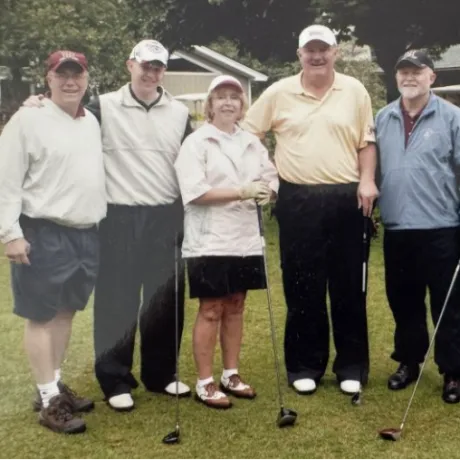
Early in my fundraising career (2006), I was traveling with the President of Norwich University, Richard Schneider, during a six-year $55 million capital campaign, the largest the institution had ever set.
During this trip, the President handed me a folder on a sensitive shift the board was making to the Corps of Cadets military training program. "Sleep on this," he said. "Tell me in the morning how you'd handle it with our community."
Later, after the work, he asked how I was doing. I answered the way professionals usually answer that question. The campaign was on pace. The Kresge match was producing more new donors than projected. The work was the work. He let me finish, then asked it again. "Jason, you. How are you?"
The second ask is the moment I keep coming back to. He did not let me hide behind the work. He knew the difference between the employee and the human, and he refused to settle for the employee's report when he'd asked the human a real question.
So I told him. My family needed me in ways Vermont could not allow. My wife and I were ready to marry, and she would never move from Boston to Northfield. My life outside of work and my life inside of work had stopped being able to coexist, and the vice president had told me a remote arrangement was off the table because previous attempts had failed.
I had been quietly preparing a business plan anyway, because that is what you do when the answer is no and the situation is changing under your feet.
President Rich Schneider listened. Then he said something I have replayed for almost twenty years.
"Jason, we have not been successful in the remote model. But I know you, I trust you, and you need to be where you are most needed while still serving us. This is an inflection point in the campaign, and both can coexist. We will make it work. When we get back to campus, pack up and head home. I will take care of the rest."
No process. No committee. No "let me think about it." A true leader who knew his answer the moment he heard mine.
What I learned from him that night is the shape of the work I do now. He met me where I actually was. He named what he trusted out loud and made it structural by changing what was possible. He did not require me to clean myself up before he helped. He just helped.
The campaign closed a year early at $82 million, the most successful in the institution's history to that point. I do not believe that result happens if the president does not ask one quiet question twice on a trip to Chicago.
Years later, when Norwich's team went fully remote during COVID-19, the model was already there, built on one person someone chose to see clearly.
Rich, thank you! The work I do today is built on what you modeled then.
Additional thanks to another special mentor, Rick Van Arnam.
Read More
Learning in the Field
By Dr. Michael Gangone
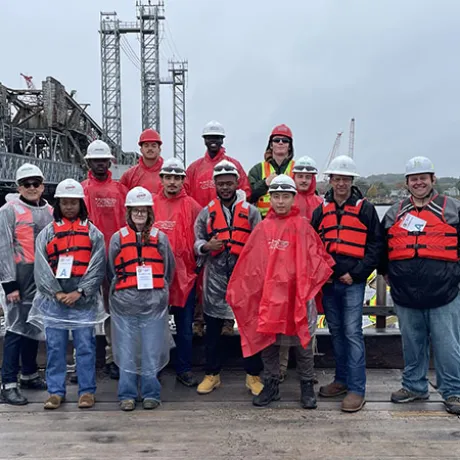
Engineering students take their learning into the field as they visit major infrastructure projects.
2 min read
What Lasts: Stories from Norwich Homecoming
By Corrina Snow
At Norwich University’s 2026 Homecoming, alumni returned to Northfield to reconnect, share memories, and celebrate relationships that extend long after graduation.
6 min read
Athletics: Zacher selected for NCAA Division III Athletic Communicators Emerging Elite Program
By Norwich Athletic Communications
This link takes the reader to an external article.