
The Constitution: What Does It Mean to You?
The Norwich community reflects upon one of the nation's foundational documents as Constitution Day approaches in the first of a two-part series.
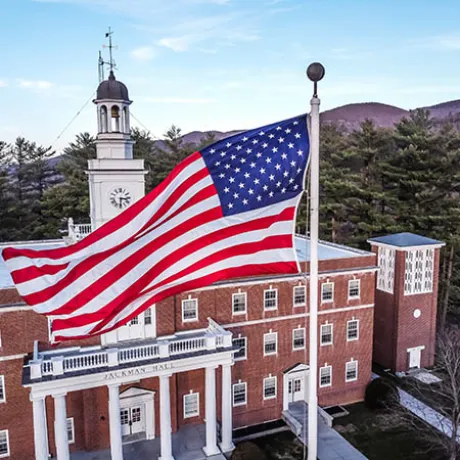
Each Sept. 17, the nation celebrates Constitution Day, the anniversary of the 1787 signing that established the framework for American self-governance. At Norwich University, that framework isn't an abstraction — it is lived daily in the University's founding purpose: preparing citizen-soldiers and citizen-leaders who understand that rights carry responsibilities, and that a republic depends on informed, engaged participants to sustain it.
This year, the Norwich University Constitution Literacy Initiative, led by Dr. Jason Jagemann, invited the Norwich community to put their thoughts into words. The project, entitled "Constitution Voices," invited them to share their introspections as they answered the question, what does the Constitution mean to you, and why does it matter today? Students were also asked to reflect on how their time at Norwich has shaped their sense of citizenship.
Gary Ginsburg ’06, M’08

Each of us has sat with a group of friends and shared how we would solve pressing issues. Whether it is achieving world peace, or winning important elections, or ensuring our favorite sports team makes it to post-season, we have boldly offered how we would do things better. Unfortunately, we rarely take any steps to execute our visions, and therefore our bold ideas come to nothing. We tell ourselves that it’s a fun rhetorical exercise, but that there really isn’t any use in coming up with a plan to take action and then to convince others of the wisdom of that plan, so it is followed.
That is where we and the crafters of the United States Constitution differ. While it may seem ludicrous that our ideas to end intractable conflicts or have the New York Mets achieve a winning season should be acted on, they are no less inconceivable than establishing an entirely new form of government. Yet that is precisely what the founders of the Constitution decided to do, and then they took the bold actions to see it through. The wisdom of the Constitution’s framers is something to be marveled at, but what I find most inspirational is their decision to act and bring their plan into the world. Generations of learned people have thought deep thoughts but never acted on them. The U.S. Constitution is an example of seeing a problem, thinking about how to address it, and then actively doing the hard work to fix things.
That lesson transcends the centuries and will hopefully inspire many more generations to be more than just talkers or thinkers, but to be doers and people of action too. The Constitution includes within it the mechanism to create amendments, which clearly shows that the framers understood that they were not to be the last generation of Americans to step up and act, but rather they should be the first. As citizens of this free republic, it is our responsibility to follow their example and not merely think about how to build a more perfect union, but to actually take the meaningful steps to act on it.
That is what I found most inspirational about the U.S. Constitution, as my Norwich experience pushed me to take action and work to build a better and stronger society and republic. As a member of the Corps of Cadets, I was instilled with a deep appreciation for what it means to be a citizen of the United States, and that it was my responsibility to serve this nation and our ideals to the best of my ability, through words and through deeds. Simply put, my Norwich education instilled in me a deep desire, “to execute as well as to conceive.” As we celebrate our Constitution and the wisdom of those who crafted it, let us remember that their true brilliance was in knowing that action was needed, not just words in a convention hall.
Gavin Kostoglian ’04, MPA ’12, MBA ’17

To me, the U.S. Constitution has never been an abstract document behind glass in Washington. It is the deal I swore to defend before I fully understood what defending it would ask of me. I raised my right hand as a private in the Army, and folded inside that oath was its own definition of citizenship: an assignment, not a status. That understanding took its clearest shape at Norwich.
I was a political science major when I took your [Professor Jason Jagemann] constitutional law course, where we broke down a live Supreme Court case instead of a textbook chapter. The final project asked us to brief a current one: Virginia v. Black, the 2003 case testing whether a state could criminalize cross burning. I sat with that case longer than any other assignment, uncomfortable that the Constitution I was studying to defend could also be read to shelter the expression of a Klan leader, someone whose views I find indefensible. Justice Scalia's opinion is what settled it for me. He wasn't asking whether the speech was likeable; he was asking what the text and its original meaning actually permitted, applied the same way no matter who stood in front of the Court. That is the moment equal protection stopped being a phrase I could recite and became a standard I understood: the Constitution isn't a document that protects people we approve of. It protects a process, evenly, or it protects nothing at all. It's also where I settled on how I believe the Constitution should be read: by its original intent, not reinterpreted each generation to fit whatever argument is convenient.
I carried that framework overseas. As an infantryman in Mosul and later Al Amarah, I watched a country try to build the scaffolding of self-government from nothing, and I saw up close what it costs a people to live without the protections we treat as background noise at home: due process, a free press, a vote that actually counts. That contrast is what turned constitutional law from an academic interest into something closer to conviction. The First Amendment in particular still anchors how I think today, because I watched what a society looks like when no one can speak against power without paying for it.
That is why it still matters. Not because the Constitution is a relic to admire, but because it is a standard every generation has to re-earn, applied to everyone equally, or not applied at all. Norwich gave me the professor, the case, and the argument that turned my service into something I could explain, and not just something I had done.
Trevor Mills ’09
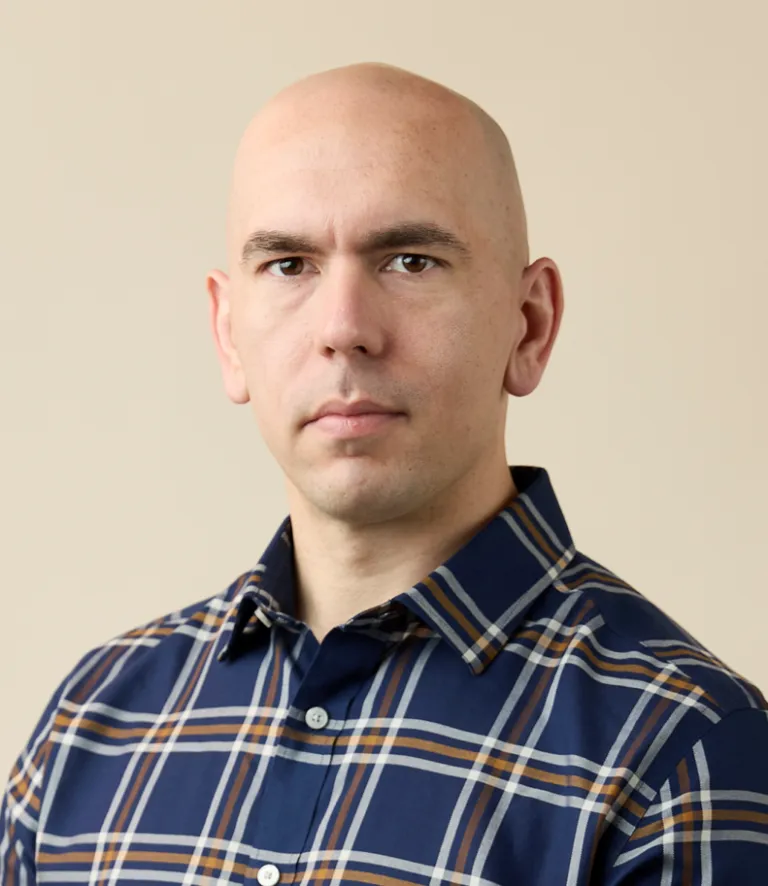
The Constitution has been the most important document in my life since my life began. As I took my first breath, it checked the government from depriving me of any subsequent one without due process and gave me a modicum of protection against that government declaring I do not belong to the nation in which I was born. It established a legislature, comprised of my fellow citizens who I had the power to help elect; an executive, under whom I had the privilege to serve as a commissioned officer; and a judiciary in the form of a Supreme Court, a body that I thankfully never had to stand before, but had I, they likely would have given me a fair shake — how hard is it to convince five Ivy Leaguers to see it your way?
As many of my contemporary veterans would say, the Constitution is essentially an idea worth fighting for. I don't disagree, but I like to frame it as something to fight about. At its creation, the Constitution had few peers — Magna Carta and San Marino's Statutes among others. It was a document that was unarguably crafted by the hands of men, which differentiated it from most other documents of law in existence — religious texts claimed by most to be the work of a higher power. This aspect removed debate around what a god intended a rule or regulation to practically mean, and centered it around what a group of humans intent could have been. The Constitution allows me the power to have a conversation, debate, or an argument about how we as a species should or shouldn't govern ourselves — a tool by which we can shape our fate during our lifetimes.
This power isn't without consequence. Those conversations, debates, and arguments have spilled over into violence more than once; most catastrophically during our Civil War. It's a cruel irony that September 17th — the birthday of a document that in so many ways protects American lives — is also the anniversary of the bloodiest day in our history — the 1862 Battle of Antietam, where nearly 23,000 Americans were killed, wounded, or counted as missing. I'm reminded of this every time I think about the Constitution, about what I am doing, or would or wouldn't do to defend it or advocate for its revision. Maybe that's the point of it — to make you think about what's most foundational to your life and what to do about it. I guess I Will Try.
Capt Dylan P. O’Brien ’20, USMC
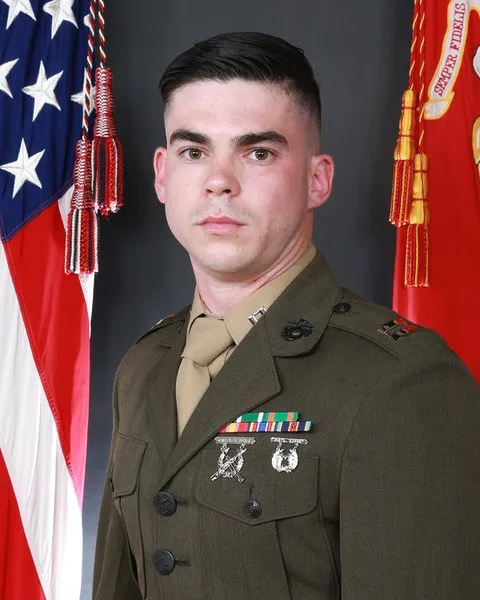
The U.S. Constitution has meant different things to me at different stages of my life. When I graduated from Norwich and commissioned into the Marine Corps as a 2ndLt in 2020, I understood the Constitution primarily through the lens of service. I, among many of my classmates, had taken an oath to support and defend it, and I understood this oath as a commitment to something larger than myself. Today, as a captain in the Marine Corps and a third-year law student preparing to take the bar, I understand that commitment in a much deeper way.
The Constitution to me is not simply a historic document or a collection of legal rules. It is the framework that defines both the power of our government and the limits placed upon that power.
As a newly commissioned officer, the oath that I took reminded me that military service is ultimately service to constitutional government. Marines, as with any service branch, do not swear allegiance to a particular president, political party, or ideology. We swear to support and defend the Constitution. That distinction matters because civilian control of the military, the rule of law, and the peaceful transfer of governmental authority depend upon public servants who recognize that their loyalty is to our constitutional system rather than to any individual. Something that was instilled from my first days as a Rook at Norwich.
Attending and nearing the completion of law school has added another dimension to this understanding. Through classes such as constitutional law, criminal procedure, and the rights of individuals has shown me how principles that can appear abstract and otherwise simple on the Constitution have a direct effect on people's lives. Questions involving equal protection, due process, searches and seizures, the right to counsel, and governmental authority demonstrate that constitutional protections matter even when enforcing them is difficult, inconvenient, or obscure. The Constitution matters today because it requires government officials (military officers, lawyers, judges, and elected leaders) to exercise power within established boundaries, and these powers have the ability to change lives in profound ways.
Norwich University helped create the foundation for how I understand this responsibility. Norwich's tradition of developing citizen soldiers taught me that citizenship involves more than enjoying the rights guaranteed by the Constitution. It also requires accepting responsibility for preserving the institutions that protect these rights. Leadership, service, integrity, and accountability were not merely concepts discussed in the classroom or on the Upper Parade Ground; they are expectations incorporated into our daily lives.
My perspective has therefore evolved since commissioning in 2020. I once viewed supporting and defending the Constitution primarily as a military obligation. I now see it as a continuing responsibility shared by every citizen. As both a Marine officer and future attorney, I have an especially important obligation to respect the rule of law, protect constitutional principles, and ensure that authority is exercised responsibly. The Constitution matters because the freedoms it protects endure only when each generation chooses to understand, defend, and live by them.
This is the first article in a two-part series. You can read the second here on the Norwich Reveille.
Read More
Norwich hosts Vermont ASCE Geo-Institute meeting
By Dr. Michael Gangone
Norwich University brings Vermont engineers, faculty, and students together to explore geological challenges, emerging technologies, and advances in geotechnical research.
1 min read
Learning in the Field
By Dr. Michael Gangone
Engineering students take their learning into the field as they visit major infrastructure projects.
2 min read
What Lasts: Stories from Norwich Homecoming
By Corrina Snow
At Norwich University’s 2026 Homecoming, alumni returned to Northfield to reconnect, share memories, and celebrate relationships that extend long after graduation.
6 min read