
Beyond the Screen: Norwich Takes Experiential Learning to Europe
Traveling and learning abroad provides unique experiences that supplement the virtual classroom education that Norwich Online students receive.
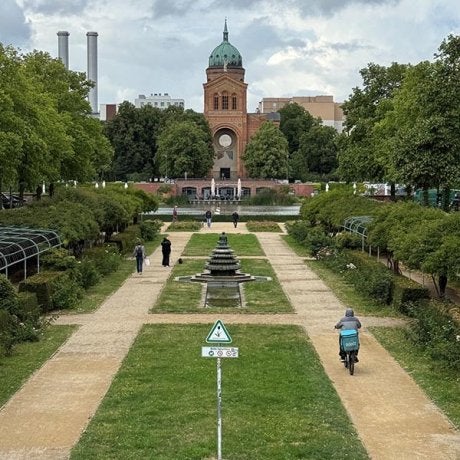
For Norwich University Online students, the classroom can be almost anywhere. This summer, for a group of graduate students, that classroom extended to Germany, where weeks of online preparation led into intensive in-person experiences built around international collaboration, applied learning and complex real-world scenarios.
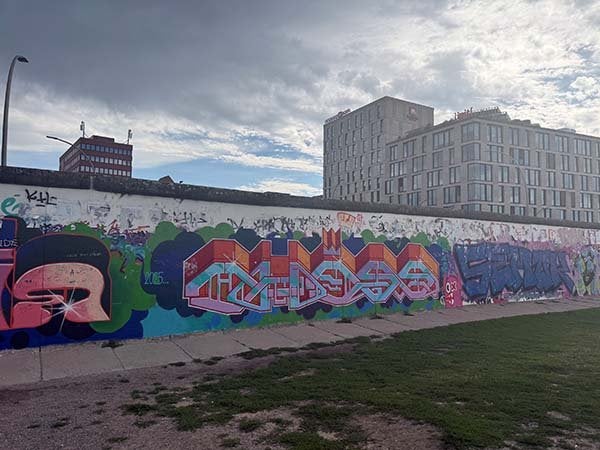
The summer included experiences connected to Hybrid Warfare and Global Strategic Leadership, bringing Norwich students together with international participants and placing them in environments designed to challenge assumptions and require them to make decisions with incomplete and sometimes conflicting information.
Bringing Hybrid Warfare Into the Real World
Developed by Norwich faculty members Dr. Diane Zorri and Mark Chadason, the 11-week Hybrid Warfare graduate course included extensive online preparation before students traveled to Berlin during week nine. There, classroom lectures were joined by tours, discussions with European participants and a tabletop exercise designed to move hybrid warfare from an academic concept into an applied problem.
Berlin offered a particularly relevant setting for that work because students could examine contemporary hybrid warfare alongside the city's history of great-power competition during the Cold War. While technologies have changed, Zorri says many of the underlying dynamics remain recognizable, particularly in the use of information, influence and psychological pressure.
"My intent was to develop a learner experience that was relevant for what we're facing right now," says Zorri. She wanted graduate students to encounter multiple perspectives that could inform both their careers and the frameworks they use to understand an evolving form of warfare that can be difficult to define.
The students arrived in Berlin after approximately two months of preparation, making the immersion an integrated part of the course rather than a study-abroad experience added onto it. The work completed online established a common academic foundation before students were placed together in an intensive environment abroad. Zorri describes the combination of preparation, academic work and an intensive week in a foreign country as a learning experience that occupies a unique place between traditional online and residential education.
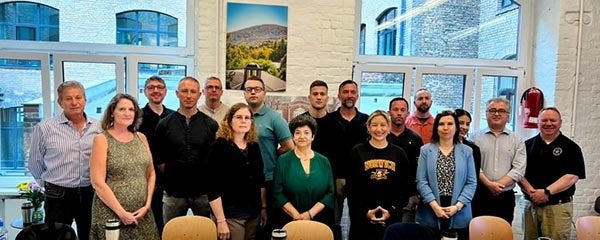
Learning to Make Decisions Without Perfect Information
The simulations used during the immersion intentionally challenged students by placing them in situations without obvious answers. Toni Raftery, who helped lead the development of Norwich's immersion programming, says the experiences share a common objective: cultural immersion combined with critical thinking and strategic decision-making in scenarios that feel as close to real life as possible.
Students work together online before meeting in person, then encounter evolving scenarios once on the ground. New information arrives throughout the exercise through simulated news, social media and other sources, some confirmed and some uncertain. That structure requires students to determine what information matters, account for the perspectives of those around them and make decisions despite an incomplete picture.
The international composition of the group added another layer to that challenge. Participants included U.S. students as well as students from Poland, Portugal, and Germany, creating situations in which assumptions that seemed self-evident to one participant could look very different to someone from another country.
"We come to accept things as facts because that's all we know," says Raftery. Bringing students together across cultures and disciplines, she explained, gives them a broader range of perspectives to consider and heightens the overall experience.
In the Hybrid Warfare exercise, those perspectives became part of the problem students had to solve. Participants assumed roles connected to Germany's Ministry of the Interior during a simulated NATO ministerial, requiring them to assess threats and make recommendations within a political and cultural environment that might be unfamiliar to them.
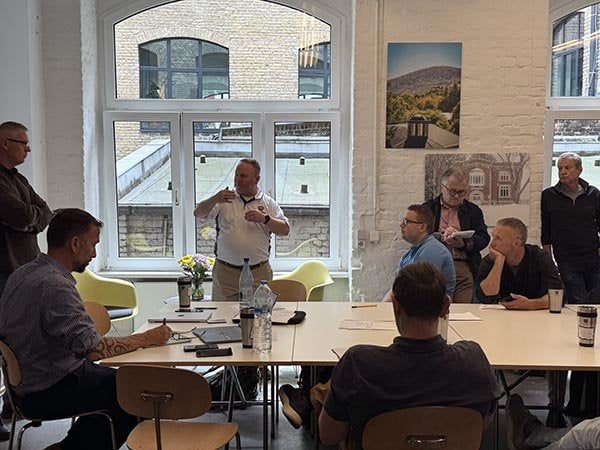
William "Bill" Lyons, vice president and dean of Norwich University's College of Graduate and Continuing Studies, explained that a U.S. participant might have to step outside a military frame of reference, operate in a civilian role, account for German culture, and advise German leaders on issues ranging from protests to threats against infrastructure. For Lyons, asking students to navigate those unfamiliar variables took the experiential learning component to another level.
Finding the People Behind the Discussion Posts
For Daniel Pedersen M'26, a Norwich graduate student who participated in the Hybrid Warfare course, some of the greatest value came through the relationships formed around the formal academic experience. Like many online students, Pedersen already knew several classmates through previous courses. He had read their work and interacted with them in online discussions, but Berlin transformed those familiar names into personal relationships.
"It was interesting to meet those people face to face and kind of see the personality behind the words that I was reading every week in the discussion posts," says Pedersen.
Living near one another also gave students opportunities to continue conversations after the formal academic day ended. Pedersen described a group that crossed professional, generational and experiential boundaries, including participants with military and diplomatic backgrounds. He found some of the greatest value in the unstructured time with classmates and professors, where conversations allowed participants to better understand one another's experiences and perspectives.
Zorri observed those relationships developing throughout the week as students continued spending time together after class, exploring Berlin, exercising, and sharing experiences beyond the scheduled program. She saw friendships form among participants who had arrived with different national, professional and personal backgrounds.
Those interactions also became one of Lyons' strongest measures of the program's success. Watching students from different countries and backgrounds work through the scenario together reinforced the value of bringing participants into the same room.
"The quality of those interactions, you can't buy that," says Lyons, describing the experience as among the most valuable educational experiences in which he has participated.
Berlin as Part of the Curriculum
Berlin itself became part of the learning environment, offering students a physical connection to many of the issues they were studying: great-power competition, division and reunification, propaganda, political influence, and the management of conflict below the threshold of war.
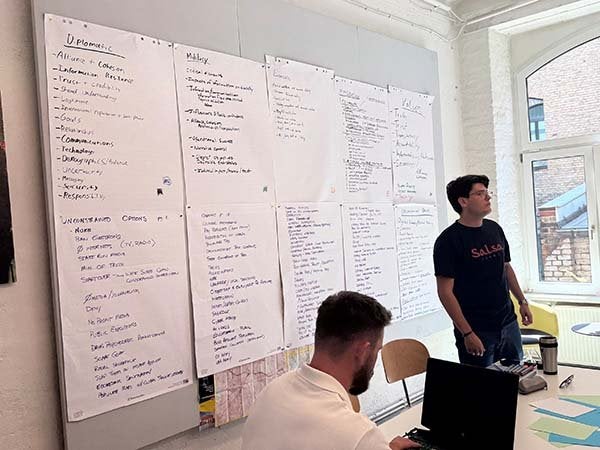
Raftery pointed to the history visible throughout the city as particularly relevant to discussions of propaganda and disinformation. Rather than examining those concepts only through readings or classroom discussion, students could encounter places shaped by their consequences and consider contemporary information challenges against that historical backdrop.
Zorri came away with a similar impression. Having studied the history of the city for years, being physically present changed her relationship with it and reinforced why location can add another dimension to academic study.
"You have no idea how important this city is in terms of the last 100 years of history," she says. "Being there, it just makes it so real."
That relationship between place and subject matter is one of the elements Norwich hopes to carry forward as immersion opportunities develop.
Building the Next Iteration
As a pilot, the Hybrid Warfare experience was intentionally designed to evolve, and Pedersen said faculty were candid with students from the beginning that the program was new and that their feedback mattered. Rather than expecting a finished product, students were encouraged to identify gaps and help strengthen future iterations.
"You're not just participating," says Pedersen. "You're also actively assisting and helping build a better product for the next generation of students that are going to come through there."
Zorri has already identified changes she would make. The first iteration packed a substantial amount of academic work into the course, and future versions could adjust assignments and refine some of the activities in Berlin based on student feedback. Still, she described the response to the in-person portion as strong.
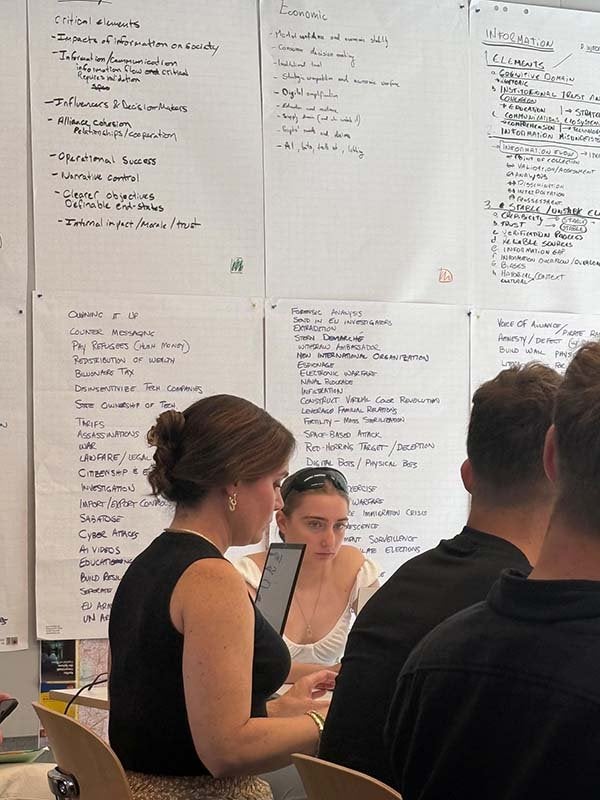
Pedersen also saw the amount of work taking place behind the scenes and said students recognized the effort required to build the initial program. He credited Zorri and the larger Norwich team for creating an experience in which students understood that they were participating in something new while also helping improve it for those who follow.
The larger ambition extends beyond one course or one city. Norwich has been developing relationships with academic and defense partners across Europe, creating possibilities for future experiential opportunities in different disciplines and locations. Lyons sees potential applications beyond security-focused programs, including international experiences for MBA students and cyber exercises with partner institutions.
That vision is informed in part by Lyons' own experience as a distance learner. He completed three master's degrees through distance education, two of which included residential components. Looking back, Lyons said some of the greatest value of those experiences came from spending time with classmates, forming friendships, expanding professional networks and developing relationships that continued after the programs ended.
His experience also led him to consider how immersion programming could connect modern online education with the educational philosophy of Norwich founder Captain Alden Partridge. Partridge's emphasis on experiential education helped shape Lyons' thinking about creating opportunities for students to move beyond studying a subject and apply what they have learned in environments designed to approximate real-world conditions.
Lyons describes the approach as "experiential learning, learning in the field, doing the job, creating conditions that were as close to real world as possible."
Global Strategic Leadership is already another part of that effort. After an initial pilot in Germany last winter and another iteration this summer, the experience is moving toward a course offering, providing another avenue for students to study leadership, information, and decision-making in an international setting.
As Norwich continues developing the model, the locations and subjects may change, but the educational premise remains familiar: prepare students, place them in challenging environments, bring different perspectives to the table and ask them to apply what they know. More than two centuries after Partridge championed experiential education, that philosophy is finding a new expression through online classrooms, international partnerships and opportunities for students to come together and learn through experience.
Read More
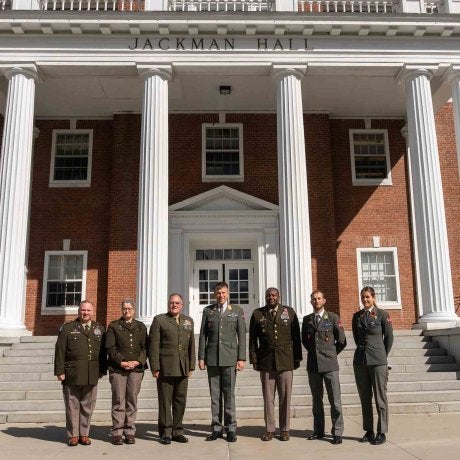
Delegation from Austria’s Theresian Military Academy visits Norwich
By NU Marketing & Communications Office
Visitors from Austria’s military academy meets with University leaders, the Vermont adjutant general, and Austrian exchange cadets on the Northfield campus.
4 min read
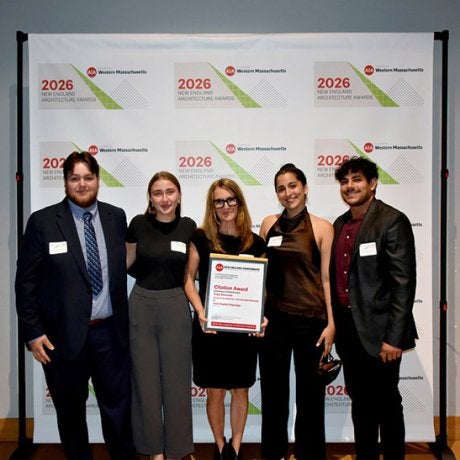
Norwich Design+Build Studio Wins Regional Architecture Award for Montpelier Playscape
By NU Marketing & Communications Office
American Institute of Architects New England honors student-built Little Rapids Playscape with a 2026 Citation Award.
2 min read
Norwich hosts hundreds of Vermont students for 'Day of Cyber'
By MyChamplainValley
This link takes the readers to an external article.