
2026 Military Writers’ Symposium: How Cinema Shapes Our Perception of War
Two days of programming on media and war features student research, expert panels, and a look at Darby’s Rangers.
Historian David Lyle Williams, winner of the 2026 William E. Colby Military Writers’ Award, presented his book, “The Road to Cisterna: Darby’s Rangers and Their Most Consequential Battle in World War II,” on Oct. 6 at the Norwich University Military Writers’ Symposium, capping two days of discussion on how cinema shapes the way the world understands war.
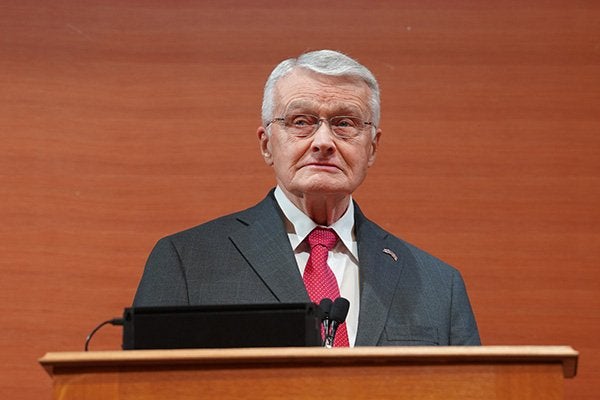
Williams’ afternoon session in Mack Hall Auditorium gave attendees a close look at the Rangers and the 1944 fight for Cisterna in Italy. Students C/COL Corey Martin ’27 and C/CSM Patrick Hobin ’27 moderated. The award is among the highest honors in military writing.
This year’s theme, “Portraying War: How Cinema Shapes Our Perception of War,” framed both days. Dr. Lisa Mundey, academic director of the Master of Arts in History, Military History, Public History, and Museum Administration at Norwich, opened the symposium Oct. 5 and returned to the stage throughout the program.
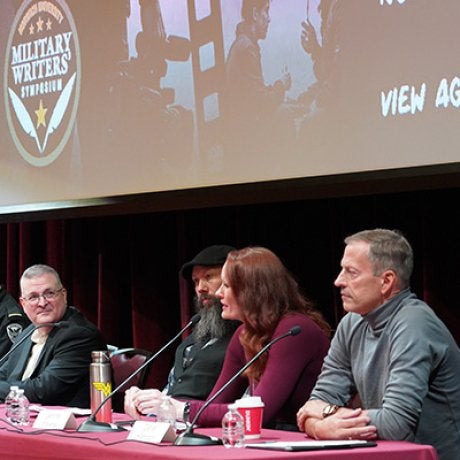
The first day opened with a session on how film has helped define war, led by author and Lt Col Dan Hampton, USAF (Ret.). Later panels turned to the human face of conflict, with award-winning war correspondent Lara Logan and photojournalist Dimitri Beliakov. Other sessions examined how China has depicted warfare and how animated films were used as wartime propaganda. Student moderators led the discussions. That evening, a closing panel conversation moderated by LTC Chris Cadigan ’95, USA (Ret.), included retired U.S. Navy veteran and actress, Jennifer Marshall, alongside several of the symposium’s speakers.
Tuesday began with a session on the myth of military success in cinema. A veterans panel, “The Reality Behind the Reel,” followed, with Marshall among those speaking on how Hollywood’s version of war compares with their own experiences. Alex Stamp ’26 also presented his work as the Dennis E. Showalter Research Fellow. The sold-out Meet the Authors Reception and Dinner at the Cyber Fusion Center closed the symposium.
Schultz Fellows Present Research
The first day’s program also featured the Richard S. Schultz ’60 Symposium Fellows, who presented their research in a session moderated by Dr. Steven Sodergren, Charles A. Dana Professor at Norwich. The fellowship, established in 2017 and administered by the Norwich University Peace & War Center, supports undergraduate research from any academic discipline and includes a $3,500 grant.
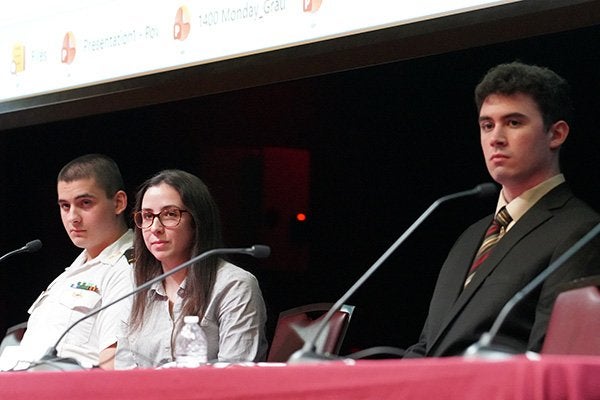
Nikolas Graupe ’27 presented “The Iran-Iraq War and its Shadows: Tracing Contemporary Iranian Disinformation Tactics to State-Sponsored Cinema.” His research examines “Sacred Defense” films made in Iran during and after the Iran-Iraq War and argues that techniques refined in that genre continue to inform Iranian disinformation online today.
Victoria Jarvis ’27, who co-authored her report with Kelli Sutton-Bosely M’13,16, assistant director of the Cyber Institute, presented “Wartime Propaganda to Modern Memory: The Evolution of WWII Films.” The project traces how Hollywood’s portrayal of World War II shifted across four periods: wartime mobilization, Cold War-era heroism, late 20th-century realism and, more recently, a focus on trauma and memory.
Dimitris Meintanas ’29 presented “How Cinema Shapes Our Understanding of Conflict,” which explores how Western films made after 9/11 have portrayed the Middle East. His report also looks at films such as “Paradise Now” and “Omar” that offer alternative perspectives.
Together, the presentations reflected the symposium’s central question: how the stories told on screen shape what audiences believe about war.
Read More
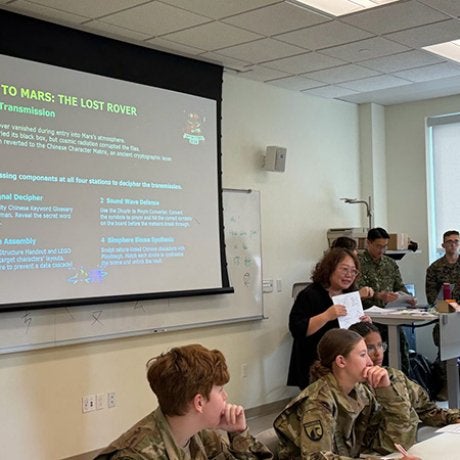
Mars Missions Bring Cybersecurity to Life at Day of Cyber
By Dr. W. Travis Morris
Nearly 300 students and educators explored cybersecurity, robotics and teamwork through hands-on adventures.
3 min read
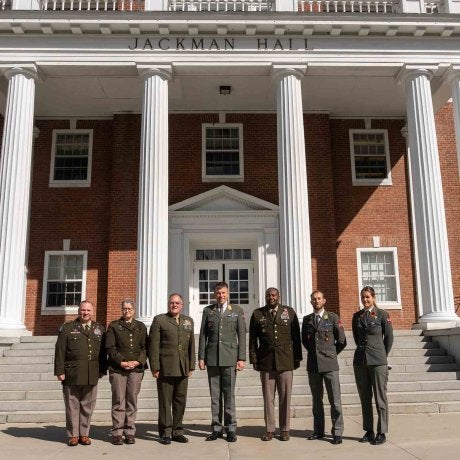
Delegation from Austria’s Theresian Military Academy visits Norwich
By NU Marketing & Communications Office
Visitors from Austria’s military academy meets with University leaders, the Vermont adjutant general, and Austrian exchange cadets on the Northfield campus.
4 min read
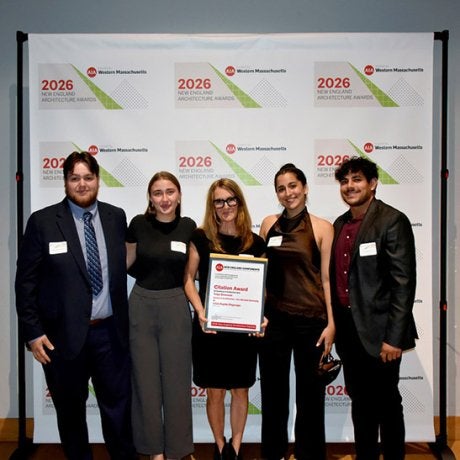
Norwich Design+Build Studio Wins Regional Architecture Award for Montpelier Playscape
By NU Marketing & Communications Office
American Institute of Architects New England honors student-built Little Rapids Playscape with a 2026 Citation Award.
2 min read